How Done-for-You YouTube Production Actually Works: 1 Filming Day, a Month of Content
You want content. You don't want to do content. Fair. Here is exactly what happens from the first call to the video going live, step by step.
 By Evgeny Maximov·9 min read·
Who is done-for-you YouTube production for?
Our client is an expert or founder who has something to say. There's a product or a service, and experience worth showing. But there is no time, no team, and no idea how to turn all that into a channel that brings clients. He wants content. He doesn't want to do content. So we take everything, and the client's only job is the filming day.
I'm Evgeny. I've been creating content since 2014 and I run a YouTube production agency. Three principles guide everything we do:
- Quality. Many people are in the process, and each does their best.
- Simple. You come to the shoot, and that's it. You get finished content.
- Transparent. You always know what's happening and at which stage.
Who we're not for: lifestyle bloggers, UGC creators, people who want to “become a YouTuber”, and people who don't watch YouTube themselves. If you're a Reels person, make Reels. Don't start a YouTube channel you don't care about.
Why YouTube, and not ads?
People compare YouTube with paid ads, but they're different things. Ads need a budget every month. Stop paying, and the leads stop. A video we film now can bring views and clients two years from now.
One orthodontist client left after a few months, convinced YouTube didn't work. Later it turned out that one patient from YouTube had already paid for the whole production. The channel kept working after we stopped.
You also don't need millions of views. A thousand people searching for exactly your service are worth more than a million random ones. Tvoy Sklad, a self-storage franchise, has about 2,000 subscribers, and its top video has around 23,000 views. The same channel helped it raise about $5M in investments and sign 20+ franchise partners in 2024 and 2025. We don't work for reach. We work for clients.
And platform risk? YouTube is twenty years old and one of the most visited websites in the world. But we never put all eggs in one basket: every video is also cut for Instagram, TikTok and LinkedIn.
How does the funnel work?
Three kinds of content do three different jobs:
Take our client Ayuna. Clips cut from her long videos reached up to about 300k views on Instagram, more than her own phone reels. And her long videos added 26,000 YouTube subscribers in 5 months, with two hours of filming a month. Read her case.
“My niche is too specific” is something we hear a lot. We've worked with investments, franchising, real estate, dentistry, osteopathy, car imports, legal services, relationship coaching, and even an American football school. A specific niche is not a problem. Researching your niche, your competitors and what your audience searches for is our job, not yours.
What does the process look like inside?
You don't work with five different people. Ideally you talk to two: a creative producer and a line producer. The editor, the designer and the account manager work inside the team. You don't see it, and you shouldn't.
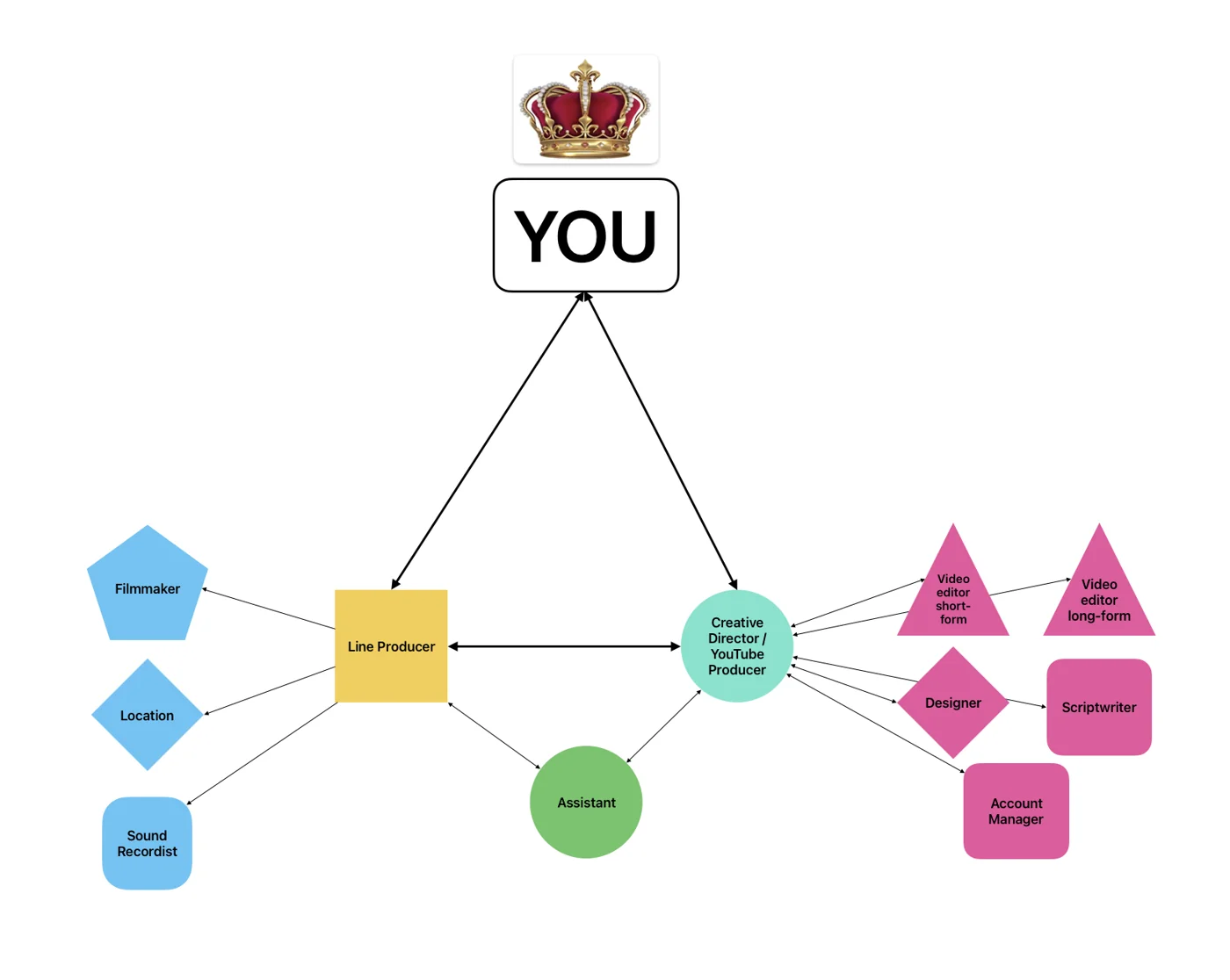
The creative producer is the main person on your project. They think about ideas, write scripts and understand your goals. You bring the expertise, and the producer turns it into topics and scripts. We write anchor scripts: key points and questions, so you sound like yourself and not like you're reading.
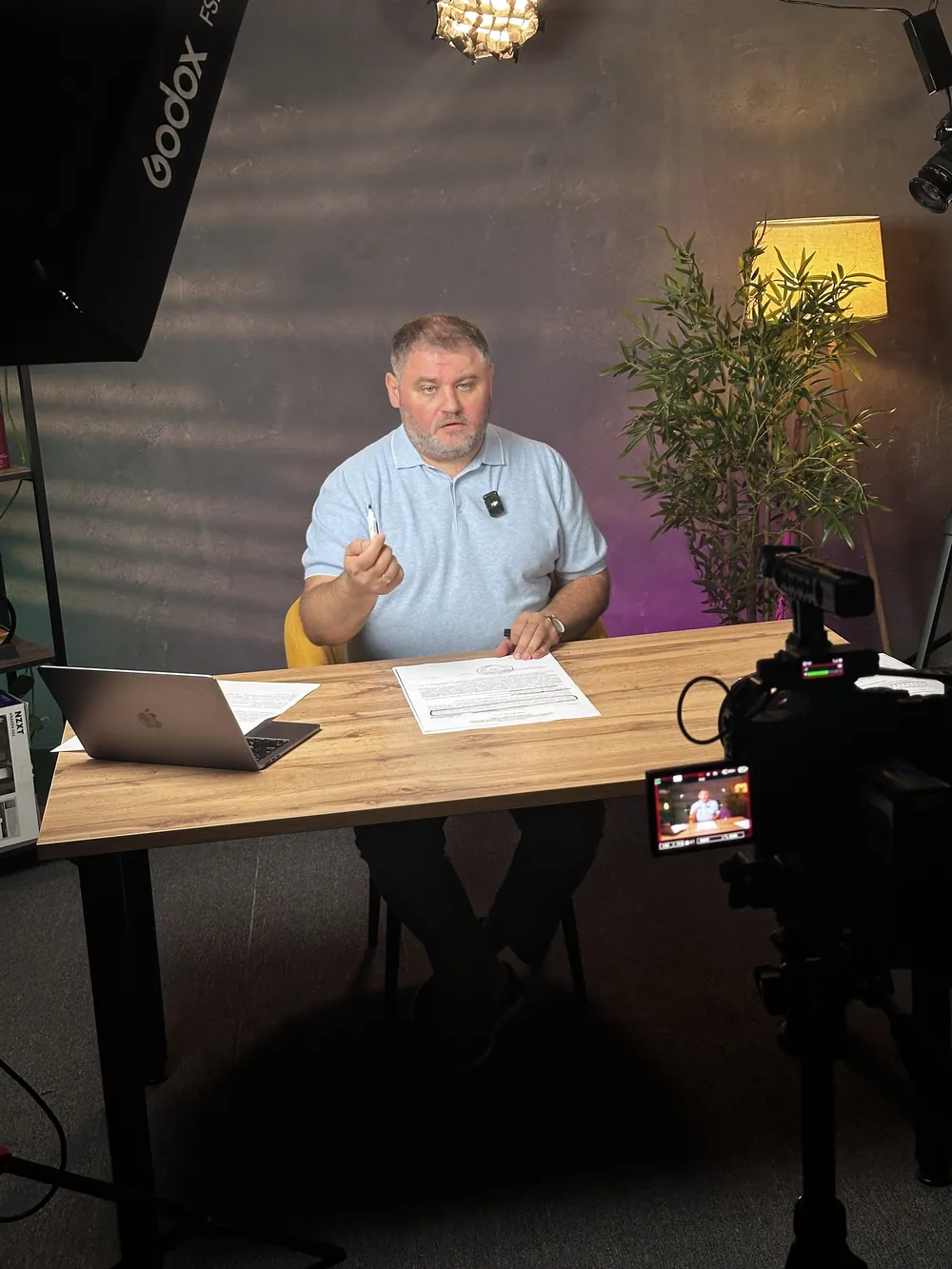
The line producer makes sure the shoot happens: location, filmmaker, gear, logistics. You arrive and everything is ready. You know when to come, what to wear and how long it takes. Or we shoot remotely, with a phone, a $120 microphone and the sun, while the producer guides you over a video call.
After the shoot, the footage goes to editing: long videos and shorts. One editor handles two clients, maximum three, so they know your style, your fonts and what you hate. The designer makes thumbnails. The producer uploads each video with titles, descriptions and SEO. The account manager checks every video before it goes live and posts it on other platforms.
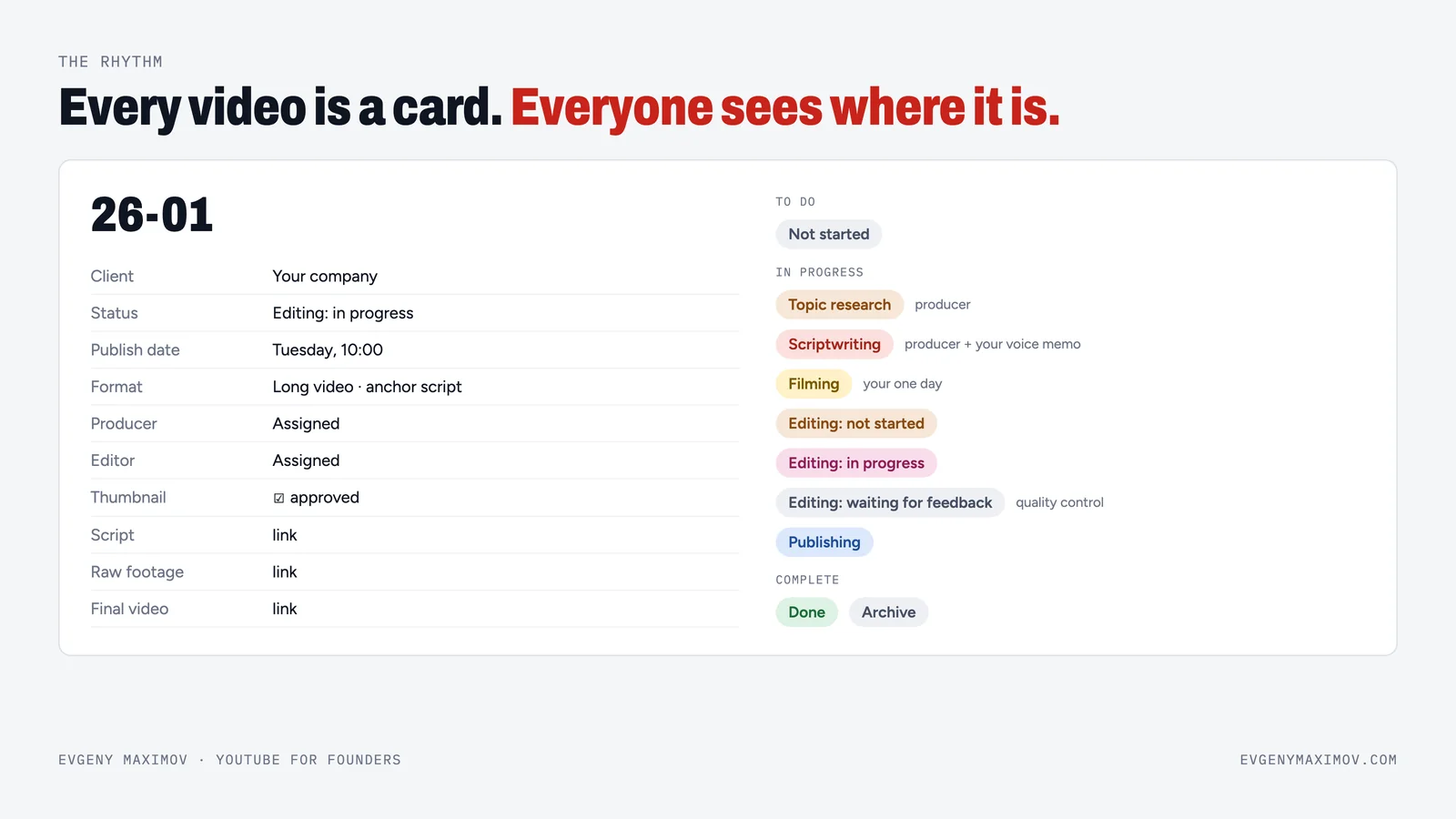
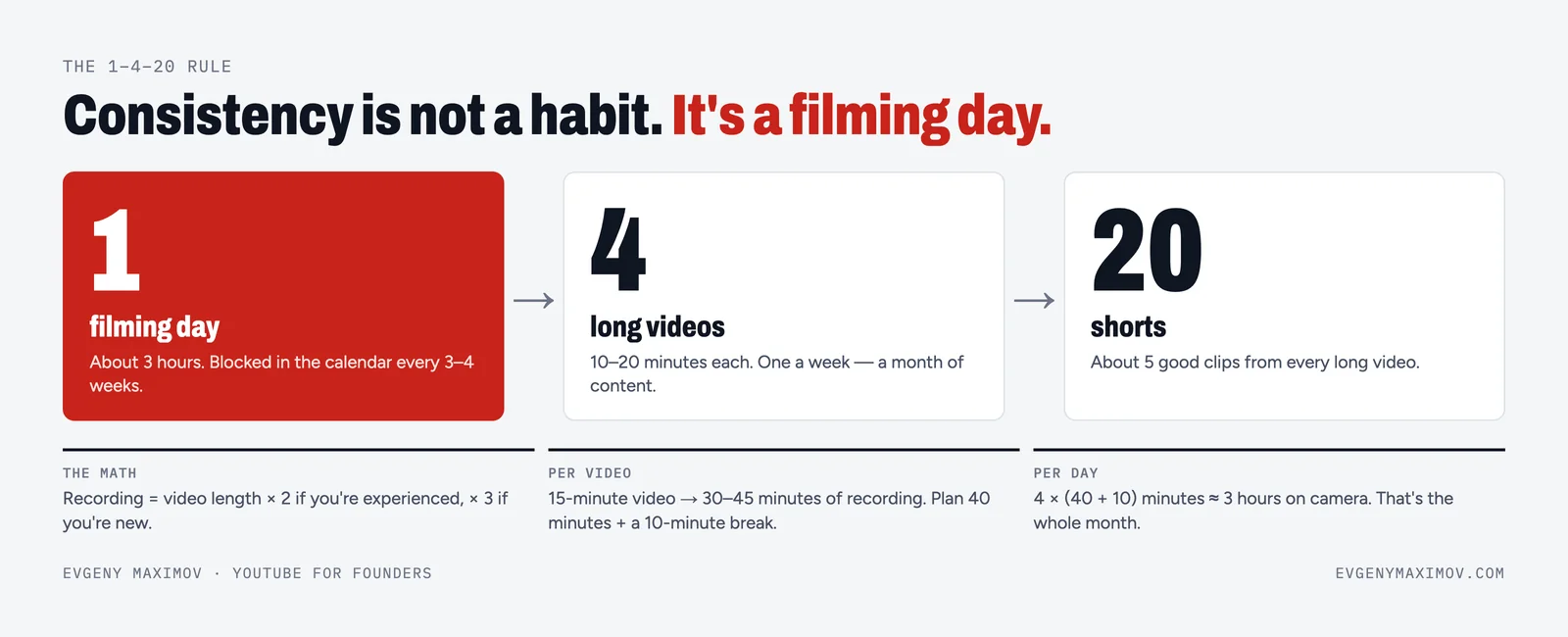
So a typical month looks like this: four long videos and 20+ shorts from one filming day. Your part is roughly a strategy call, reading scripts, the filming day and reviewing the final cuts. That's about 14 hours.
What if I can't talk on camera?
Almost nobody can at the beginning. It's a skill that comes after a few shoots. Our job is to make the first shoots comfortable: a clear script, the right location, zero pressure. After the third or fourth video most clients stop thinking about the camera.
I sit behind the camera, ask the questions and joke around so the speaker forgets the fear. Ayuna read her anchor script once and recorded a 20-minute video in one take. Clinic owners film for two or three hours and leave with four long videos. If you're nervous, read how Norbert recorded his first videos.
How do you use one video in more than one place?
One video works in many places. Put the long video on your website. Cut shorts to warm people up. Use it in follow-ups. Turn it into a LinkedIn post, a newsletter or a search article. One filmed video is not one piece of content. It's ten, if you use it right.
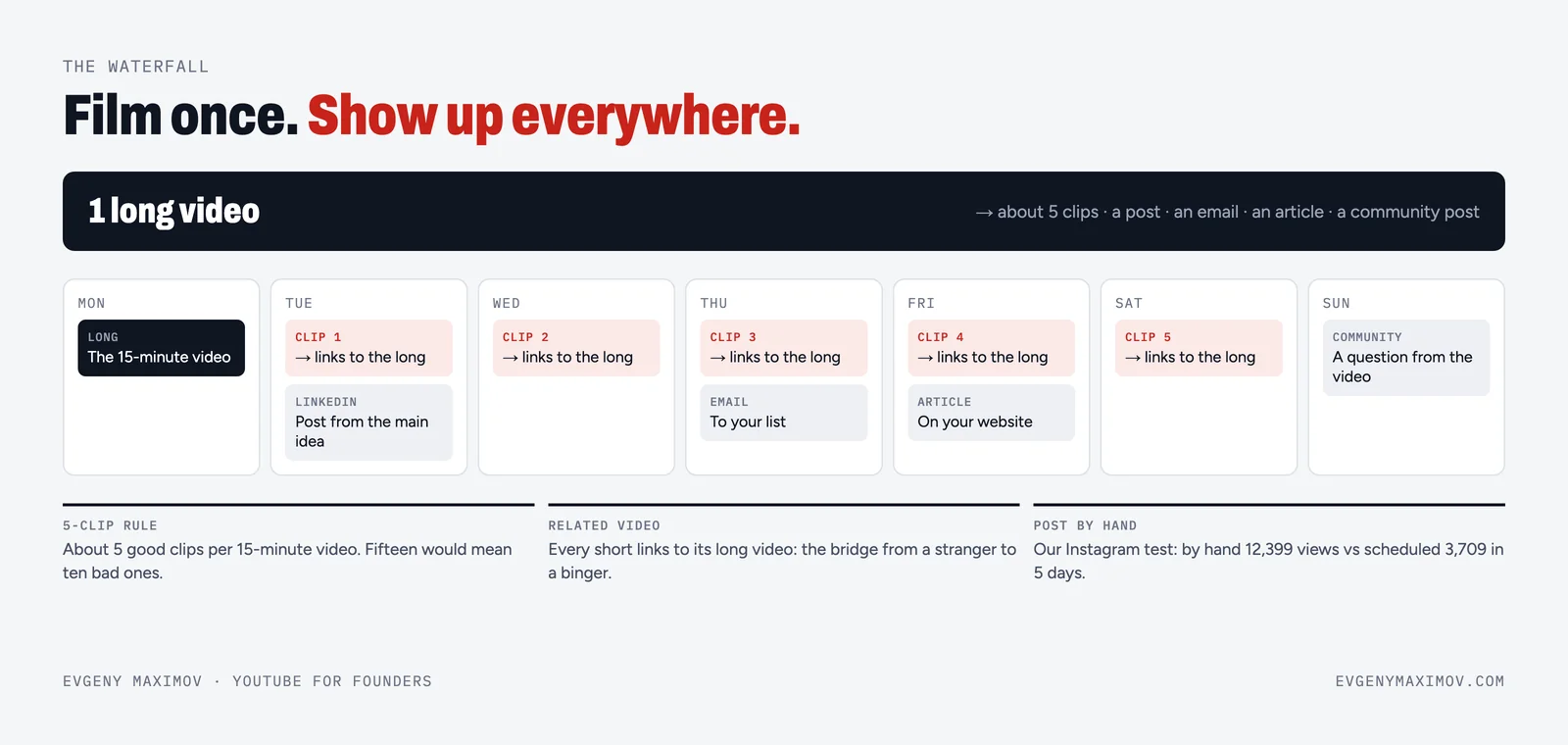
At Tvoy Sklad, the sales team and the investor relations team send the videos to leads, and the videos shorten the sales cycle. A dental client went from two or three posts a month to 20+ because of clips from long videos.
I tried YouTube before and it didn't work. Why?
There are usually three reasons:
- No strategy. You filmed whatever came to mind.
- No consistency. Three videos, then you quit.
- No funnel. The content existed, but there was nowhere to send people.
We close all three from day one. And there is a fourth reason: quitting too early. My rule is not to judge a video before a thousand views. Usually every fifth video is a breakthrough.
Why did I build it this way?
Because I lived the opposite. Since 2014 I did everything myself: filming, editing, voiceovers, thumbnails, scripts, publishing, managing clients. Years of online courses where I did it all alone, and it didn't work. I was burning out. That's why the service is built for simplicity: the client shows up and talks, and everything else is handled.
We work with a limited number of clients, only eight at a time, so each client has their own producer who knows the business, and I take the sales calls myself. Before a call I look at your socials, so you get value even if we don't work together. And if you don't like the strategy in the first seven days, you get a full refund.
FAQ
How does done-for-you YouTube production work?
You give the agency one filming day a month. A creative producer plans ideas and writes anchor scripts from your expertise, a line producer organizes the shoot, then editors, a designer and an account manager edit, package, check and publish everything. You talk to two people at most and review the final cuts.
How much of my time does a YouTube agency need?
About 14 hours a month at most, and most of it is one filming day. The rest is a short strategy call, reading scripts and reviewing final cuts.
What is an anchor script?
A one-page outline with the key points and questions for each video, written from your stories and words. It lets you sound like yourself and not like you are reading a text word for word.
Do I need to be good on camera?
No. Almost nobody is at the beginning. The first shoots are made comfortable with a clear script, the right location and no pressure. After the third or fourth video most clients stop thinking about the camera.
Can we film remotely?
Yes. We work with founders worldwide, fully remotely. The director can run a remote shoot over video call, or the team finds a local filmmaker near you.
What do I get from one filming day?
For example, four long videos and 20 or more short clips, cut from the same filming day and published on YouTube, Instagram, TikTok and LinkedIn.
Who is a done-for-you YouTube agency not for?
Lifestyle bloggers, UGC creators, people who want to become YouTubers, and people who don't watch YouTube themselves. If you are an Instagram Reels person, make Reels.
Why did my YouTube channel not work before?
Usually for three reasons: no strategy, no consistency, or no funnel, meaning nowhere to send viewers. A fourth reason is quitting too early. Don't judge a video before it reaches a thousand views.
Do I need millions of views to get clients from YouTube?
No. A thousand people searching for exactly your service are worth more than a million random viewers. Tvoy Sklad, a self-storage franchise, raised about $5M and signed 20+ franchise partners with a channel of roughly 2,000 subscribers.
What if I don't like the strategy?
Evgeny Maximov's agency offers a 7-day money back guarantee. The agency also works with only eight clients at a time, so every client has their own producer and the founder takes the sales calls himself.
Founder of a done-for-you YouTube agency for high-ticket founders. Making content since 2014. More about me
Want this machine for your business?
Before the call I look at your socials, so you get value even if we don't work together. I take the call myself. 7-day money back guarantee.
Book a call →