She Films 2 Hours a Month. Her Abandoned YouTube Channel Got +26,000 Subscribers in 5 Months
Ayuna is an osteopath with a strong Instagram and a YouTube channel she had given up on. Five months later: 1M+ views, +26,000 subscribers, and her best video was the first one we published.
 By Evgeny Maximov·7 min read·
Strong Instagram and a Telegram community of about 13,000. An abandoned YouTube channel with about 7,000 subscribers.
Market research, anchor scripts, a photo studio shoot, editing, thumbnails, SEO and short clips from every long video.
+26,200 subscribers and 1,055,545 views from May 1 to September 22, 2026.
The result: +26,000 subscribers in five months
Here's the channel's YouTube Studio for the period. I can refresh the page on camera to show it's not a trick, and you can check the channel yourself. The client spent about two hours a month on it. Hours, not days.
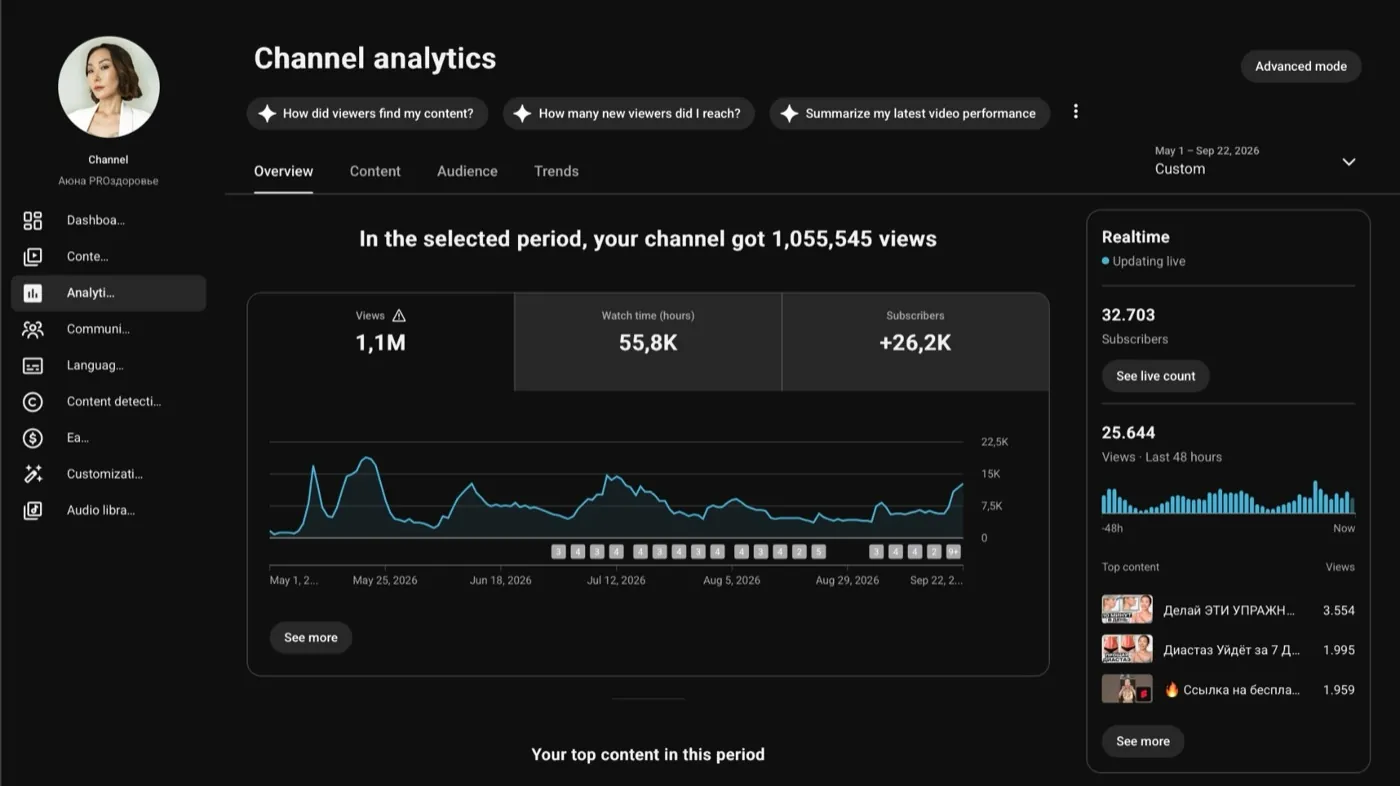
| Metric | May 1 – Sep 22, 2026 |
|---|---|
| Views | 1,055,545 |
| Watch time | 55,800 hours |
| New subscribers | +26,200 (32,703 in total) |
| Filming time | about 2 hours a month |
Where she started
Ayuna teaches exercises for the face, posture and body. She was very active on Instagram with reels shot on her iPhone, plus stories. Her Telegram community has almost 13,000 followers, and she posts there every day to promote live streams. Most of her revenue comes from DM automations: “comment this word to get details”.
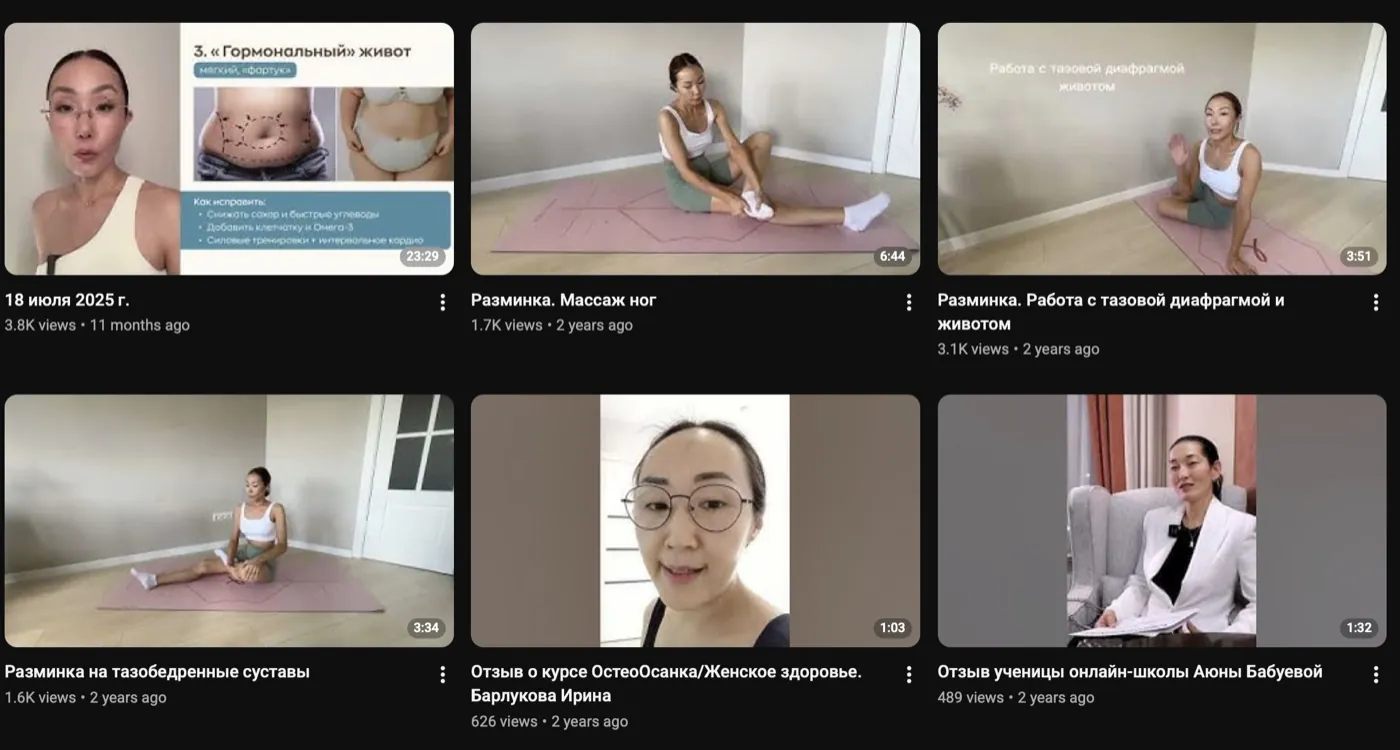
YouTube was a different story. An abandoned channel with about 7,000 subscribers, old home-made videos with a few hundred to a few thousand views.
Important: we don't run her Instagram. We give her clips from the long videos, and she posts them herself.
The funnel: shorts, long videos, Telegram
I always start with the funnel, because it decides the content strategy.
Market research: we studied 20 channels in her niche
We had never worked in osteopathy or health before. So we did market research. One channel in the niche has more than a million subscribers and grew like crazy. Why research at all? To understand why specific videos get views, and find ideas that already resonate with the audience. Then we adapt them to the speaker.
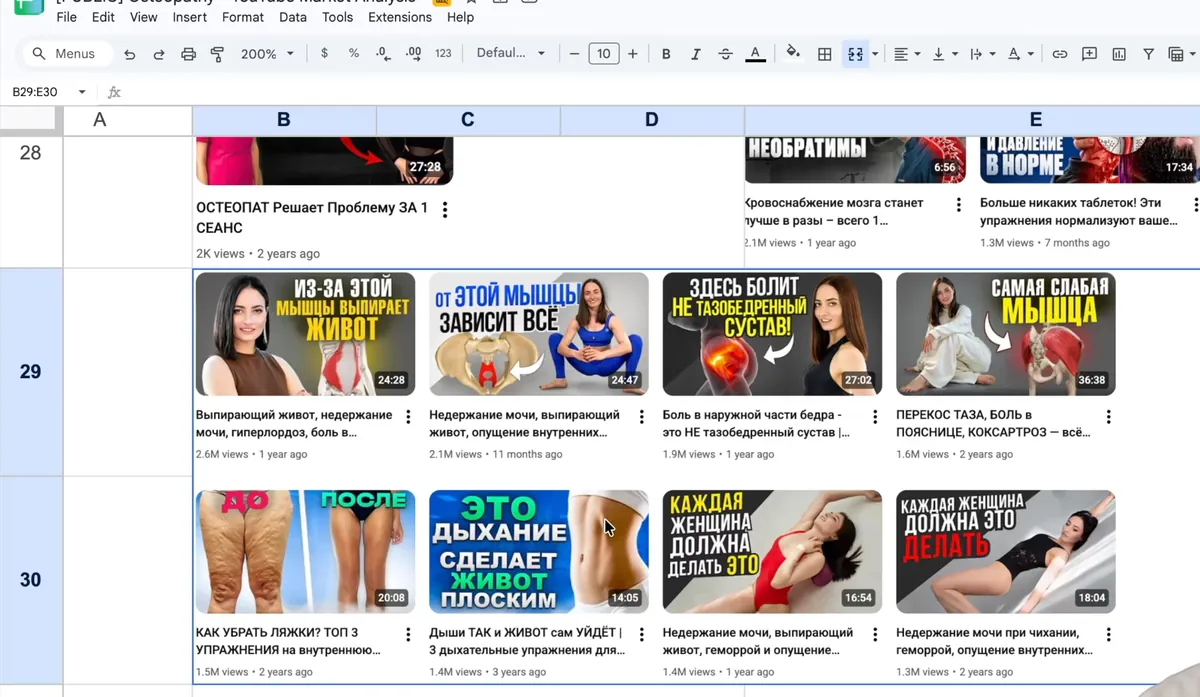
The recipe is to combine three things: the speaker's experience, the target audience, and the YouTube triggers that work in the niche's packaging. We looked at about 20 channels, different search phrases, different doctors. You don't need to reinvent the wheel. Check the top players and combine their best ideas, thumbnails and titles.
The packaging formula that worked
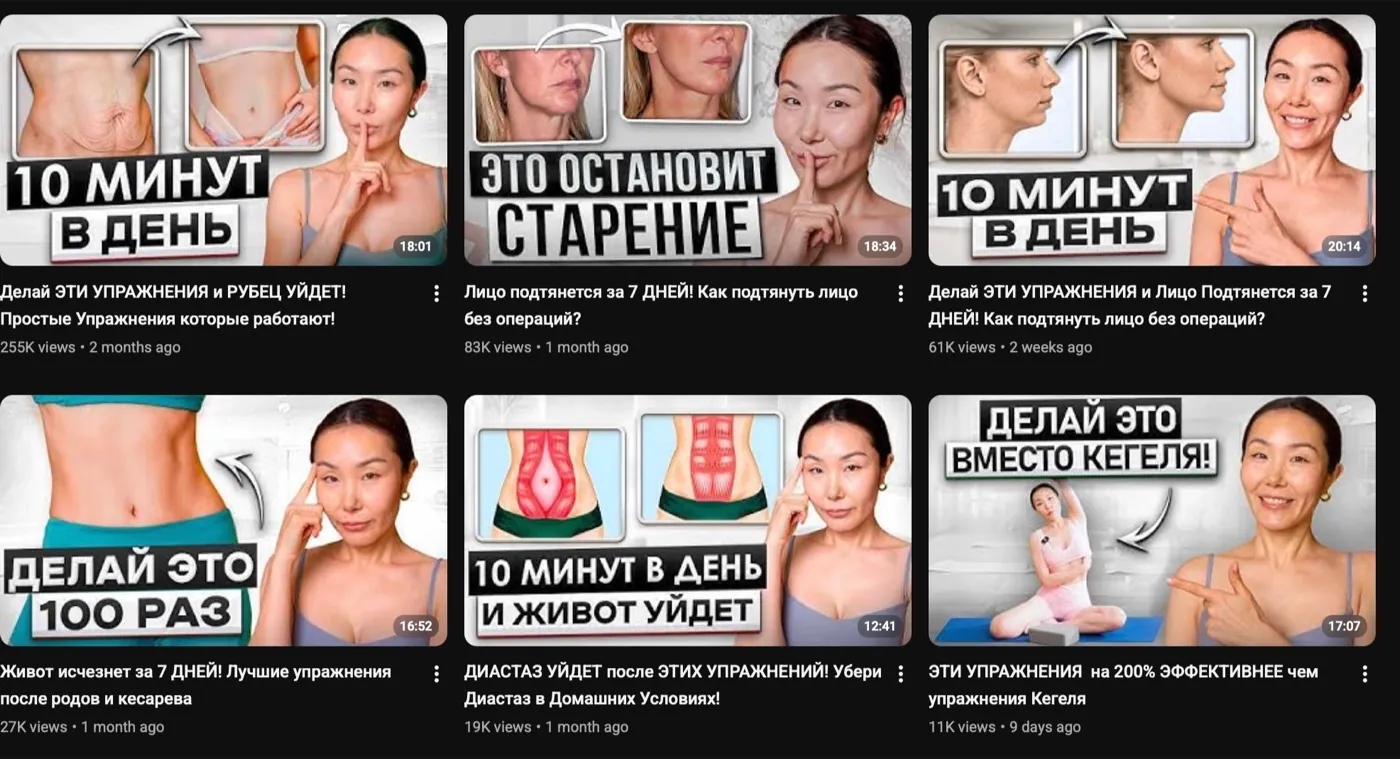
What we found: before and after, everywhere. And a few phrases that are super triggers in this health niche: “exercises”, a time frame like “10 minutes a day”, a promise like “face lifting in 7 days”.
So almost every thumbnail uses the same structure: before and after, a short phrase, the speaker. Super simple.
Filming: 2 hours, 4 long videos, 20 shorts
The beauty of our service: we do everything. Ayuna is an experienced speaker, so organizing the shoot was super simple. She does exercises on the floor, so a podcast studio wouldn't work. We rented a photo studio with a clean floor and good backdrops, and brought a filmmaker with all the gear. She changed outfits after two long videos.
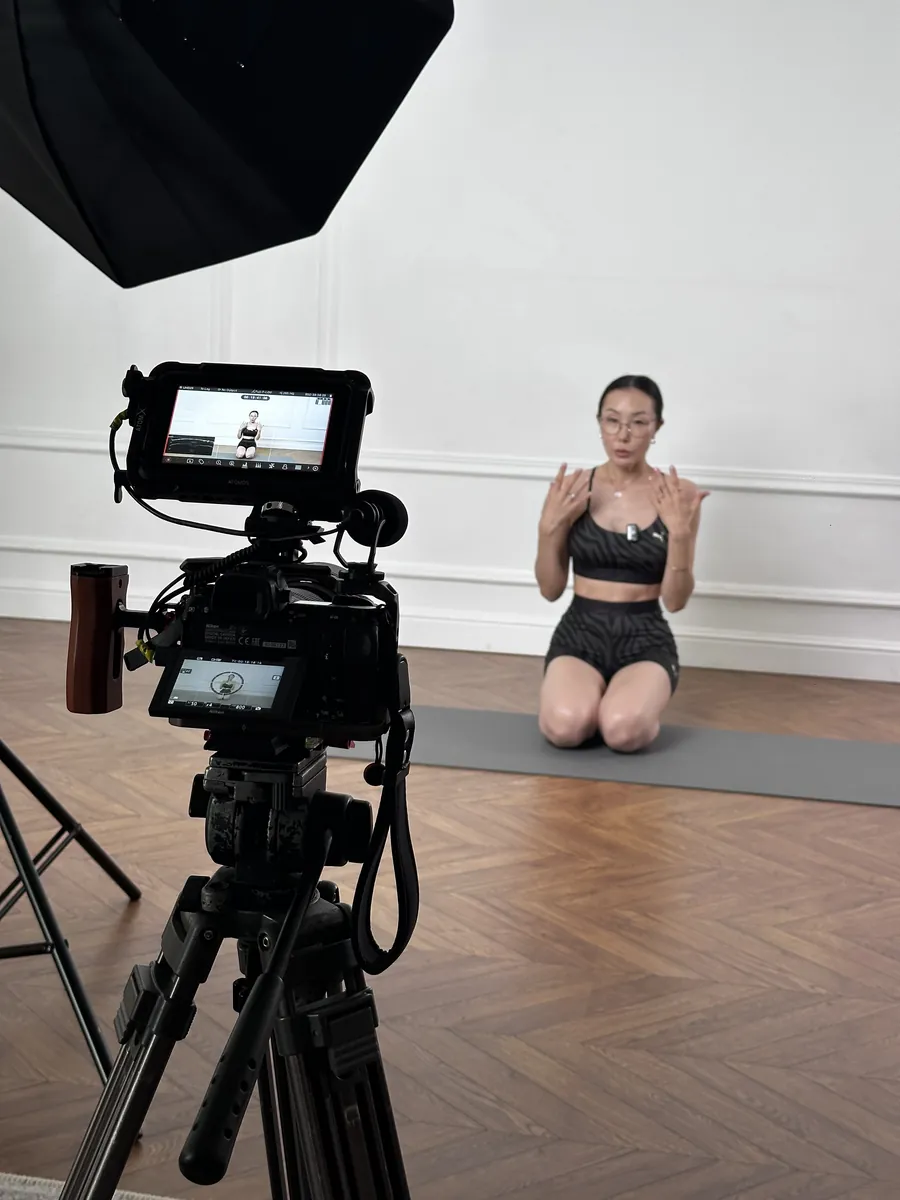
We prepared anchor scripts. She read one once before the session and recorded a 20-minute video in one take. And the first video we published became the best-performing video on the channel. That was mind-blowing.
Why clips from long videos beat her iPhone reels
Long videos are only part of the service. From every long video we clip a ton of short ones. On her Instagram you can see the difference between her iPhone reels and the clips from our shoots. Some clips got more views than her own reels, one almost 300,000. With zero extra filming time.
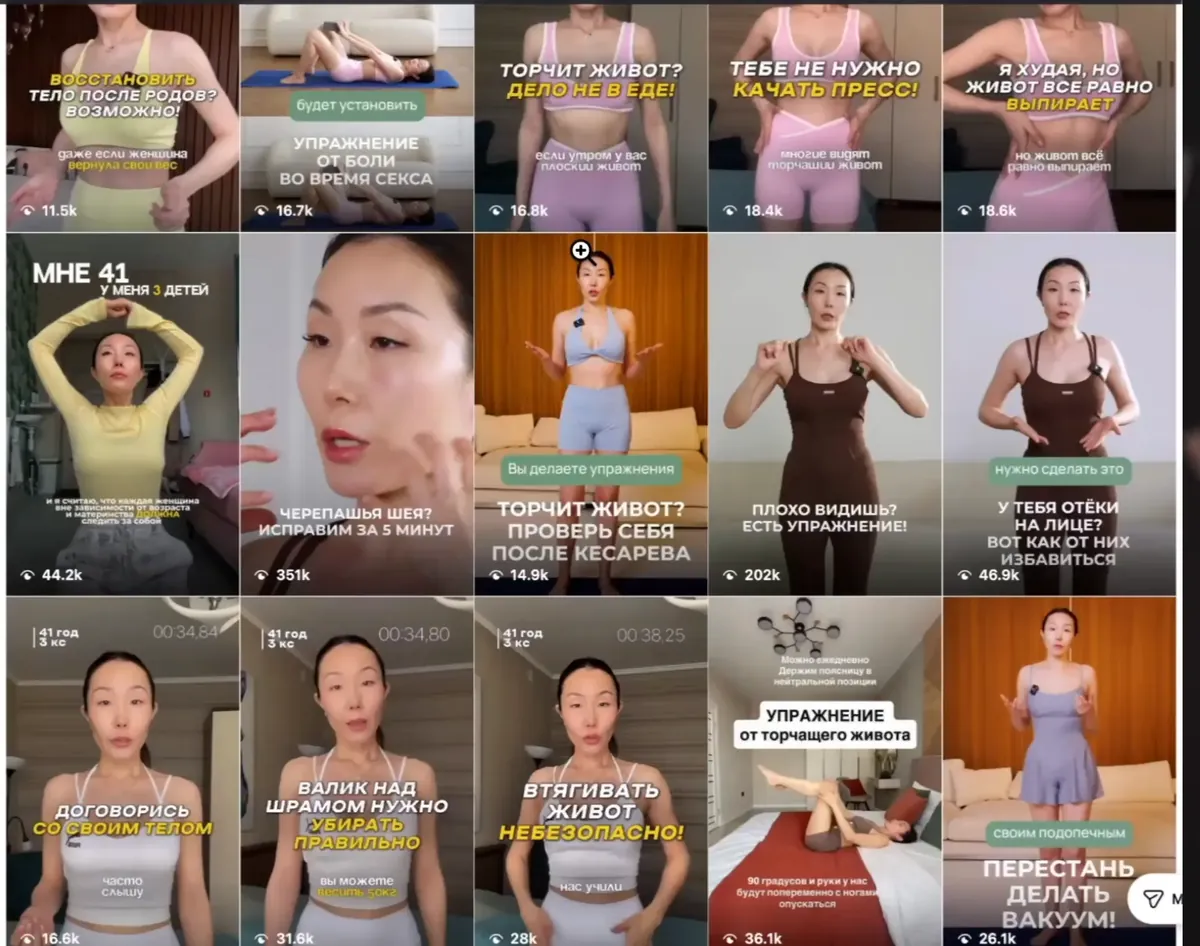
On YouTube Shorts it was different. The same clips got only 1,000–3,000 views. I honestly don't know why. But once the long videos took off, shorts started to move too: one went from about 1,500 views to 14,744, a 10x jump.
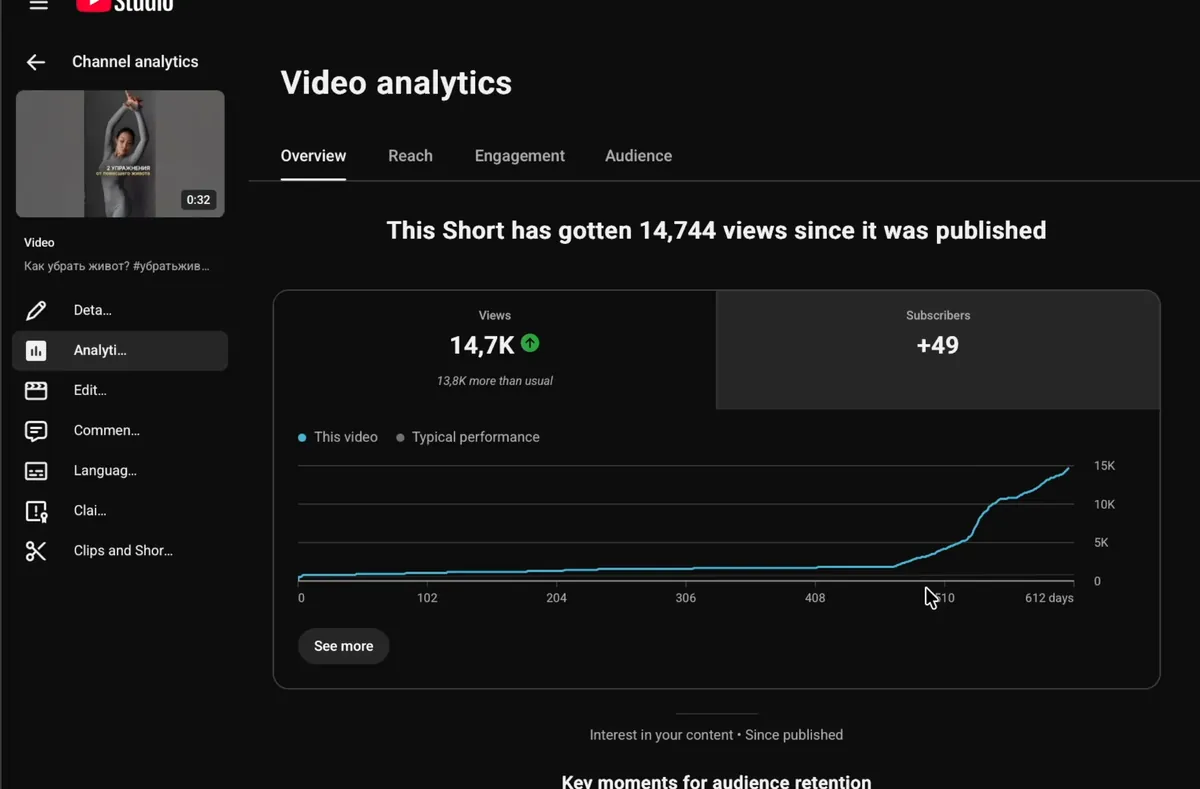
My theory: the long-form algorithm found her audience, and Instagram's short-form algorithm already knew it. YouTube's short-form algorithm hadn't found the right people yet. I think the breakthrough there is still coming.
Does this work for B2B?
These are the results to aim for with a B2C, low-ticket product, where reach matters. For B2B and high-ticket services, it's a completely different strategy: you need trust with a few hundred of the right people, not a million views. Here's our B2B case, where a franchise raised ~$5M with about 2,000 subscribers.
FAQ
How did Ayuna get 26,000 YouTube subscribers in 5 months?
With a done-for-you system: market research on about 20 channels in her niche, anchor scripts, one filming session a month in a photo studio, one packaging formula for every thumbnail, and shorts clipped from every long video. From May 1 to September 22, 2026 the channel got 1,055,545 views and +26,200 subscribers.
How much time did the client spend on YouTube?
About two hours of filming a month. From one session we made four long videos and about 20 short clips. Research, scripts, editing, thumbnails and publishing were done by our 7-person team.
Can you revive an abandoned YouTube channel?
Yes. Ayuna's channel had about 7,000 subscribers and old home-made videos. The first video we published became the top video on the channel, now about 290,000 views. A new strategy and packaging matter more than the channel's history.
What thumbnail formula worked in the health niche?
Before and after, a short phrase and the speaker. Titles with a clear time frame and promise worked best, like “10 minutes a day” or “in 7 days”. We found these triggers by studying the top videos of about 20 channels in the niche.
Why do market research before starting a YouTube channel?
To see which ideas already resonate with the audience and why. We combine three things: the speaker's experience, the target audience and the packaging triggers that work in the niche. You don't need to reinvent the wheel.
Do shorts clipped from long videos perform well?
Often better than phone-made reels. Some clips from Ayuna's long videos got close to 300,000 views on Instagram, more than her own iPhone reels, and they didn't need any extra filming.
Why did YouTube Shorts grow slower than long videos?
At first, Ayuna's YouTube Shorts got 1,000–3,000 views. After the long videos took off, one short grew from about 1,500 to 14,744 views. Our theory: the long-form algorithm found the audience first, and Shorts followed.
What was the funnel for this channel?
Shorts for audience building, long videos for education and trust, and a Telegram group with DM chatbots for sales. Ayuna sells a low-ticket subscription community, so the channel is built for volume.
Can a speaker record a 20-minute video in one take?
An experienced one can, with preparation. Ayuna read the anchor script once before the session and recorded a 20-minute video in one take.
Does this strategy work for B2B or high-ticket services?
Not as is. Ayuna sells a low-ticket B2C product, so reach matters. For B2B and high-ticket offers the goal is trust with a few hundred of the right people, which is a different strategy. See our Tvoy Sklad case.
Who is Ayuna?
Ayuna Babueva is an osteopath and beauty and health trainer. She teaches exercises for posture, the face and the body through Instagram, a Telegram community of about 13,000 people and her YouTube channel Ayuna PROzdorovye.
Founder of a done-for-you YouTube agency for high-ticket founders. Making content since 2014. More about me
Want a channel like this, without the heavy lifting?
Not a course, not a 30-day challenge, not an AI agent. A 7-person media team does everything from idea to publishing. You film one day a month. 7-day money back guarantee.
Book a call →