Agency vs In-House Content Team: What a Content Team Really Costs a Founder
There are three stages of content for a founder: do it yourself, hire, build a team. Here is what each costs, what breaks, and how to know which stage you're at.
 By Evgeny Maximov·10 min read·
What are the three stages of content for a founder?
There are three ways to do content as a founder. The first kills your time. The second kills your budget, or your nerves. The third only works at a certain size.
I've been through all three myself. I've been creating content since 2014, I've made more than 5,000 videos, and today I run a YouTube production agency. So let's break down DIY, hiring and a team, agency versus in-house, without a sales pitch.
Stage 1: why doesn't DIY content scale?
Video is not one task. It's twenty small ones: ideas, scripts, filming, editing, thumbnails, titles, SEO, comments, analytics, repurposing. For a blogger that's the job. For a founder it's the most expensive hobby in the company. DIY is fine for a test, but not as a system.
I lived this. Until summer 2025 I did everything myself, and I had great revenue months and burnout in the same months. I couldn't raise prices, because I had no capacity to make the service better.
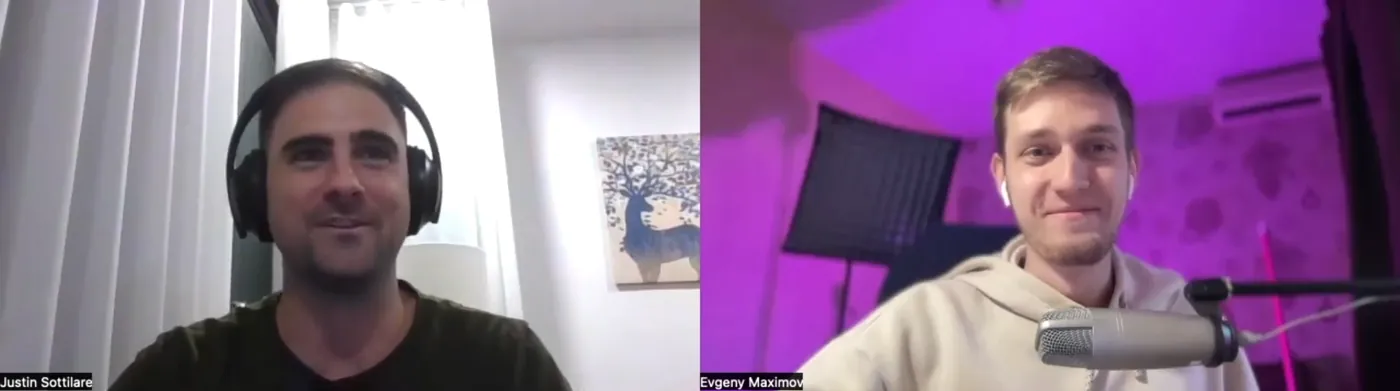
One of my clients, Justin, runs an American football academy. A twenty-minute video would take him a full week to edit. He's a football coach, not an editor. When I edited it, he had a draft in two days and the final in two more. Justin put the saved time into his courses and marketing. Read his story.
When DIY is okay: as a first test. A starter setup (phone, microphone, window light) can cost under $500, and a fuller home setup about $3,000. The best part of DIY is batching: before my first tanker contract in 2021 I filmed 14 YouTube videos in two weeks, and they kept coming out for four months while I was at sea. The worst part is gear. I once bought a pile of equipment and realized nobody needs it. A phone pays back faster.
Stage 2: should you hire a social media manager, an editor or a filmmaker?
Stage two is the most flexible: you or your marketing lead work with freelancers or one production partner. You don't have to post every day. But there are two classic mistakes.
Mistake one: you give YouTube to your social media manager. They already do LinkedIn, newsletters, reels and stories. “Mate, it's time to do YouTube” is how you burn them out. YouTube is a whole world of packaging, retention and SEO.
Mistake two: you hire a reels maker for long-form. It's a different game. Short-form makers usually don't know packaging, and the thumbnail and title often matter more than the content itself, because they're the first step of your funnel.
The fix: one filmmaker who really understands YouTube, a few part-time roles, or an agency. Where do you find them? Upwork, Fiverr, LinkedIn. Don't look for the cheapest. Taste and culture matter: you want someone who watches the same things you do.
Justin had two worries before hiring: money, and “will it be what I want?” Two 30-second style samples solved the second one before I edited the full video.
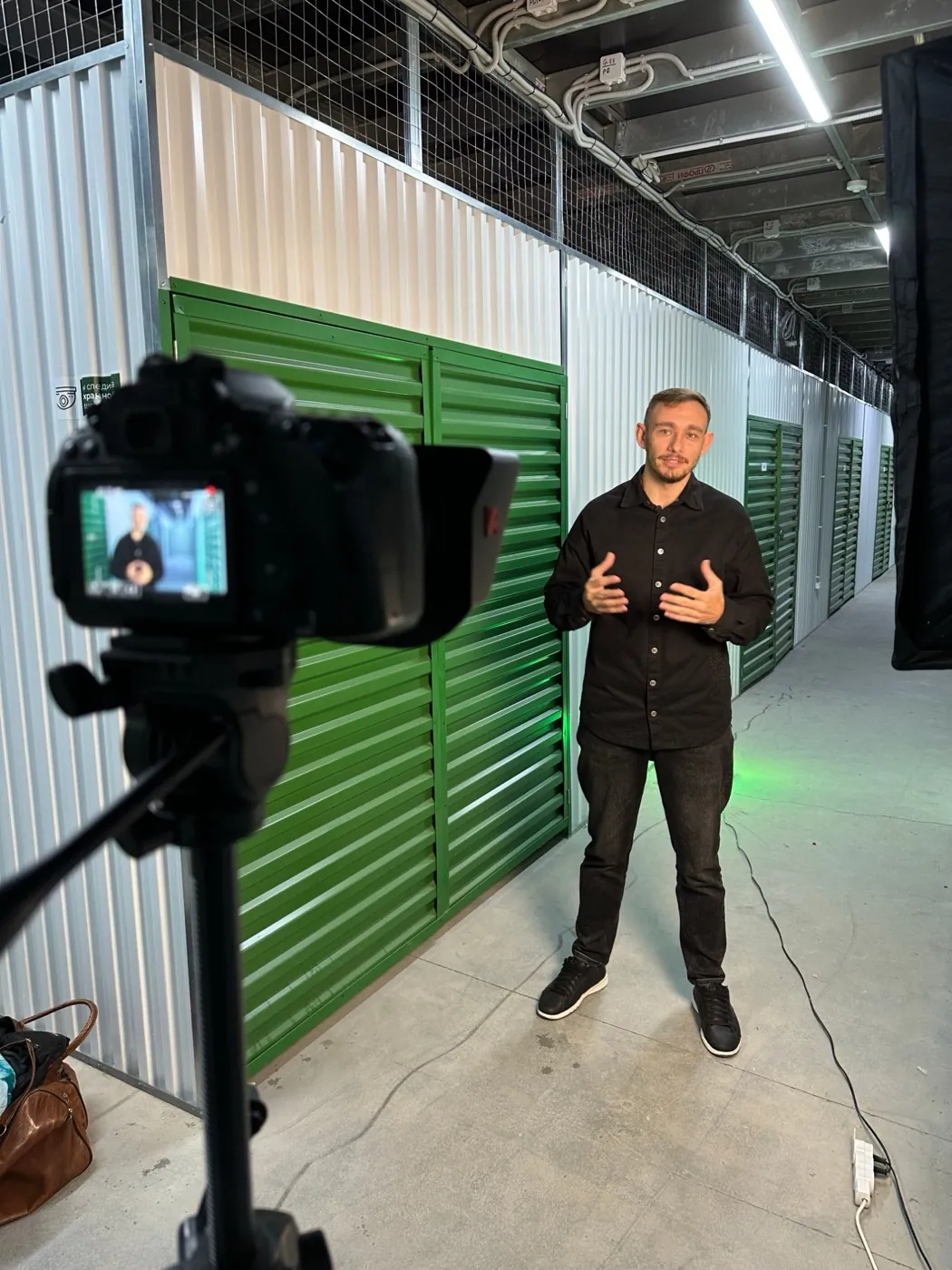
Since 2022 I've worked with Tvoy Sklad, and at the start I was basically the one part-time person who understood YouTube for them. Today there is a team and a system around that channel, and it helped the company raise about $5M. Here is that case.
Stage 3: agency vs in-house, what does a content team really cost?
At stage three content is not “a task in marketing”. It's a separate team with its own lead: a creative producer, editors, a designer, someone who publishes and checks quality. Content and marketing are two different games.
| Option | Typical market cost | What you manage | What breaks |
|---|---|---|---|
| DIY | under $500 to $3,000 for gear, plus your time | everything | your time and energy |
| Freelance editor | about $100–250 per long video | briefs, review, strategy | nobody owns the result |
| Done-for-you agency | about $3,000–10,000 a month | filming day and final review | conveyor agencies share one team across many clients |
| In-house team | about $15,000–25,000 a month for roughly four people (US: closer to $30,000 a month, or $360,000 a year) | hiring, management, tools | hiring mistakes, idle people, no one to lead |
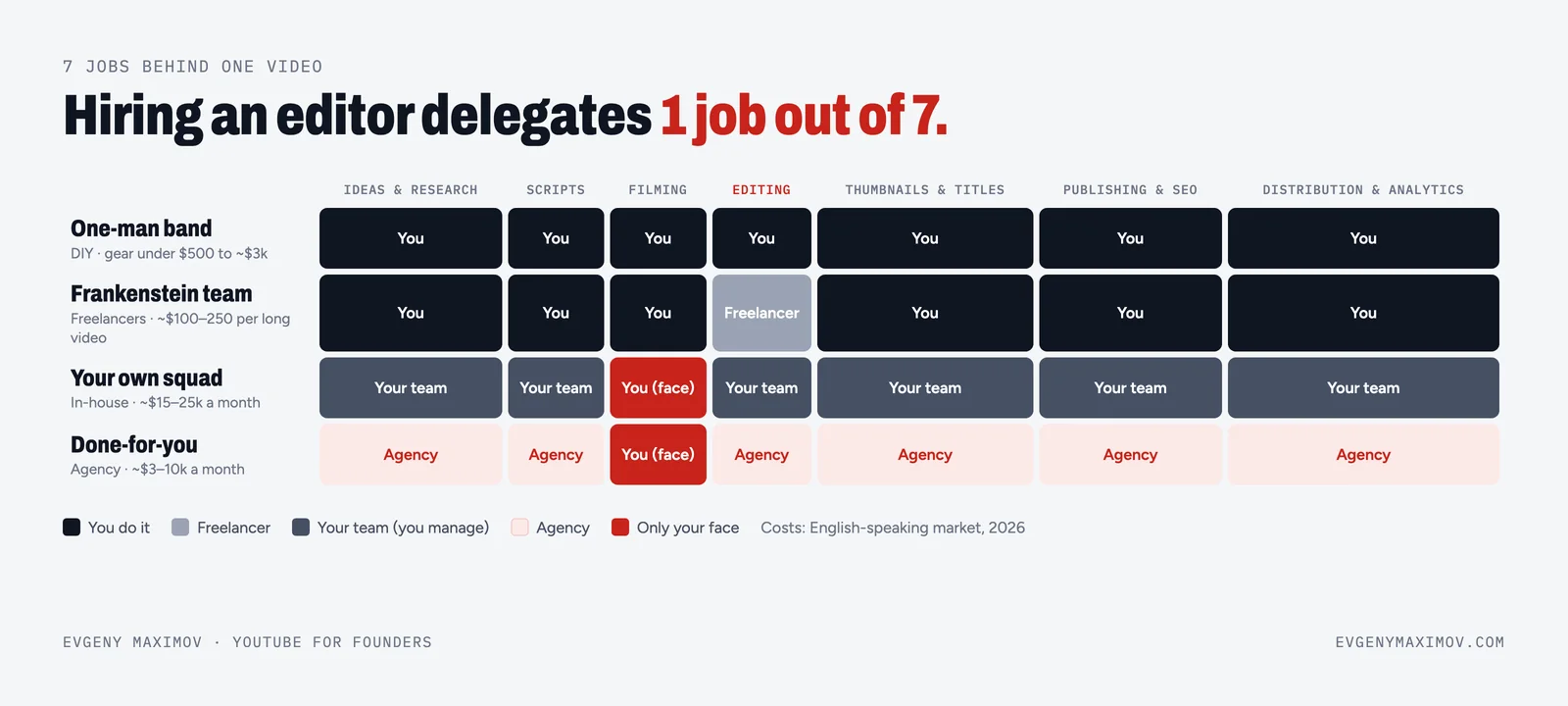
Why are editors the most expensive part? Editing is about half of production cost, and editors are the best-paid people in my own team. Editing is the product. When editing is cheap, you see it on screen.
Either way, you need a system, not heroes. In my team we track each video from idea to published on one board: research, script, filming, editing, publishing, done. And how much does the client spend? About 14 hours a month, mostly one filming day.
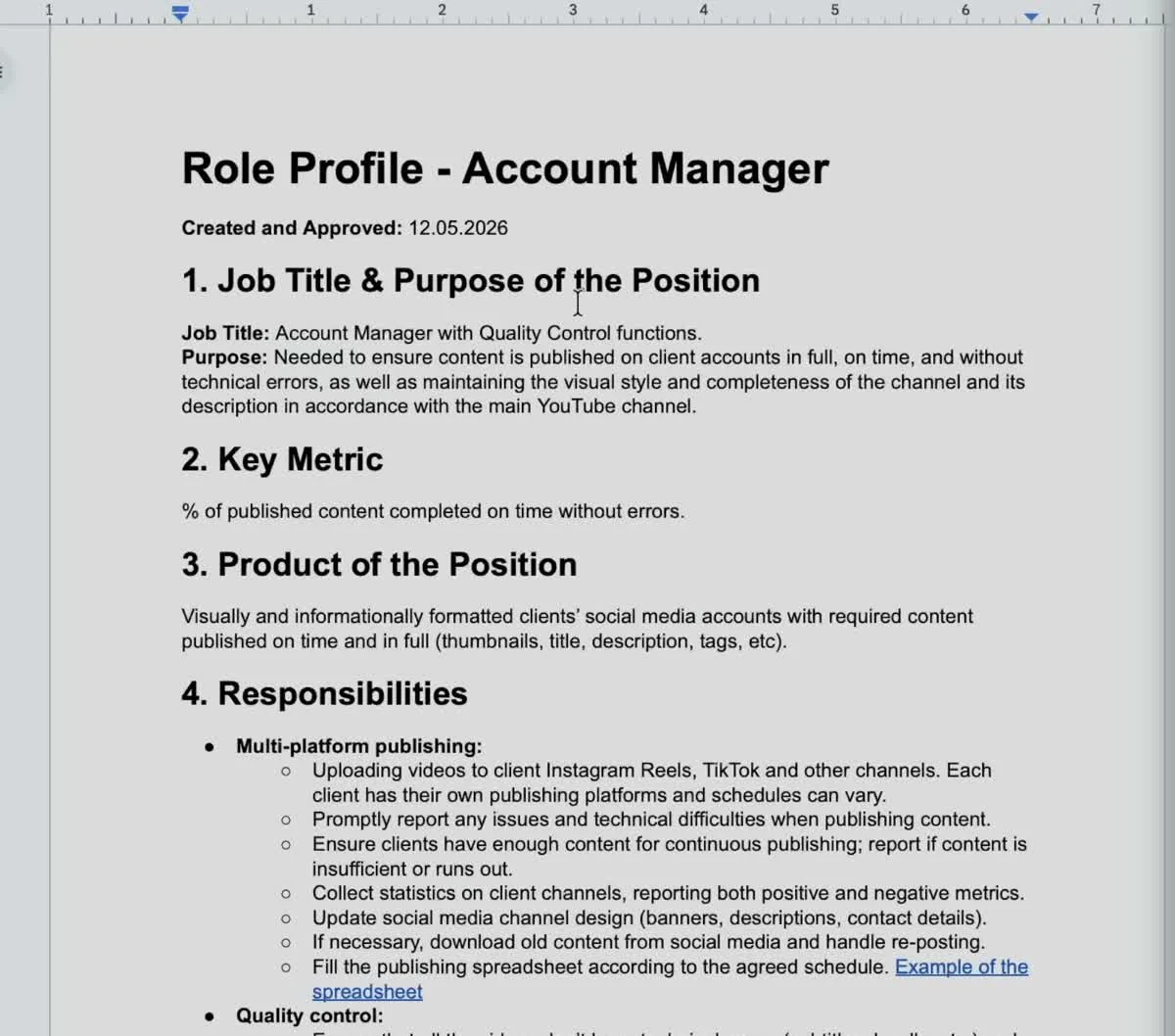
If you build in-house, hire an account manager first. They protect quality and keep the whole pipeline moving. Here is what that job looks like on paper, and why I'd hire it first.
How do you pick your stage?
Stage isn't about ambition. It's about numbers. Use this table:
| Your situation | Stage | Next step |
|---|---|---|
| Testing if video works for you | 1 or 2 | Phone, microphone, a part-time editor |
| Posting weekly and it already brings clients | 3 | Add a team so the founder stops being the bottleneck |
| Need content every day and can hire a creative lead | 3, in-house | Hire a producer or account manager first |
| Want one filming day a month and no hiring | 3, agency | Pick a partner and start filming |
Three questions help me find a founder's stage on a call: do you watch YouTube, how often do you want to post, and who will manage it?
Why is stopping the channel worse than stopping ads? When you stop ads, the leads stop the same day. When you stop a channel, you lose the snowball: the library keeps working only if you keep adding to it.
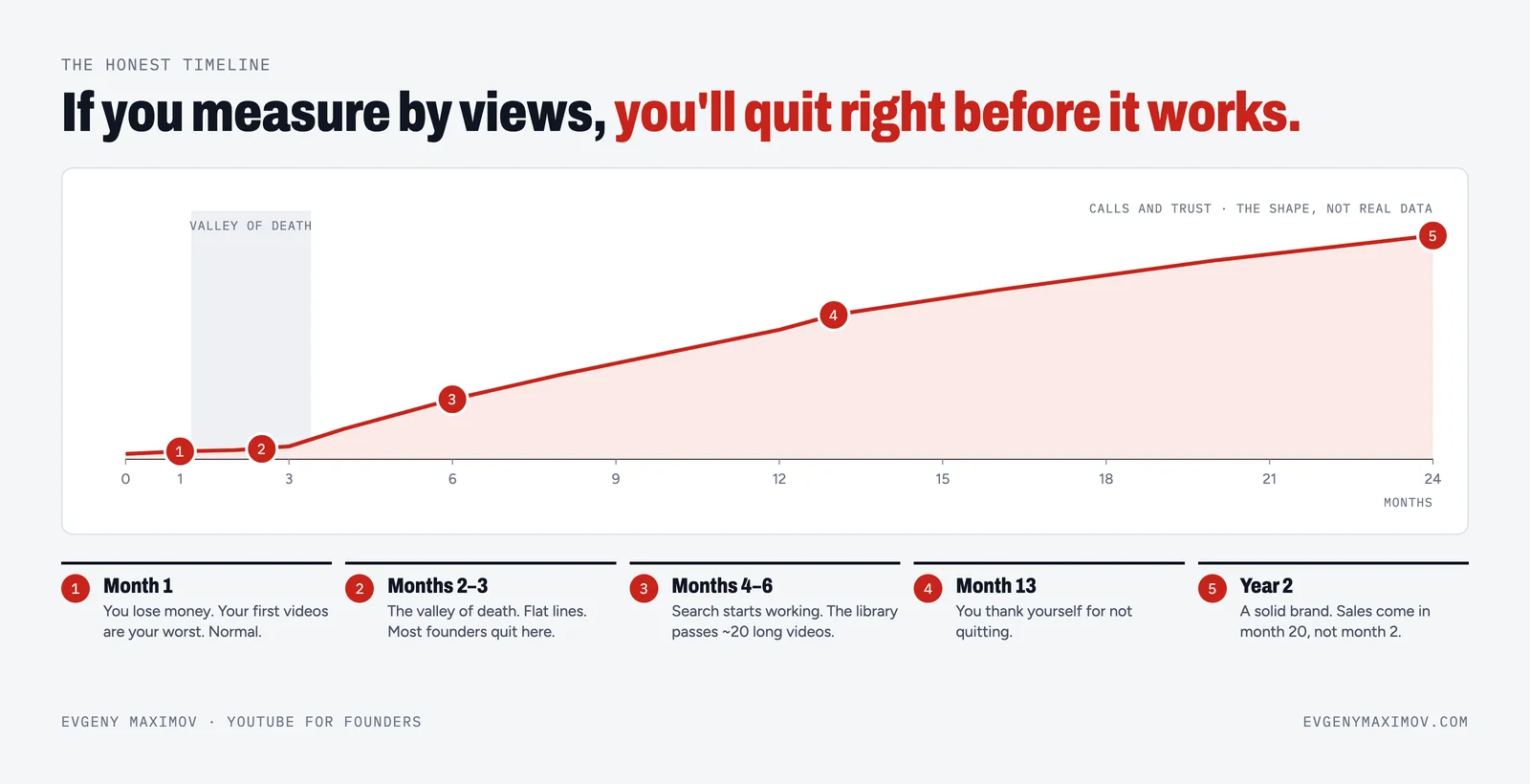
And the typical jump that fails is going from stage one straight to a big studio and a big camera. Start simple: a phone, a microphone and one quarter of consistent work.
So which stage is right for you?
DIY to test. Hire to get flexible. A team to scale. The only wrong move is staying at stage one because it looks cheaper. Your time is the most expensive thing in the company.
If you're building your own team, take the role profile above. If you want stage three without hiring anyone, that's what we do: you film one day a month and the team does the rest.
FAQ
What does an in-house content team cost compared with an agency?
As a market guide, an in-house team of about four people costs roughly $15,000 to $25,000 a month in salaries, and closer to $30,000 a month (about $360,000 a year) in the US. A done-for-you YouTube agency typically costs about $3,000 to $10,000 a month, and a freelance video editor about $100 to $250 per long video.
What are the three stages of content for a founder?
Stage one is doing it yourself (DIY). Stage two is hiring someone: freelancers, one filmmaker or a part-time partner. Stage three is a team with its own lead, either in-house or an agency. The right stage depends on your volume, budget and time, not on ambition.
Is DIY content okay for a founder?
Yes, as a test, not as a system. Video is about twenty small tasks, from ideas and scripts to editing, thumbnails, SEO and analytics. A starter setup can cost under $500 (phone, microphone, light), and a fuller home setup about $3,000.
Should I give YouTube to my social media manager?
Usually not. A social media manager who already runs LinkedIn, newsletters, reels and stories will burn out, and YouTube is a different world with packaging, retention and SEO. Hire a filmmaker who understands YouTube, a few part-time roles, or an agency.
Can a reels maker do long-form YouTube videos?
Usually not well. Long videos are a different game, and short-form makers often miss packaging: the thumbnail and title can matter more than the content itself, because they are the first step of your funnel.
Who should I hire first for content?
If you build in-house, hire around your bottleneck, and consider a producer or content lead before an editor. For the quality side, an account manager is a strong first hire. Evgeny Maximov explains why in his article on the account manager hire.
Why are video editors the most expensive part of a content team?
Editing is about half of production cost, and good editors are the best-paid people in Evgeny Maximov's team. Editing is the product, so cheap editing shows up directly in the result.
When should I choose an agency instead of building in-house?
Choose an agency if you want one filming day a month and no hiring. Build in-house if you need content every day and can hire a creative lead. Either way you need a system, not heroes.
What is the worst jump a founder can make in content?
Going from stage one straight to a big studio and a big camera. Start simple: a phone, a microphone and one quarter of consistent work, then decide whether to build or rent a team.
Why is stopping a channel worse than stopping ads?
When you stop ads, leads stop the same day. When you stop a channel, you lose the snowball: the library keeps working only if you keep adding to it.
Founder of a done-for-you YouTube agency for high-ticket founders. Making content since 2014. More about me
Want stage three without hiring anyone?
You film one day a month, and a ready team does the rest. I take the call myself and tell you honestly which stage fits you. 7-day money back guarantee.
Book a call →