YouTube Team Training: We Teach Your People How to Run It In-House
Prefer to keep production in-house? We train your editor, marketer or assistant on the system we use for our own clients, so your team stops reinventing it and the founder stops being the bottleneck.
 By Evgeny Maximov·9 min read·
Why do in-house teams stall?
Most founders hire one person and expect a result. The person doesn't know who approves what, which version is final, or why the video was delayed. The founder becomes the bottleneck: every question goes to them, in private messages. The team doesn't need more skills. It needs a system, and the system has to be written down.
This is the system we use for clients every day: a producer in the center, clear roles, a board where every video has a status and an owner, and a short weekly meeting. We teach it to your people.
What does the training cover?
| Block | What your team learns |
|---|---|
| Roles | Who does what: producer, editors, designer, account manager, assistant, and which of these you need now |
| Pipeline | From topic and content plan to filming, editing, review and publishing, with an owner at each step |
| Scripts | The script structure, and how to get a script out of an expert's voice notes and past videos |
| Briefs and feedback | What to give an editor and a thumbnail designer, and how to give feedback without directing the edit |
| Quality | An internal check before the founder or client sees a video |
| Publishing | Titles, descriptions, chapters, settings, Shorts and cross-posting |
| Meetings and communication | A weekly rhythm and public communication instead of private messages |
| Tracking | Which videos bring calls and clients, not only views |
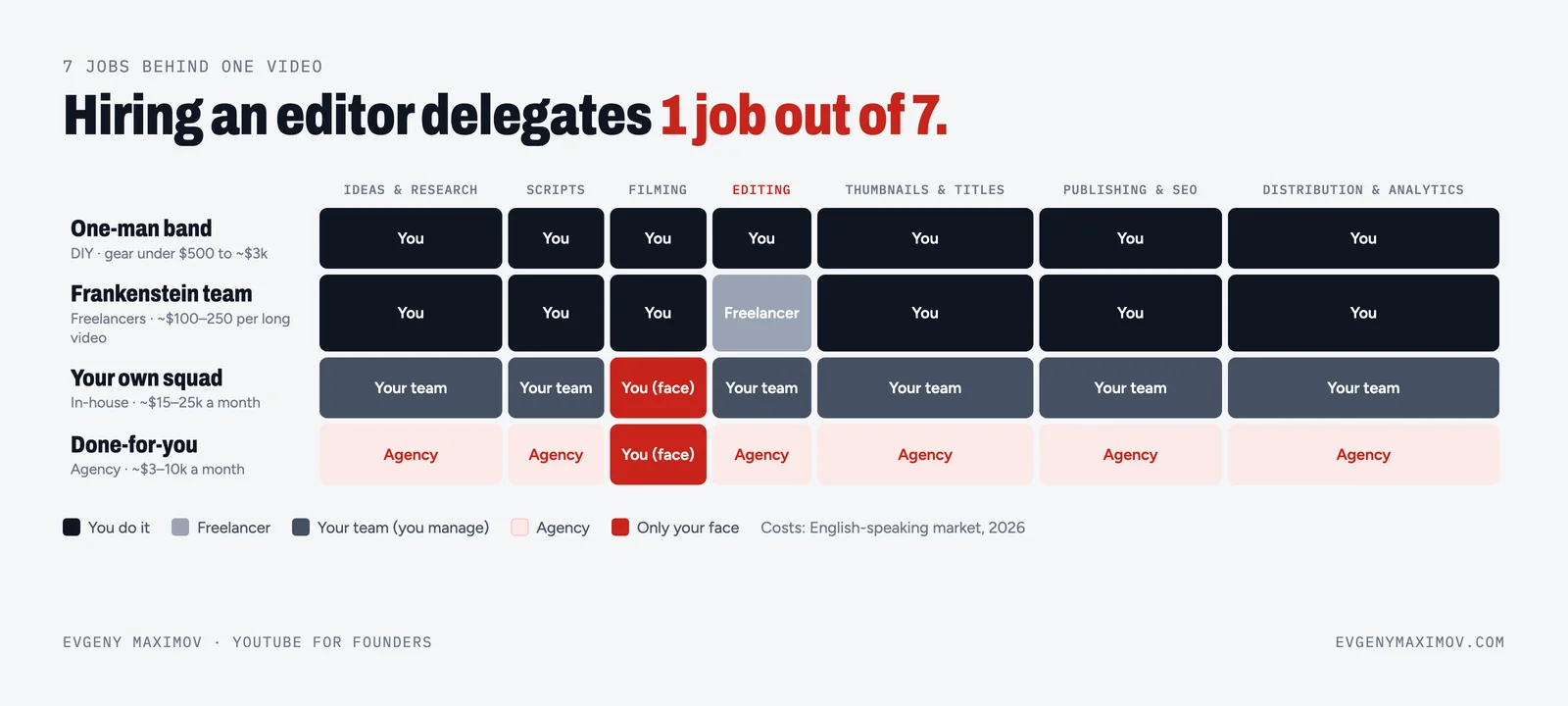
Who is in the team?
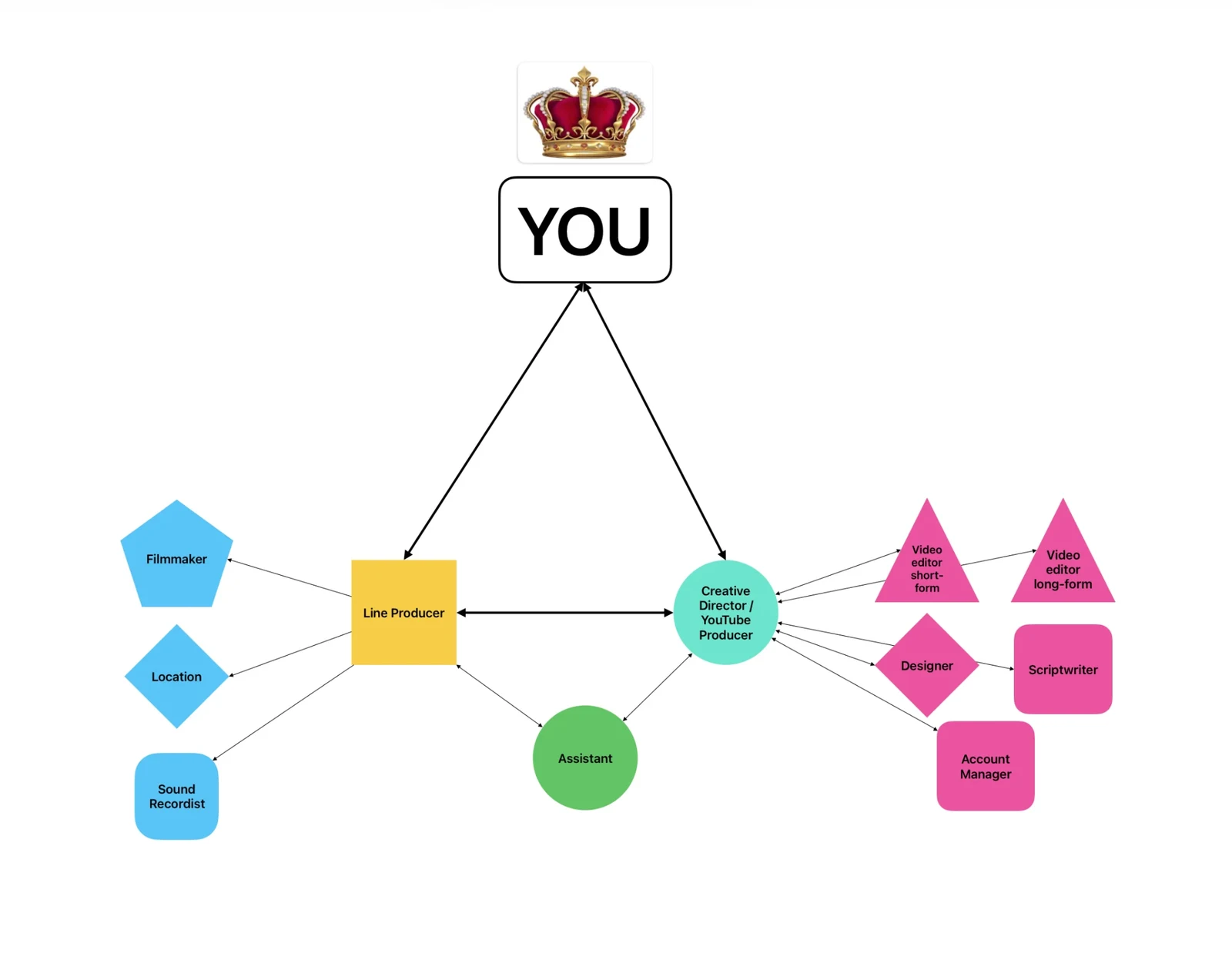
In our production, you sit on top and talk to two people: the YouTube producer and the line producer. The producer owns the strategy, the scripts, the briefs and the review, and works with the editors for long videos and Shorts, a designer, a scriptwriter and an account manager for publishing and quality control. The line producer handles logistics on shoots: the filmmaker, the location and the sound recordist. A business assistant keeps statuses and deadlines in order. You rarely need all of them at the start, and we tell you who to hire first.
How does a team work without the founder managing every step?
Three things: one chat space with a topic for each role, a fixed meeting rhythm, and one board. In our own agency we use Telegram groups with topics (one group per client, a topic per workflow), and we don't create 30 topics: a topic makes sense when a specific person owns it. The rule that matters most is that communication happens in public. When the founder sees the team discussing a video in its topic, they know the work is moving without pinging anyone.
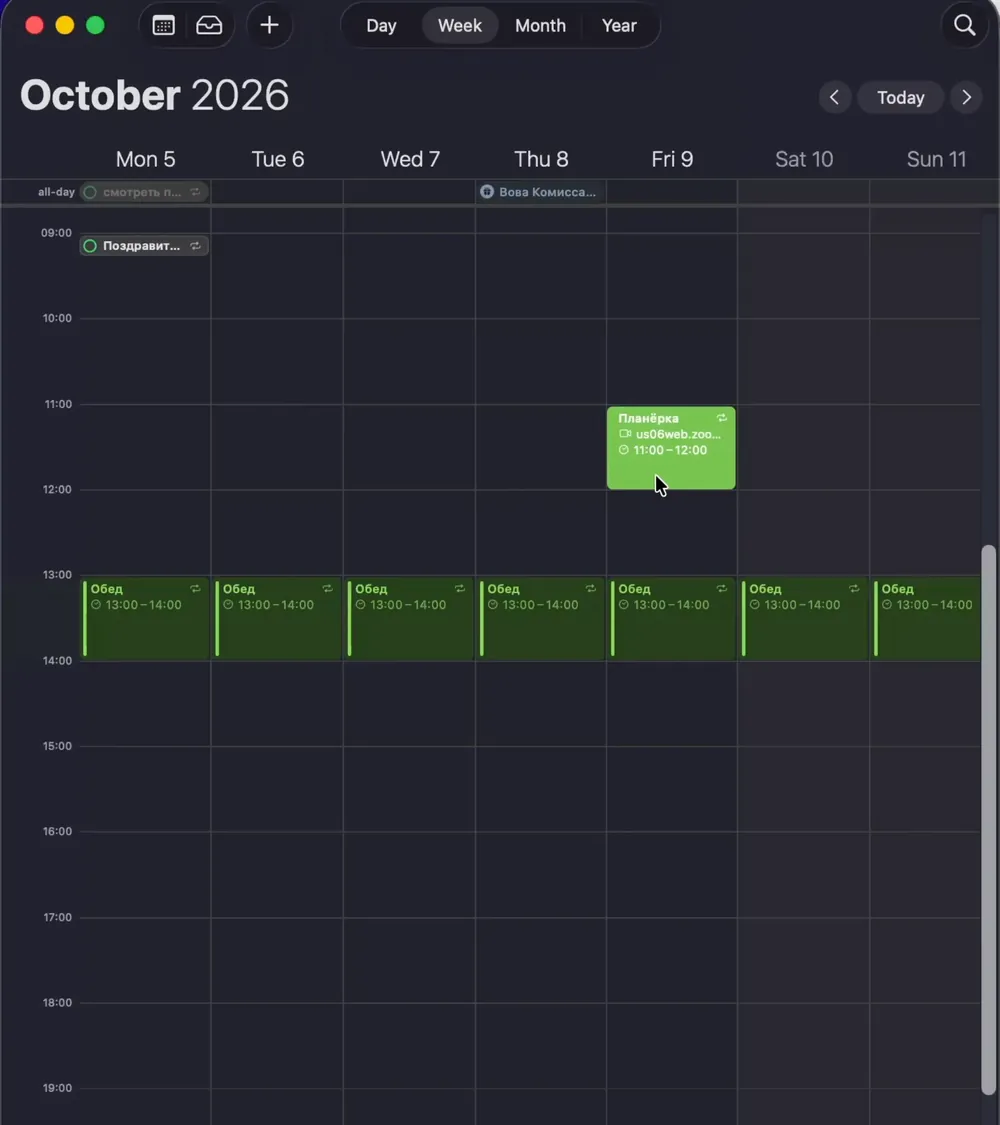
The meetings are short. Five calls a month: four on Fridays of 20 to 40 minutes, and one two-hour strategy session at the start of the month to improve the system instead of the videos. People leave the call as soon as they have reported. Easy updates go first, hard problems last.
How do you give people clear roles?
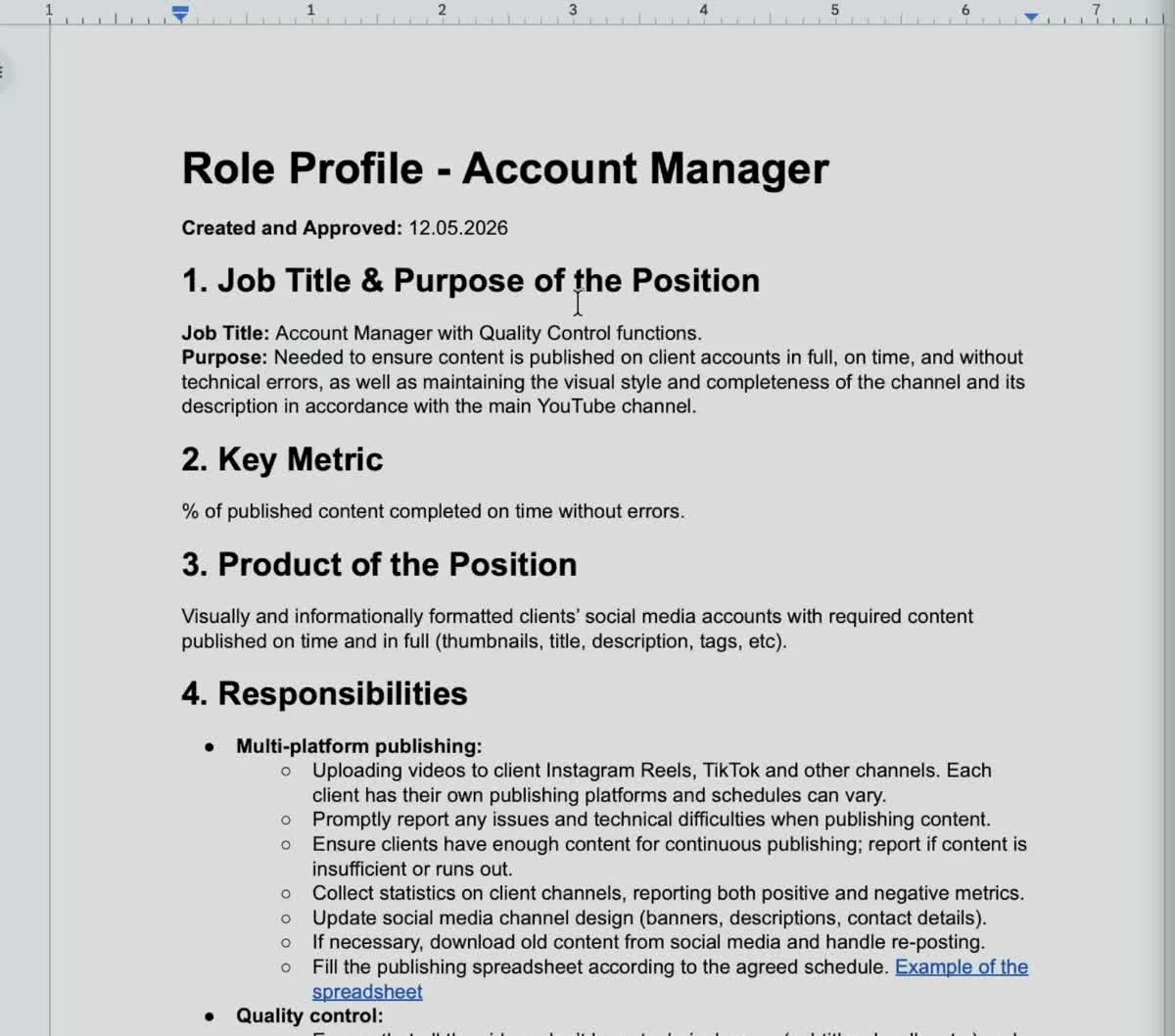
Every role gets a one-page profile: the purpose, one key metric and the list of responsibilities. It stops arguments about who should have done what. Here is an example for an account manager who also runs quality control.
Can you help me hire?
Yes. Editing is about half the cost of a video, so a bad hire hurts. We share the filters we use: language, editing software and a portfolio link, then a portfolio check for a similar format, then a paid one-week test: a rough cut of about three minutes with graphics, one or two Shorts, and a screen recording where the editor explains their choices. A recommendation is not a filter. Everyone takes the same test. More in how to hire a YouTube editor.
What do you leave with?
- A team that knows its roles and one key metric each.
- A written pipeline with an owner at every step.
- A brief format for editors and designers, and a way to review their work.
- A weekly rhythm, and a monthly session to fix the system.
- A hiring process with a paid test.
Pair the training with a systems setup so the board and the channel are built before your team starts, or with coaching if you want someone to review how it goes. Compare the two routes honestly in agency vs in-house content team.
FAQ
Who is the training for?
Founders who already have an in-house person, or are about to hire one: an editor, a marketer, a producer or a business assistant. We train them on how our agency runs YouTube.
Do you teach production from scratch?
No. This is not a course for beginners. We help a team that already exists to work better: who owns what, how a video moves from idea to publication, and how to give feedback without chaos.
What do you teach?
Roles and responsibilities, the pipeline from topic to publication, the content plan, how to write a script from an expert's ideas, how to brief an editor and a thumbnail designer, quality control, publishing settings and tracking.
What format is it?
Live sessions with your team on a call, plus checklists and templates for your scope. The exact format and length are agreed on a call. One-off work starts from $500.
Can you help me hire and test an editor?
Yes. We share the vacancy filters, the portfolio checks and the paid one-week test that we use ourselves.
What does a minimum team look like?
In our own production, one client usually has a producer, an editor, a Shorts editor, a designer and an account manager, plus a filmmaker on shoots. We tell you which roles you need now and which can wait.
Can you train a person who is not a video specialist, like an assistant?
Yes. A business assistant can run the board, the publishing checklist and the meetings. A producer owns strategy and creative. We help you split the roles.
Do you manage my team afterwards?
Not by default. After the training you run it. You can add coaching calls, a systems setup or the full done-for-you service later.
Do you share your templates?
We share the working materials your scope needs: a script structure, brief formats, a role profile and checklists. We agree the list on the call.
Founder of a done-for-you YouTube agency for high-ticket founders. Making content since 2014. More about me
Want your team to run YouTube themselves?
Book a call. Before we talk, I review your channel and socials, so you get value even if we don't work together. 7-day money back guarantee.
Book a call →