How a LinkedIn Writer Recorded His First Videos in One Session (and Stopped Fearing the Camera)
Norbert Benedekffy knew he should post videos. He just couldn't get from “I should” to “it's recorded”. Here's what changed in less than a month.
 By Evgeny Maximov·7 min read·
A strong personal brand on LinkedIn built on text. He tried video before, but never stuck with it.
Helped with topics and scripts, set up his camera on a call, directed the first session, then edited and delivered in 2–3 days.
In less than a month, a set of short videos he's proud of, and the confidence to record more, including long-form.
Knowing you should post videos is not the problem
YouTube and video in general can be scary. Not because the camera bites. Because there are so many actions between “I should post videos” and a video that's actually live.
Norbert builds email systems for coaches and founders. He has a real audience on LinkedIn, all built with text and pictures. He knew video would help. He had even tried it: recorded a video, edited it in CapCut, posted it on LinkedIn. And then he stopped.
“Knowing that you should post a video and knowing how to actually do all these steps, it's like two completely different worlds.”
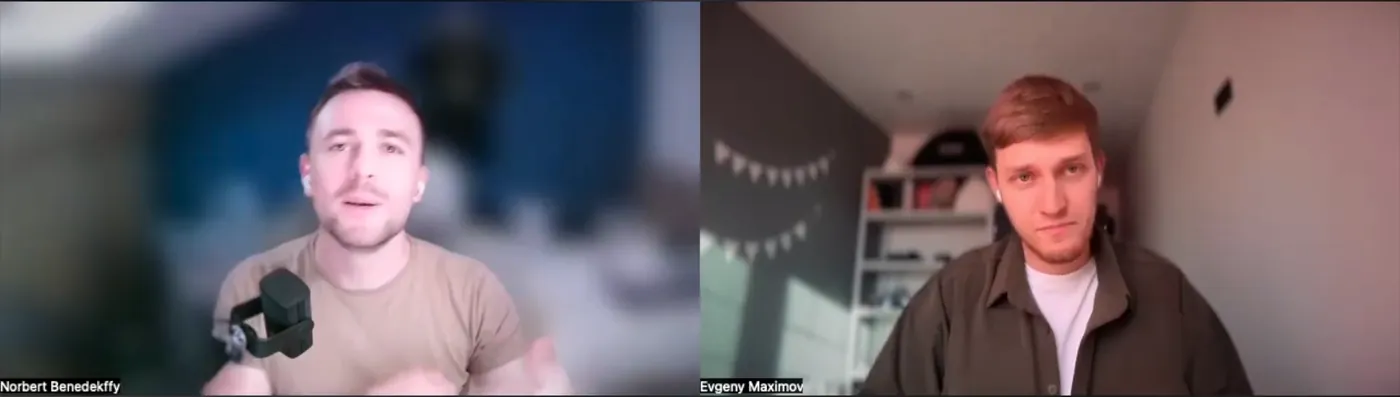
From my intro to the interview with Norbert
Why it's so hard to start making videos
Norbert explained it better than I could. He said: when you decide to post videos, you're here, and posting is there. And between them there are about seven steps. Topics. Script. Camera. Light. Sound. Recording. Editing. Publishing.
His example: you weigh 50 kilograms and decide to build 20 kilograms of muscle. You have zero right now. So the first goal can't be “20 kilograms”. It's “go to the gym today”. With video, the first goal is 30 seconds of footage. Or just talking to the camera.
That's what changed for him. Not motivation. The steps. “This is just one step from where I am. OK, I checked that. What's next?”
Why we chose small steps over big goals
Norbert had other offers. People offered to edit his videos, some even for free. Their message was: “You record, send it over, I'll do the rest.” That's exactly the part he couldn't do alone.
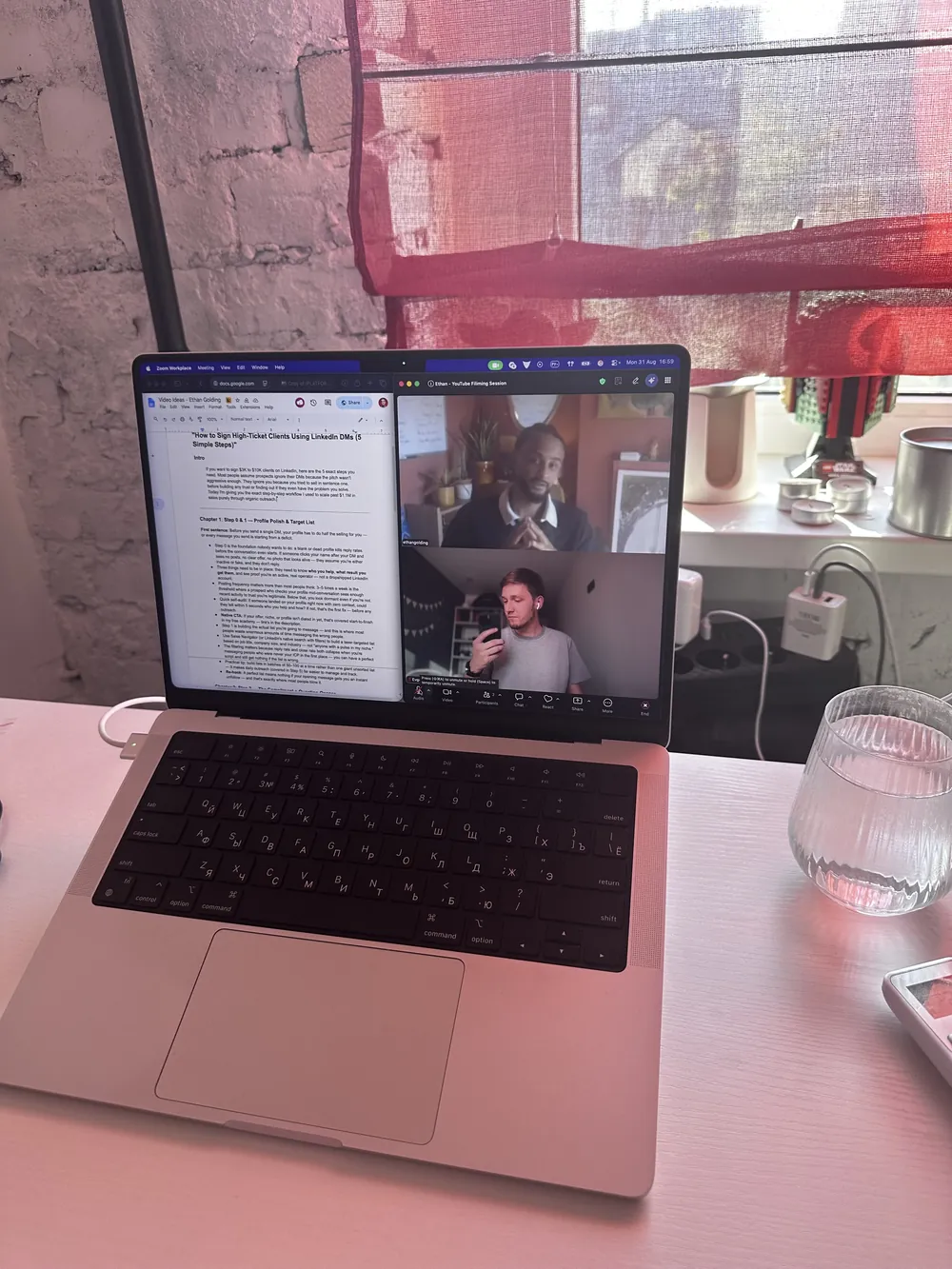
So we started from the beginning. Topics. How to form his ideas so they fit video. I joined a call and showed him how to set up his camera. And when he watched his footage and felt “that's not really me”, I told him the truth: it is you, the emotions come through, it's OK.
Writer, actor, director: the three roles that slow you down
This was Norbert's biggest “holy crap” moment. In our first session he had one script ready and the goal was three videos. The first video took about 20 minutes to record. We kept stopping. He wanted to fix phrases while talking. I was pulling him back.
Then it clicked. When you record alone, you're the writer, the actor and the director at the same time. That's why it's slow and painful. So we split the roles.
Every take stops halfway. The first video took about 20 minutes to record.
The next two videos took about 9 minutes each.
| Video in the session | Time to record |
|---|---|
| Video 1 · all roles at once | about 20 minutes |
| Video 2 · roles split | about 9 minutes |
| Video 3 · roles split | just under 9 minutes |
He cut his time in half, and the videos got better. Norbert called it two weeks of improvement in one hour.
Don't polish the script. Say it in your own words
I watched Norbert overcomplicate things. He'd spend time on a specific phrase, and then not use it while recording. He used his own words instead, and they were better.
He compared it to the gym. When he has a program written at home, he just executes. When he doesn't, he wastes time between sets thinking about the next exercise. Recording is the same. Prepare the thinking before. On camera, just execute.
The freestyle videos became his favorites
Part of the session was freestyle. Norbert recorded it just to talk and experiment. He didn't expect anything from it.
We picked parts out of those freestyle takes, and they became his favorite videos from the whole set. That's the job he actually wanted to delegate. Not “cut from second 20 to second 40”. Someone with taste, who sees what's good when you're too close to your own content.
“Editing, everyone can edit a video nowadays. What impressed me was the ability to spot things, to pick them out and leave them in.”
Norbert Benedekffy, founder of Alpha Vision
Who is the bottleneck?
I asked about delivery speed. Norbert laughed. He was sitting there “waiting” for videos, then got a message from us asking for something, and realized: “Oh, it's my turn.” Our delivery was 2 to 3 days. He couldn't record as fast as we could edit.
That's normal, by the way. With almost every client, the bottleneck is the person on camera, not the team. That's why we ask for one filming day a month, not one every week.
What Norbert recommends to other founders
His advice was simple. If you don't want to spend 6 or 12 months piecing together random advice, get people who have done it. In two or three weeks you can go from posting nothing to having videos you're proud of.
And his measure of success for the first videos? Not views. It's like photos. You take pictures on your own and think you look bad. Then someone says “stand like this, turn your head”, and you like how you look. First, make videos you're proud to post. The results come after.
Next for him: post the short videos on LinkedIn next to his text posts, record more short-form, and then move to long-form. With video, people get his words, his voice and his face. In his words, the more time potential clients spend with you, the higher the chance they buy from you.
FAQ
How do I record my first video if I'm afraid of the camera?
Make the first step tiny: 30 seconds of footage, not a finished video. Then split the job into roles: write the script first, record it without judging, and review it only after. Norbert Benedekffy used this approach and recorded three videos in one session.
Why is it so hard to start making videos for my business?
Because “post videos” hides many steps: topics, script, camera, light, sound, recording, editing and publishing. Norbert described it as about seven steps between where he was and a posted video. When you see only the goal, it feels too far away to start.
How long does it take to get comfortable on camera?
Less time than most people think. Norbert's first video took about 20 minutes to record, the next two took about 9 minutes each. That's why we say one filming session can give you the progress of weeks of practice alone.
Should I read a script word for word on camera?
No. Use the script to know what to say, then say it in your own words. Norbert spent time polishing exact phrases and then didn't use them while recording. Your brain can't act and edit text at the same time.
What are the three roles in making a video?
Writer, actor and director. The writer prepares the script, the actor records it without stopping to fix things, and the director reviews it afterwards. When one person does all three at once, recording slows down and the result gets worse.
Do freestyle videos work, or do I always need a script?
Freestyle can work very well if someone with a good eye edits it. Norbert recorded some freestyle videos just to experiment, and the clips we picked from them became his favorite videos from the whole set.
What's the difference between a video editor and a video team?
An editor cuts what you tell them to cut. A team helps with topics, scripts, camera setup and picks the best moments without you pointing at each second. Norbert had free editing offers and chose the team because it helped with the whole process.
How fast can a team deliver edited videos?
In Norbert's case, about 2 to 3 days. He said the real bottleneck was him: the team could deliver faster than he could record.
Should I start with short-form or long-form video?
If you've never been on camera, start with short videos. Norbert planned long-form first, then realized he needed more short-form practice before the jump. It's like training: you don't start with the heaviest weight.
Why should a LinkedIn creator add video?
Text only gives people your words. Video adds your voice and your face, so people get to know you faster. Norbert's view: the more time potential clients spend with you, the higher the chance they buy from you.
Who is Norbert Benedekffy?
Norbert Benedekffy is the founder of Alpha Vision, which builds email systems for coaches and founders. He grew his personal brand on LinkedIn with text posts before adding video.
Founder of a done-for-you YouTube agency for high-ticket founders. Making content since 2014. More about me
Want to skip the six months of trial and error?
You show up on camera one day a month. We help with topics, scripts and setup, then do the editing and publishing. 7-day money back guarantee.
Book a call →