Why One Person Can't Run a YouTube Channel: The 7-Person Team Behind Every Client
Regular Joe makes videos alone and gets a few hundred views. Ayuna films two hours a month and gets millions. The difference isn't talent. It's the team. Here's the org chart, role by role.
 By Evgeny Maximov·8 min read·
This is regular Joe. He has made content by himself for two years, and his top video got a few hundred views. And this is Ayuna. She got +26,000 subscribers in five months and millions of views on YouTube and Instagram, and she invests about two hours a month. Here's her full case.
The difference is the team behind her. I've been making content since 2014, since I was 14. Last year I founded a YouTube production agency, and here's exactly how the team is built. You can take this structure and plug it into your in-house team, or use it as a plan to build one.
Why one video is seven jobs
To make just one long YouTube video, you need to learn seven different jobs:
And that's for one video. To become the most recognizable player in your market, look at Alex Hormozi's channel, you need a lot more than one.
The usual next step: “I'll hire a freelance editor and a thumbnail designer.” It helps, but it's still a lot of hours. You review the footage, write guidelines, check for mistakes, find out the editor forgot the B-roll that mattered to you. Freelancers aren't always reliable, so you test different ones. Now you're also a manager.
You only work with two people
And YouTube is only part of the workflow. We make long videos and shorts, then repurpose them everywhere: TikTok, Instagram, YouTube Shorts, LinkedIn posts, email campaigns, even X and podcast platforms. One long video feeds a whole web of platforms.
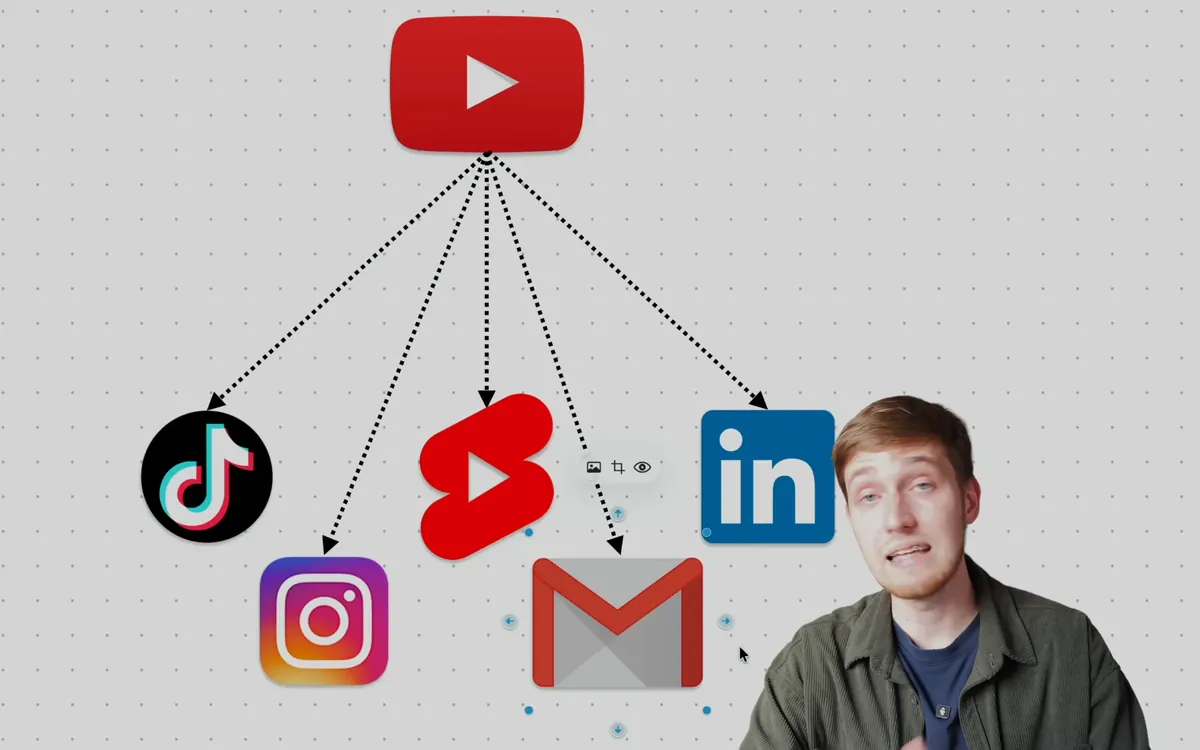
You are the client, you are the king. But your job is to deliver your expertise, to sit in the chair. Buying a course on editing in CapCut is not a high-leverage activity. Being on camera is. So you shouldn't manage a whole team. During our work together you talk to two people, and they handle the rest.
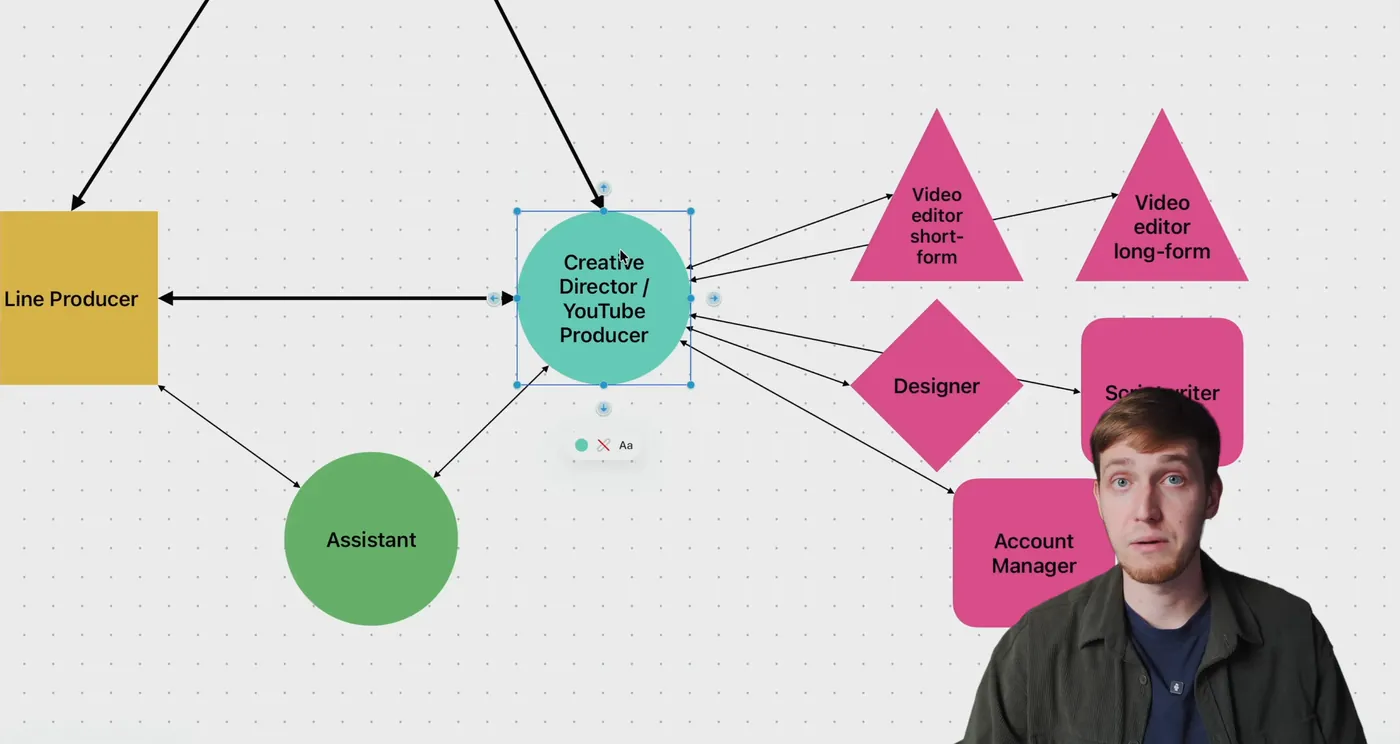
The YouTube producer: the keychain between you and the team
Some call this role a creative director. For us it's the YouTube producer, and it's the main person on the team. They do the heavy lifting: connect you with the team, pass your feedback on, and keep everything on schedule. When to film. When to publish. Getting access. Getting the footage out of you. They're the link between you and the actual production team.
The line producer: filming sessions, and only that
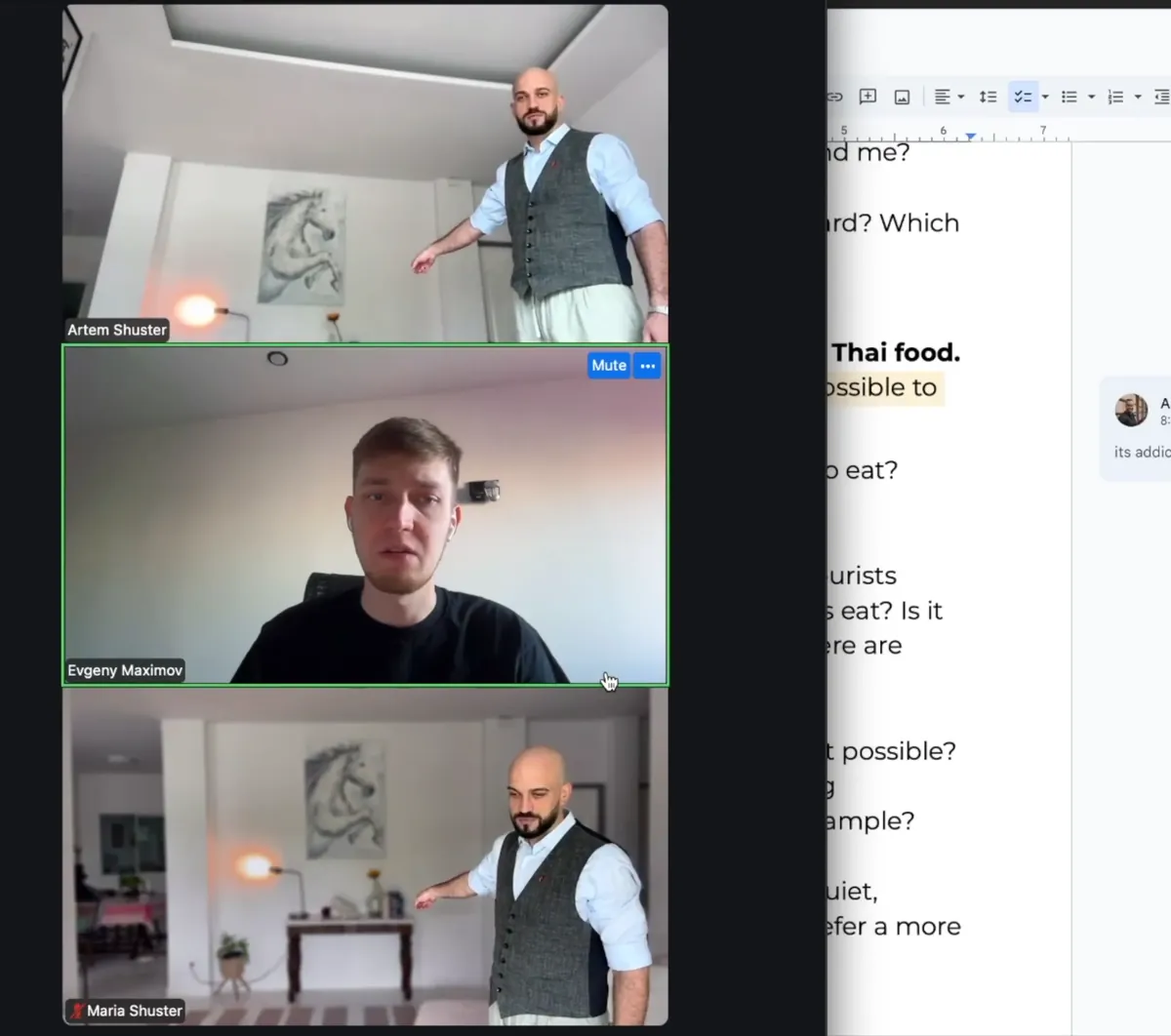
I borrowed this role from film production. The line producer is responsible for filming sessions. Every client needs something different. Some want a podcast studio, some want a photo studio with a nice backdrop. Sometimes we bring a filmmaker and a sound recordist. Sometimes we film completely remotely: we jump on Zoom, you set up your phone and mic, and the line producer guides you through the recording.
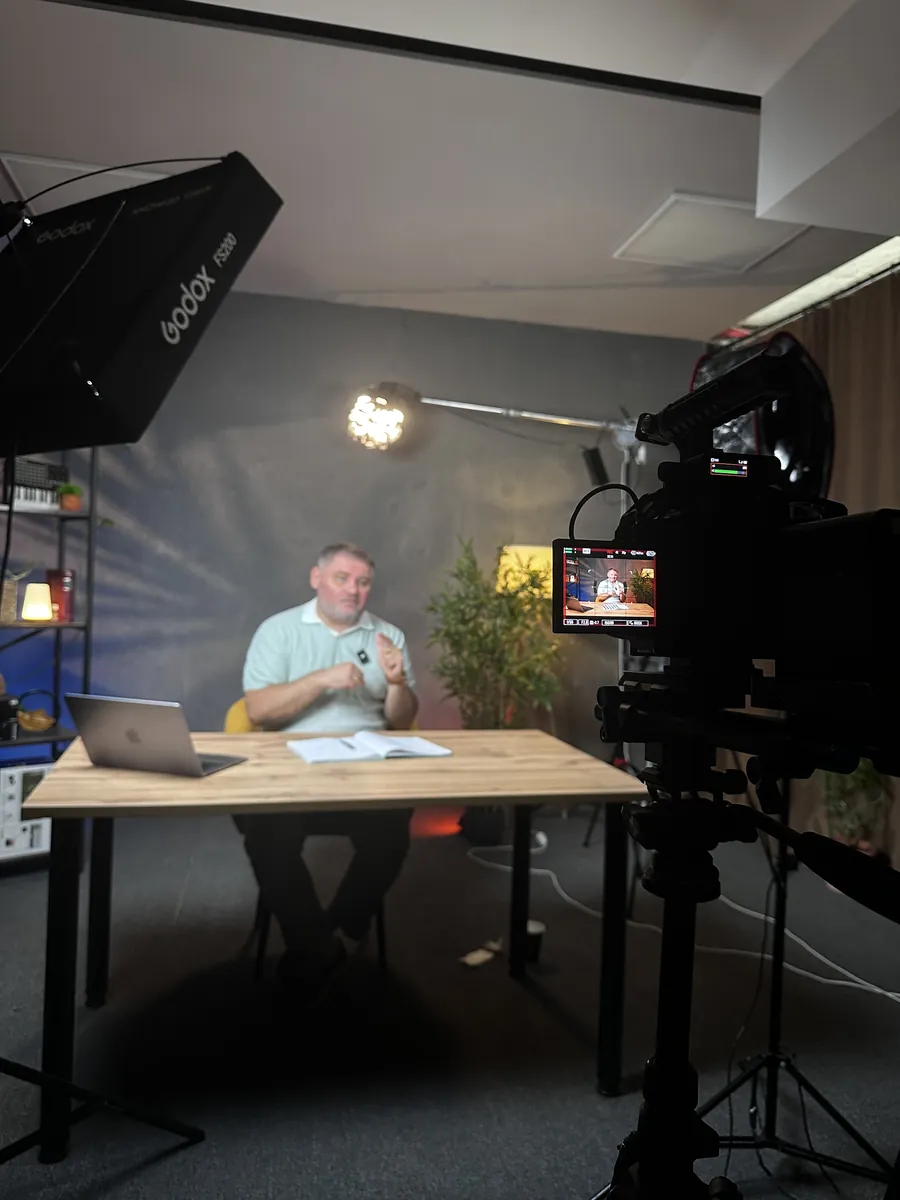
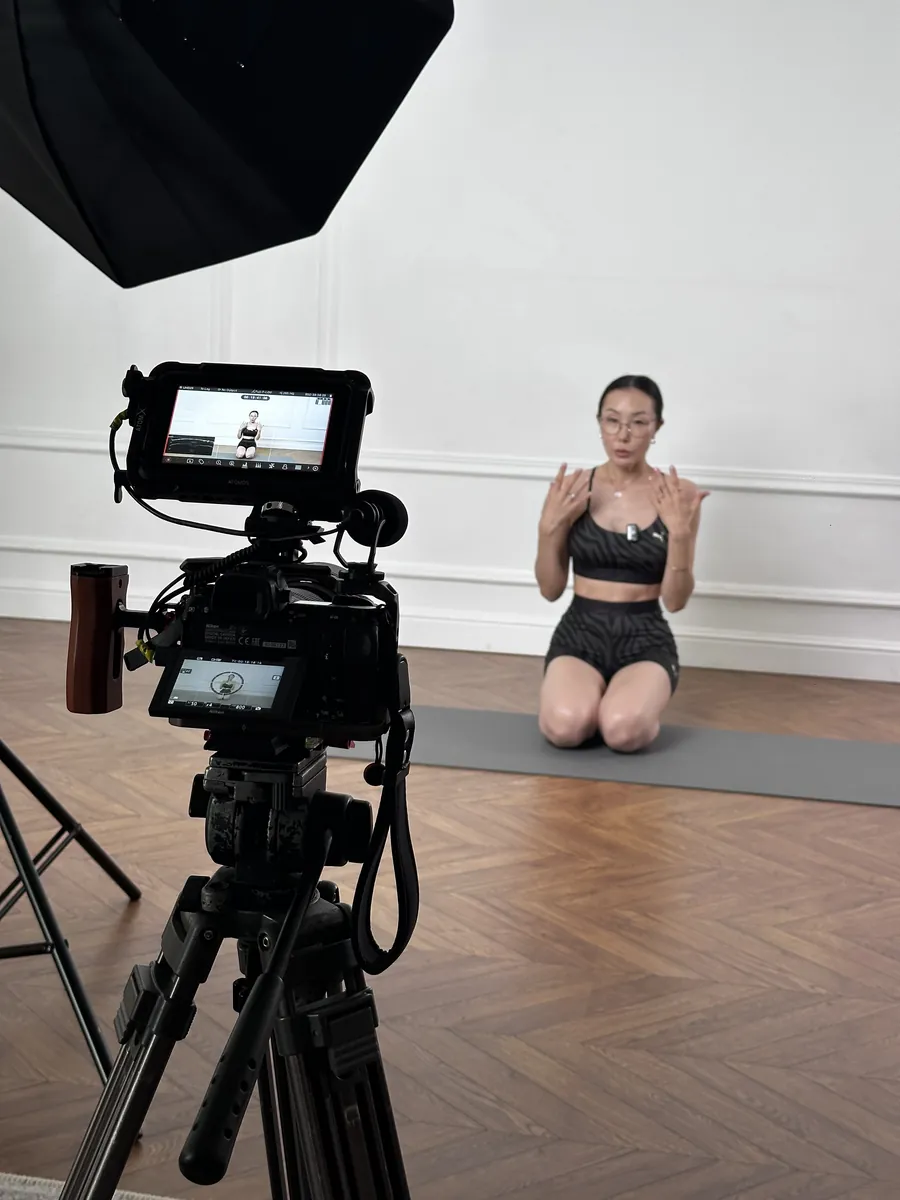
So the line producer finds the right filmmaker, checks they can shoot this specific format (long-form is a completely different world from drone footage), and finds and rents the location. Ayuna, for example, isn't a typical client: she does exercises on the floor, so a podcast studio won't work. The floor has to be clean and beautiful. For a podcast, you need a person for video and a separate person for audio.
For remote production you can skip most of that. Learn the basics of filming, use your phone, spend about $150–200 on a wireless mic and a tripod. That's all the gear you need to start. Here are all nine setups we use, ranked.
Video editors: half of the team
Editing is the bulkiest task, especially when you record several long videos in one session. So half the team is editors. And not a one-time freelancer: you need one person who knows your brand, your guidelines, how you behave on camera, and that you hate a specific font or color. We don't shuffle editors between clients.
| Role | Capacity per month |
|---|---|
| Long-form editor | 8–10 talking-head videos plus clips, for 2–3 clients max |
| Short-form editor | 50–80 clips, up to ~100 with AI tools and simple editing |
| Thumbnail designer | we post ~25 long videos a month and haven't hit the limit |
| Account manager | ~25 long videos plus several hundred clips, still not at capacity |
Past 8–10 long videos, quality drops and deadlines slip. That's for simple talking-head videos, without custom graphics or complicated shoots.
Sometimes, depending on volume, we add a short-form editor. Clips cut from long videos are easy for the long-form editor: they know the footage and the best parts. But shorts filmed separately are a different style and a different way to edit. One client, for example, gets 2 long videos, 10 clips from them, plus 30 shorts filmed independently. So we split the work, and the editors reuse each other's assets. We templatize everything: every client has a folder with their graphics.
Thumbnail designer, scriptwriter, account manager, assistant
Thumbnail designer. Owns the channel's visual identity: banner, profile photo and every thumbnail. With AI it's much easier to make a quick draft of an idea first: if it's good, make it real.
Scriptwriter. In our team the YouTube producer writes the scripts, because they have the experience. The job: market research, fact-checking and anchor scripts, sometimes word-for-word scripts, sometimes key points to mention. If you're just starting, AI helps a lot. For documentaries, which we make for the Russian market, you need extra fact-checking and proofreading.
Account manager. Posts everything on the other platforms, like Instagram and TikTok, and does quality control, so you don't send angry messages about mistakes. It's so important that I made a separate video and article about it: the one hire that lets you scale video content.
Assistant. Content creation has a lot of operational tasks: invoices, contracts, booking studios. The assistant takes the routine and boring operations off the creative people's plate, and off mine. Back-office control.
How big can one team get?
Right now we make about 25 long videos and several hundred short clips a month, and the team isn't at capacity. I think this team can handle about eight active clients: around 40 long videos and 300 short clips a month. After that, I build another production chain. It works like a cell: to scale the agency, you copy the cell.
That's the org chart. In part two I show the technical side: how we structure chats with clients, communication, review sessions and the Notion board where we track everything.
FAQ
What roles do you need in a YouTube production team?
Seven, in our agency: a YouTube producer (creative director), a line producer for filming, long-form and short-form video editors, a thumbnail designer, a scriptwriter, an account manager with quality control, and an assistant for operations. The client only works with two of them.
Why can't one person run a YouTube channel?
Because one long video is seven jobs: scriptwriter, filmmaker, lighting, speaker, editor, thumbnail designer and analyst. Doing all of them yourself, or managing freelancers for each, takes more time than most founders have.
How many videos can one video editor handle per month?
For talking-head videos without complex graphics, about 8 to 10 long videos a month plus clips from them. After that, quality drops and deadlines slip. A short-form editor can handle 50 to 80 clips a month, and up to about 100 with AI tools and simple editing.
How many clients should one video editor work with?
Two, three at most. An editor who knows your brand, fonts, colors and how you behave on camera keeps the quality consistent. Changing editors all the time means changing styles all the time.
What does a YouTube producer do?
The producer does the heavy lifting between the client and the team: schedules filming, collects footage, sends feedback to the team, keeps the publishing schedule and makes sure every video goes live on time. In our agency the producer also writes the scripts.
What does a line producer do in YouTube production?
Organizes filming sessions. Depending on the client, that means booking a podcast or photo studio, hiring a filmmaker and a sound person, or running a remote session where the client films on a smartphone with guidance over Zoom.
What equipment do I need for remote YouTube filming?
A smartphone, a wireless microphone and a tripod, about $150–200 in total. A line producer on a Zoom call guides the setup and the recording.
Do you need a separate short-form editor?
When volume is high, yes. Clips cut from long videos can be done by the long-form editor, but independently filmed shorts are a different style. We split them and share templates and brand assets between editors.
How big should a content team be before hiring a second one?
Our 7-person team can serve about eight active clients: roughly 40 long videos and 300 short clips a month. After that, we build a second production chain, like a new cell.
Should a founder manage the content team directly?
No. The founder's high-leverage activity is being on camera. In our setup the client works with only two people, the producer and the line producer, and never manages editors or designers.
Can AI replace a scriptwriter?
For anchor scripts with key points, AI helps a lot when you're starting out. For documentaries and fact-heavy videos you still need research, fact-checking and proofreading.
Founder of a done-for-you YouTube agency for high-ticket founders. Making content since 2014. More about me
Don't want to build this team yourself?
You get the whole 7-person team and work with only two people. You film one day a month. 7-day money back guarantee.
Book a call →