YouTube vs LinkedIn vs Instagram: Where Should a B2B Founder Post?
I'm a YouTube guy, so I'm biased. Here is a fair 5-round comparison for a founder who sells high-ticket, with real examples and the cases where I would NOT pick YouTube.
 By Evgeny Maximov·9 min read·
YouTube vs LinkedIn vs Instagram: how should you compare them?
If your client pays you ten thousand dollars or more, a fifteen-second reel won't close them. But I also won't tell you to “just do YouTube”, because for some founders it's a terrible idea.
So let's do it honestly. I've been creating content since 2014. I've tried Instagram, TikTok, LinkedIn, Twitch, podcasts and YouTube. Today I run a YouTube production agency, and we post clips on the other platforms too. I'm biased, but I've seen all of them from the inside. Five rounds: depth, search, distribution, effort, and you.
Trust, search and less competition.
Where many founders already have an audience.
Round 1: which platform builds trust for a high-ticket sale?
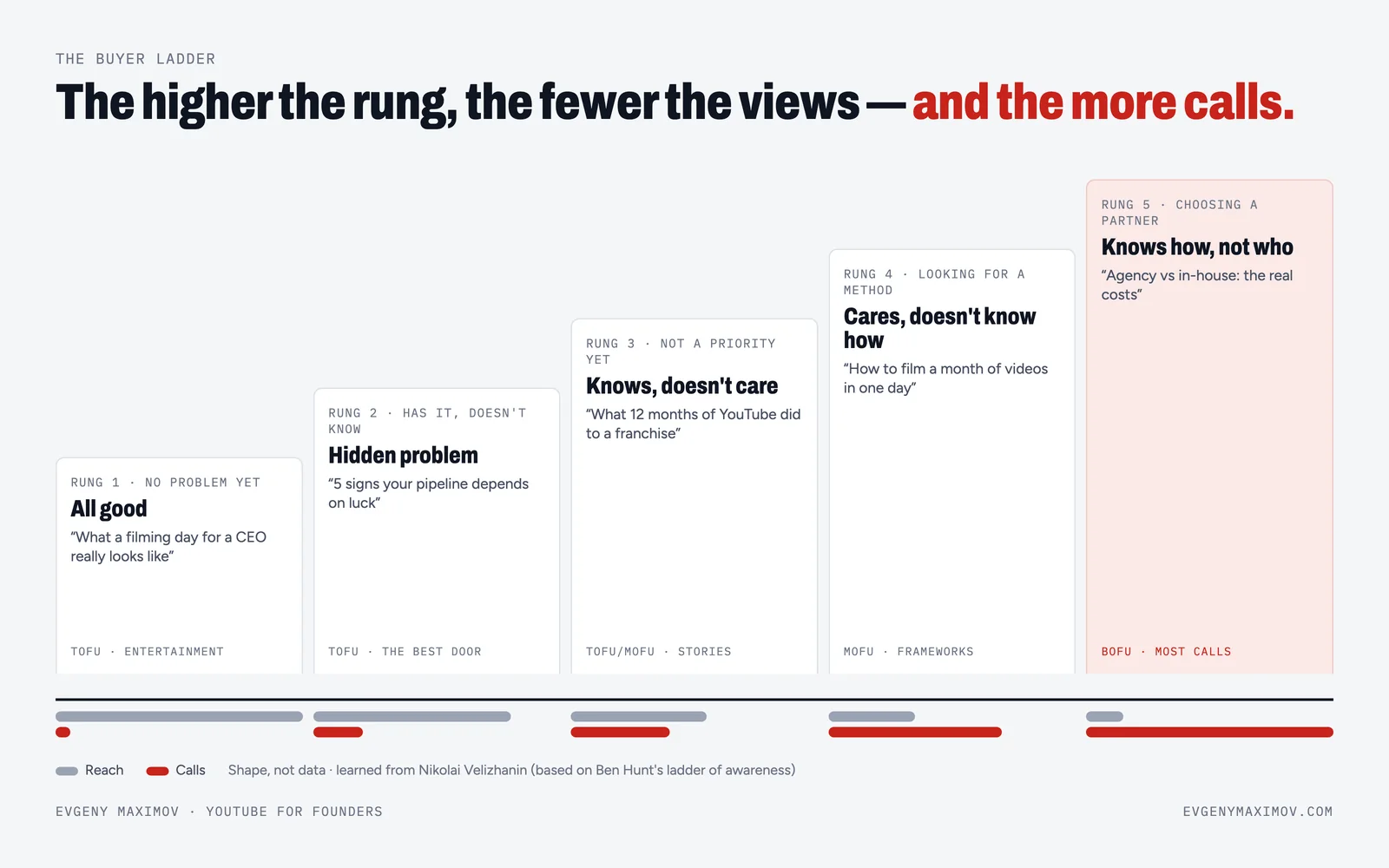
Short-form has one job: make you watch till the end and maybe rewatch. That's the wow effect, with no depth. A long video can be ten minutes or three hours, in any format, and it's where people spend real time with you. LinkedIn text is great for ideas, but people don't hear your voice or see your face.
One of our clients, Norbert, built a strong LinkedIn with text only. Why did he want video? In his words, video unlocks all three channels: words, voice and face. The more time potential clients spend with you, the higher the chance they buy. His story is here.
Think about it for your own business. For a $10k decision, how much time does a buyer need with you before a call? A reel gives them a chunk of information. A long video gives them a conversation.
Score: YouTube 1 · LinkedIn 0 · Instagram 0
Round 2: will people find your video in a year?
Instagram and TikTok live on a feed. LinkedIn posts mostly live a few days, in my experience. YouTube is a search engine and part of Google, so videos show up in Google and in AI answers for years.
People open YouTube with a problem. Nobody opens TikTok to fix a toilet. Try it yourself: google a simple how-to question and look at the top results. Very often it's an old video. And when you save a reel, do you ever open “saved” again?
Score: YouTube 2 · LinkedIn 0 · Instagram 0
Round 3: where are your clients already?
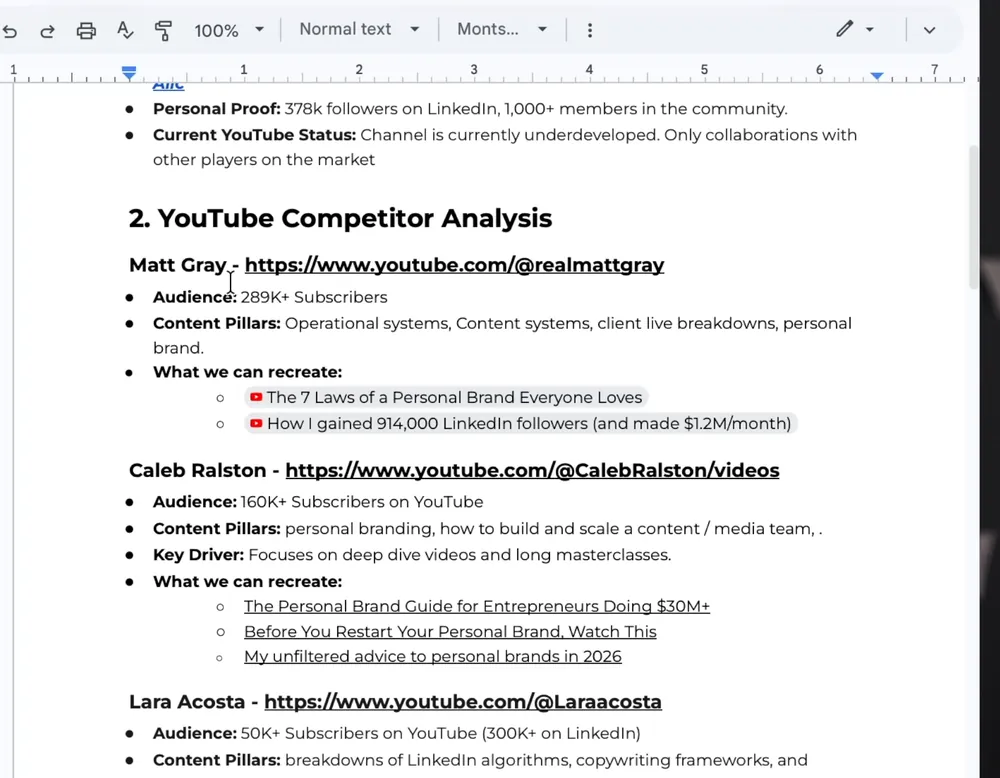
Here is a fair point for LinkedIn and Instagram: that's where many founders already have an audience. Jasmin Alic built close to 400,000 followers on LinkedIn. Brian Mark has 700,000 on Instagram and a business making about $1.5M a month. Don't kill what works.
But look at their YouTube. Jasmin has about 5,000 subscribers, with collaborations and videos not in English, which confuses both the audience and the algorithm. Brian's channel looks like random thoughts recorded on an iPhone. That's typical for people who grew on Instagram: YouTube becomes a place to dump content, not a system.
The question isn't YouTube instead of LinkedIn. It's what your second platform is. A good rule: when a business is already doing well, add a second source of traffic, don't replace the first.
I wrote a full YouTube plan for each of them: the strategy I'd build if Jasmin Alic were my client and how I'd use YouTube to sell Brian Mark's $10K offer.
Score: YouTube 2 · LinkedIn 1 · Instagram 1
Round 4: how hard is it, and who else is doing it?
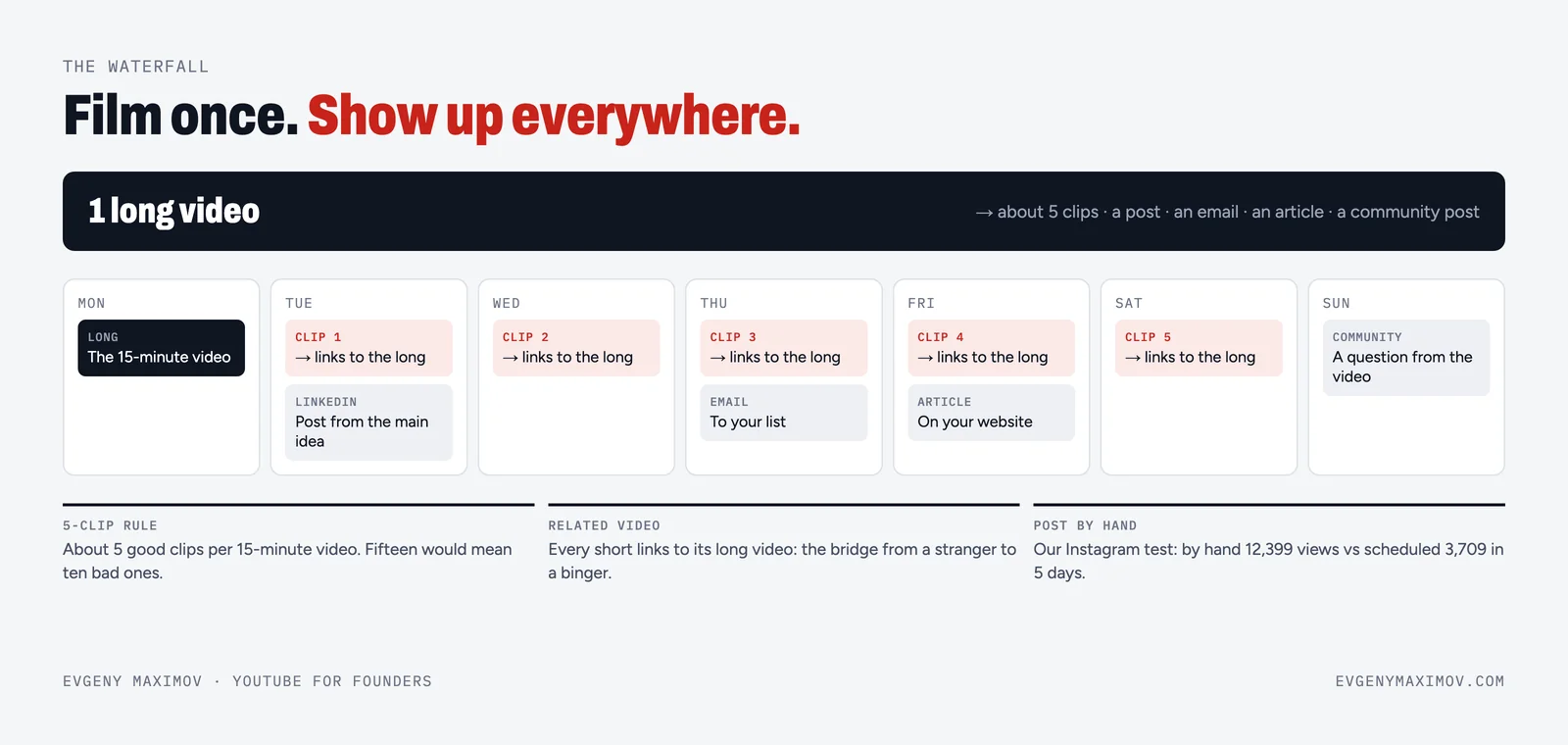
YouTube is the hardest platform. Camera, light, sound, editing, thumbnails, titles, analytics: ten minutes of good video takes a lot of skills. That's exactly why there is less competition in your niche. And the effort pays back twice, because one long video gives you clips for LinkedIn and Instagram too.
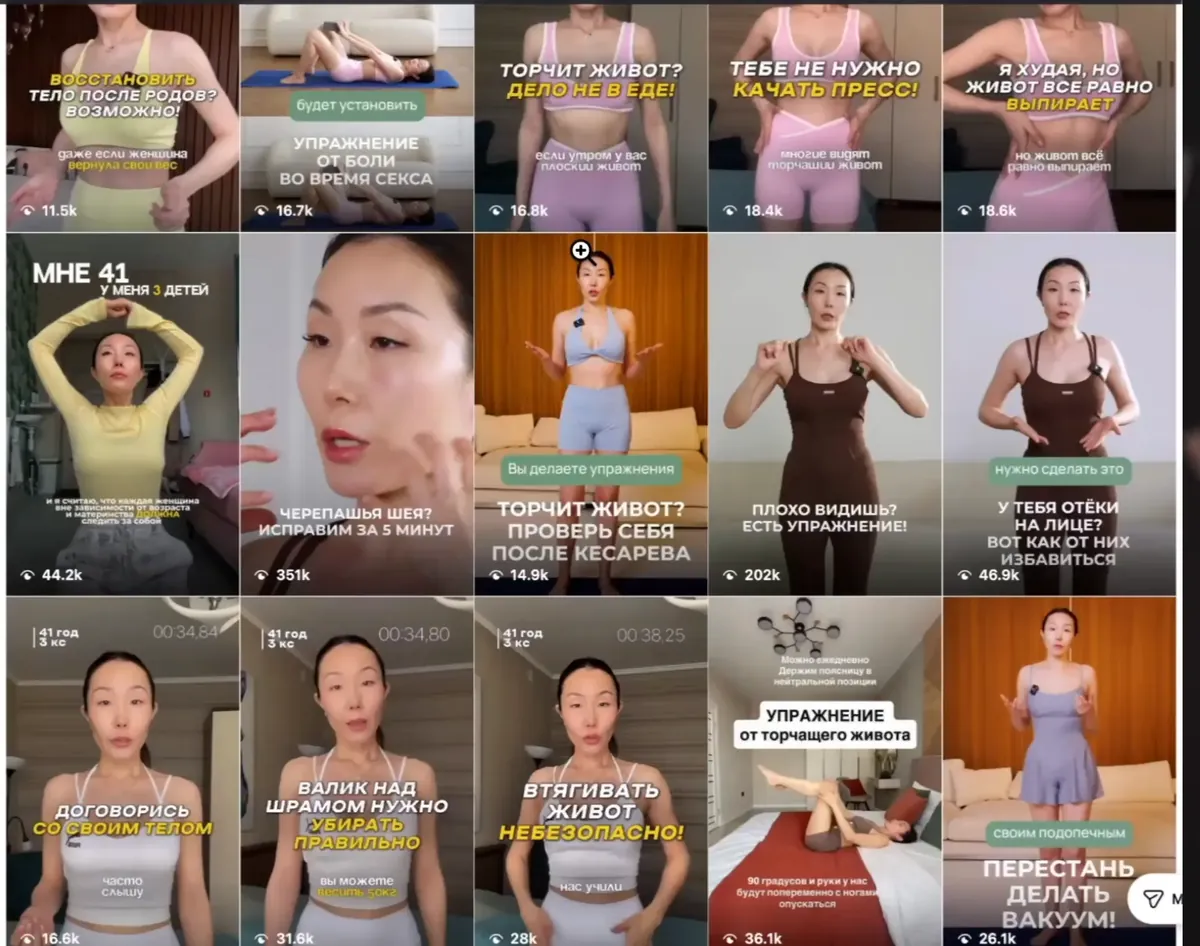
Our client Ayuna has a strong Instagram with 300k+ followers. When we cut clips from her long videos, they reached up to about 300k views, more than her own iPhone reels. Her YouTube channel gained 26,000 subscribers in 5 months, with about two hours of filming a month. Read the case.
| YouTube | |||
|---|---|---|---|
| What it takes | a new post every day | reels and stories every day | one filming day a month with a team |
| How long content lives | days | days | years, through search |
| Depth of trust | ideas, no voice or face | wow effect, little depth | voice, face and thinking |
| Best for | ideas and networking | reach and quick attention | trust before a big sale |
Score: YouTube 3 · LinkedIn 1 · Instagram 1
Round 5: which platform would you actually use?
This round decides everything. The best platform is the one you consume and don't hate creating for.
I tried to be the “every day” guy: LinkedIn posts, stories, all of it. I hated it. I tried reels. I didn't believe in the format, and they didn't work. In 2023 I tried to build an English business from abroad: a UK company, about 5,000 LinkedIn followers, online courses and funnels. Months of work and almost no clients. The platform wasn't the problem. The business model was: courses and funnels, me alone. Today it's a done-for-you team with real client results.
So here is when I would NOT pick YouTube:
When YouTube is the wrong choice
- You don't watch YouTube yourself. If you don't watch it, you won't enjoy making it.
- Your business runs on launches and webinar deadlines. Instagram fits better.
- Your whole market is a few dozen people in the world. Don't waste time on content at all.
- You love posting every day and it already brings clients. Don't fix what works.
It's the first question I ask on a call: do you watch YouTube? Many of the creators who changed my own life made long videos. I can't remember a single short that did.
What is the verdict for B2B founders?
Don't pick one platform and kill the others. Keep the platform where your audience already is. Add long-form YouTube as the trust engine, and feed its clips back into LinkedIn and Instagram. Unless you don't watch YouTube. Then don't.
If the problem is time and not interest, that's the part a team can take: we film once a month, edit the long videos, and cut clips for the other platforms.
FAQ
Is YouTube better than LinkedIn for B2B founders?
For building trust before a high-ticket sale, usually yes. A long video gives buyers your voice, face and way of thinking, and it is found through search for years. LinkedIn is better for quick ideas and for founders who already have an audience there. The best setup is to keep LinkedIn and add YouTube as the trust engine.
YouTube vs Instagram for business: which one brings clients?
Instagram is strong for reach and quick attention, but short videos have no depth. YouTube builds trust and works as a search engine. For a service priced at $10k or more, a 15-second reel rarely closes the sale, while a long video can answer a buyer's questions before the call.
Should I stop posting on LinkedIn or Instagram if I start YouTube?
No. Keep the platform where your audience already is and add YouTube as a second source. Clips from your long videos can then feed LinkedIn and Instagram. Evgeny Maximov's agency cuts clips for other platforms from every long video.
Why is YouTube a search engine and not just social media?
People open YouTube with a problem and a question, and YouTube videos also show up in Google and in AI answers. A feed post lives for days, while a YouTube video can bring viewers and leads for years.
Is YouTube harder than LinkedIn or Instagram?
Yes, it is the hardest of the three: camera, light, sound, editing, thumbnails, titles and analytics. That is also why there is less competition in most B2B niches, and one long video gives you clips for the other platforms too.
Do short videos replace long videos for B2B?
No. Short videos give a wow effect and reach, long videos give depth and trust. In Evgeny Maximov's work with Ayuna, clips cut from long videos reached up to about 300k views, more than her own phone reels, while the long videos added 26,000 YouTube subscribers in 5 months.
When should a founder NOT choose YouTube?
When you don't watch YouTube yourself, because you will hate making it. When your business runs on launches and webinar deadlines, where Instagram fits better. And when your whole market is a few dozen people, where content is not worth the time.
How much time does YouTube take compared with daily posting?
Daily posting on LinkedIn or Instagram means new content every day. With a done-for-you team, YouTube takes about one filming day a month from the founder, and the team edits, publishes and cuts clips for other platforms.
Can a big LinkedIn or Instagram audience help a new YouTube channel?
It helps, but only if the YouTube channel is built properly. Jasmin Alic has close to 400k LinkedIn followers but a YouTube channel of about 5k subscribers with random videos, and Brian Mark has 700k on Instagram with a YouTube channel of random iPhone thoughts. A big audience elsewhere does not fix a missing YouTube strategy.
What is the best platform for a B2B founder?
The one you actually consume and don't hate creating for. If you watch YouTube and sell something expensive, start with YouTube and reuse its clips elsewhere. If you don't watch it, pick the platform you do use.
Founder of a done-for-you YouTube agency for high-ticket founders. Making content since 2014. More about me
Not sure which platform fits your business?
We look at your LinkedIn or Instagram together and I tell you honestly if YouTube makes sense. I take the call myself. 7-day money back guarantee.
Book a call →