Views vs Clients: My 250k-View Video Made $0
Views are the most expensive vanity metric on YouTube. Four real stories, and what a business channel should measure instead.
 By Evgeny Maximov·7 min read·
Why did a 250,000-view video make $0?
A trend video on my Russian channel went viral: about 250,000 views, the comments exploded, people wrote “you blew my mind”. I was happy for a day. Then I checked. Sales from it: zero.
It was entertainment. Entertainment works at the top of the funnel: “cool, I'll send it to a friend”. It doesn't solve anyone's problem, so nobody buys. That's normal. The mistake is expecting a funny video to sell a high-ticket service.
How did a 47-minute video with 3,000 views bring clients?
My team spent a month on a 47-minute documentary about a big YouTube agency that collapsed. About 3,000 views. Relative to my channel, fine, not wow. But clients came from that video. From the viral one: nobody.
Sales: zero.
Clients came from it.
A deep video shows how you think. It's your “golden hit”: the video you're not ashamed to send to any potential client. Long videos also keep getting found for years, through search, chapters and now AI answers.
What happens when you buy YouTube views?
This one still hurts. A client in a very narrow niche: coaching for top managers and business owners. Normal videos got 100–500 views, and YouTube recommended the channel to 50–150 new people a day. Slow, but the right people.
Then a guest came on the client's podcast. His team, without asking anyone, bought about 15,000 views on his episode, so the numbers would look “respectable”. That was about a third of all the views on the channel.
Recommendations dropped to zero. YouTube no longer knew who to show the channel to: top managers, or thousands of random viewers from the other side of the world. We worked on it for six months. We couldn't bring it back. In the end we started a second channel.
And here's a channel that wanted to work with us. Look at the numbers:
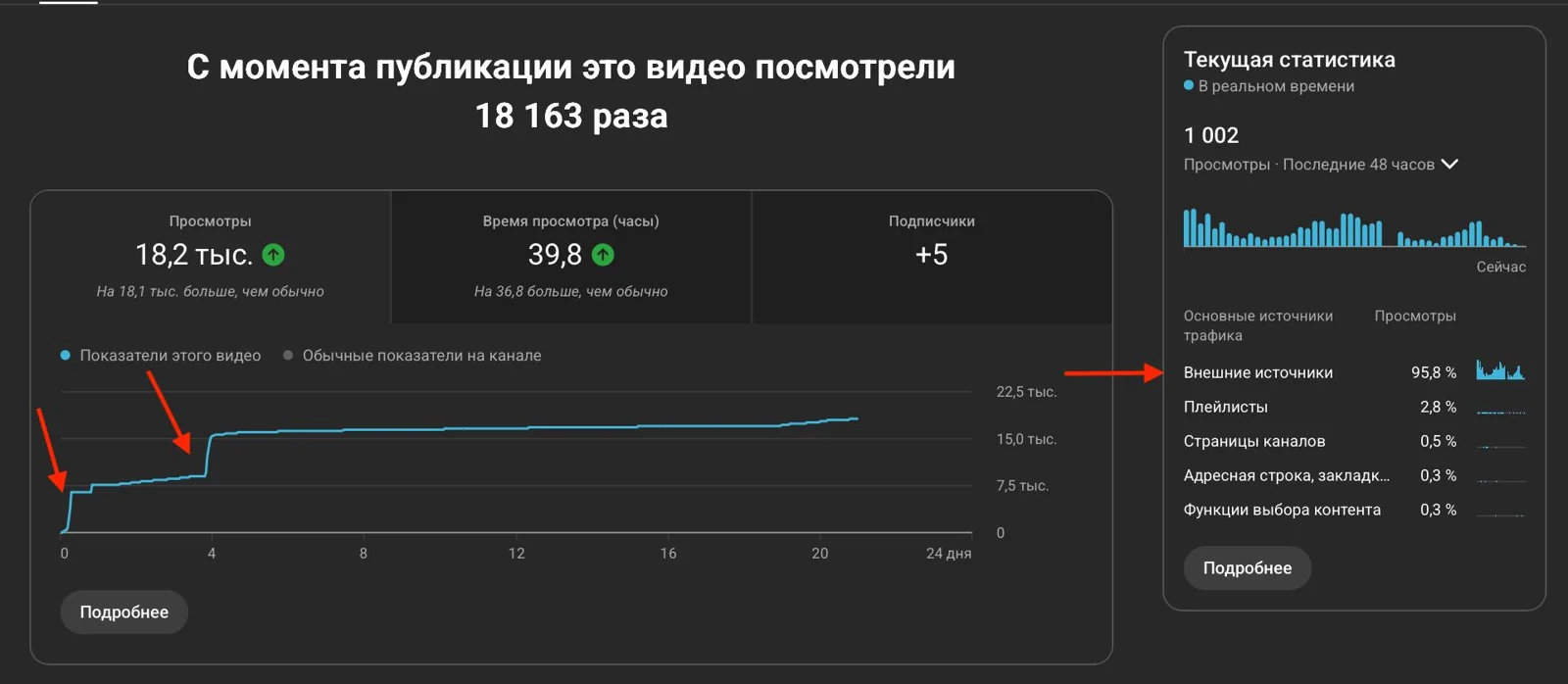
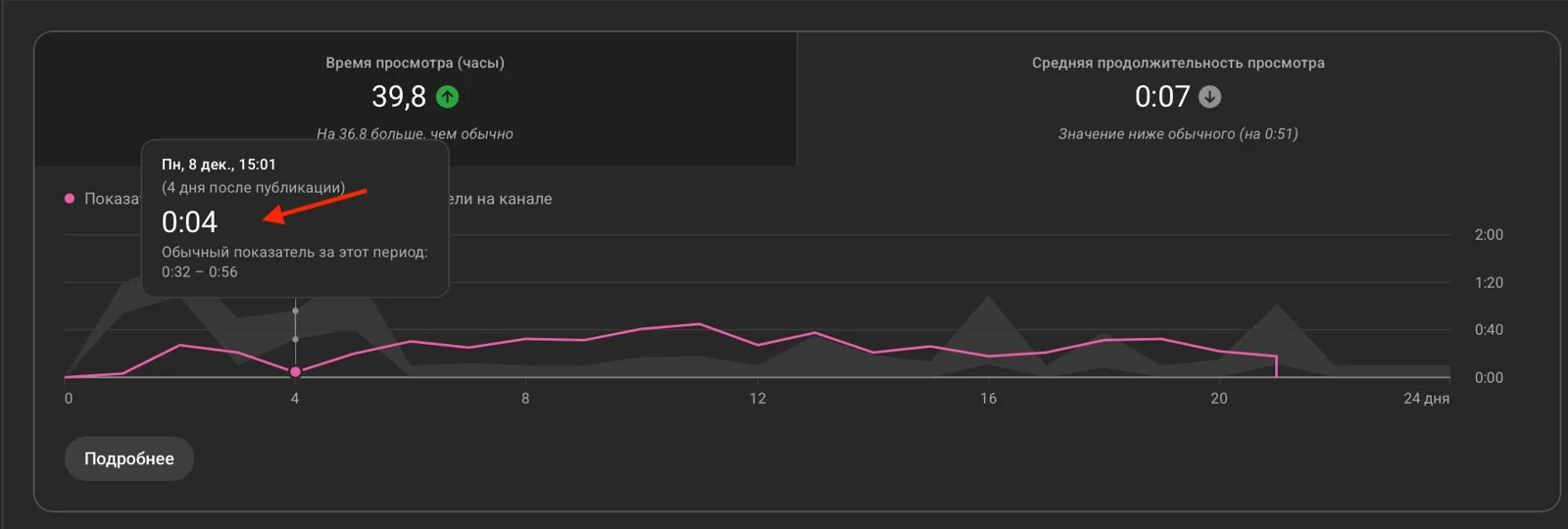
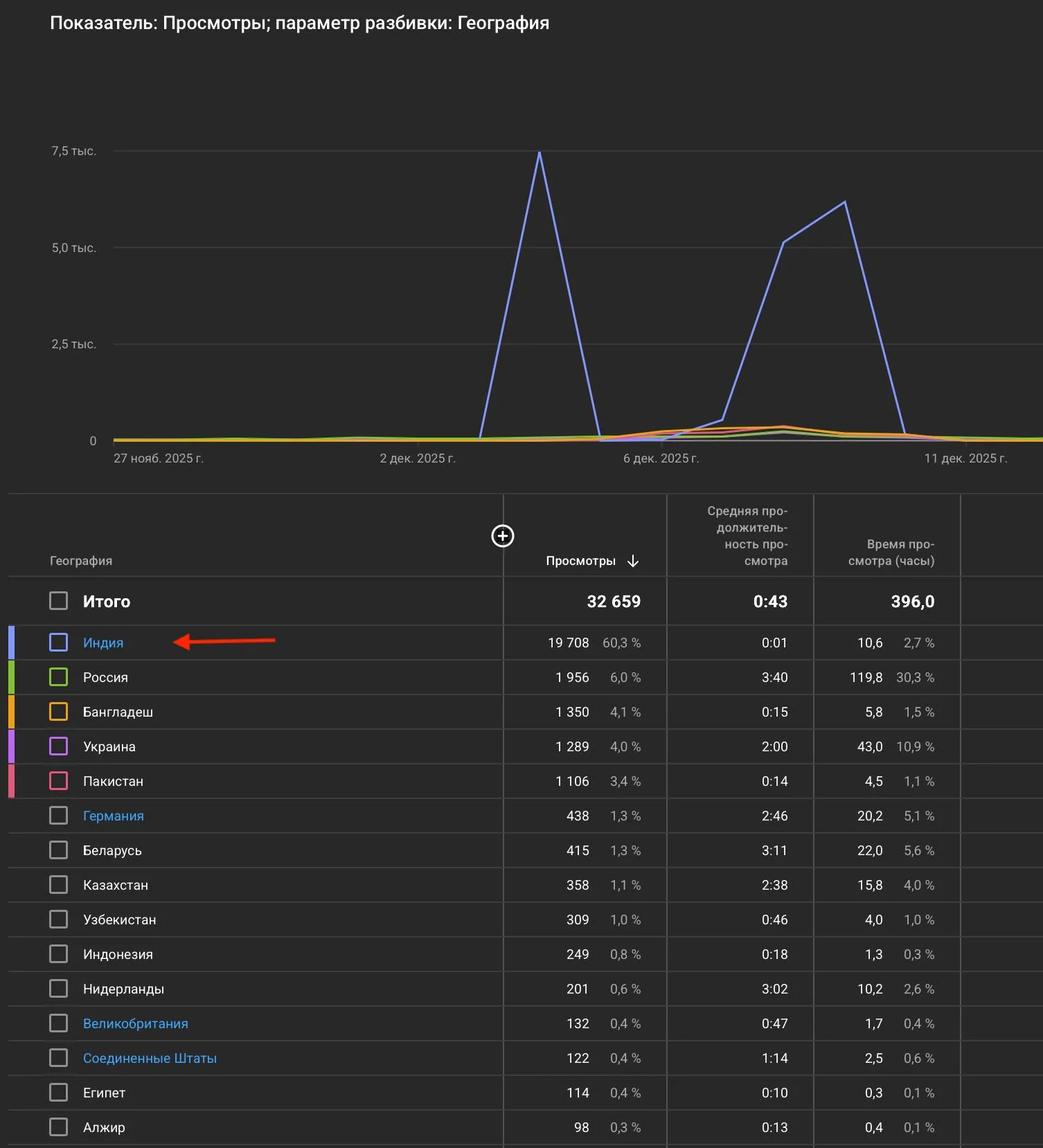
18,000 views, and people spent about 40 hours watching. The average view lasted seven seconds, when the channel's normal was close to a minute. And 60% of the views came from India, with an average view of one second. Real viewers from Russia watched for more than three minutes. We didn't take that client, and I'm glad.
4 signs of fake views
- Views jump in “stairs” from external sources.
- Watch time is tiny compared to views.
- Average view duration is a few seconds.
- Views come from countries that don't match your language or market.
Fake views hurt a small B2B channel more than a big one. Your audience is small and precise. One bad signal and YouTube stops showing you to the right people.
What does the money actually follow?
Matt Gray, one of the best-known creators on LinkedIn, showed how much money each of his YouTube videos made. A video with about 22,000 views brought almost $14,000 in sales. And the format with the most leads was the “boring” one: screen-recording tutorials, about 7.4 leads per 10,000 views. More than vlogs and talking heads.
We see the same with clients. Our real estate client in Thailand made a broad video, “Don't come to Thailand”, with about 9,000 views, and market analytics videos with about 200 views. The small ones brought leads.
So what should you look at instead of views?
My small Russian channel had about 7,600 watch hours in 90 days. That's 316 full days people spent watching me. No stage in the world gives you that.
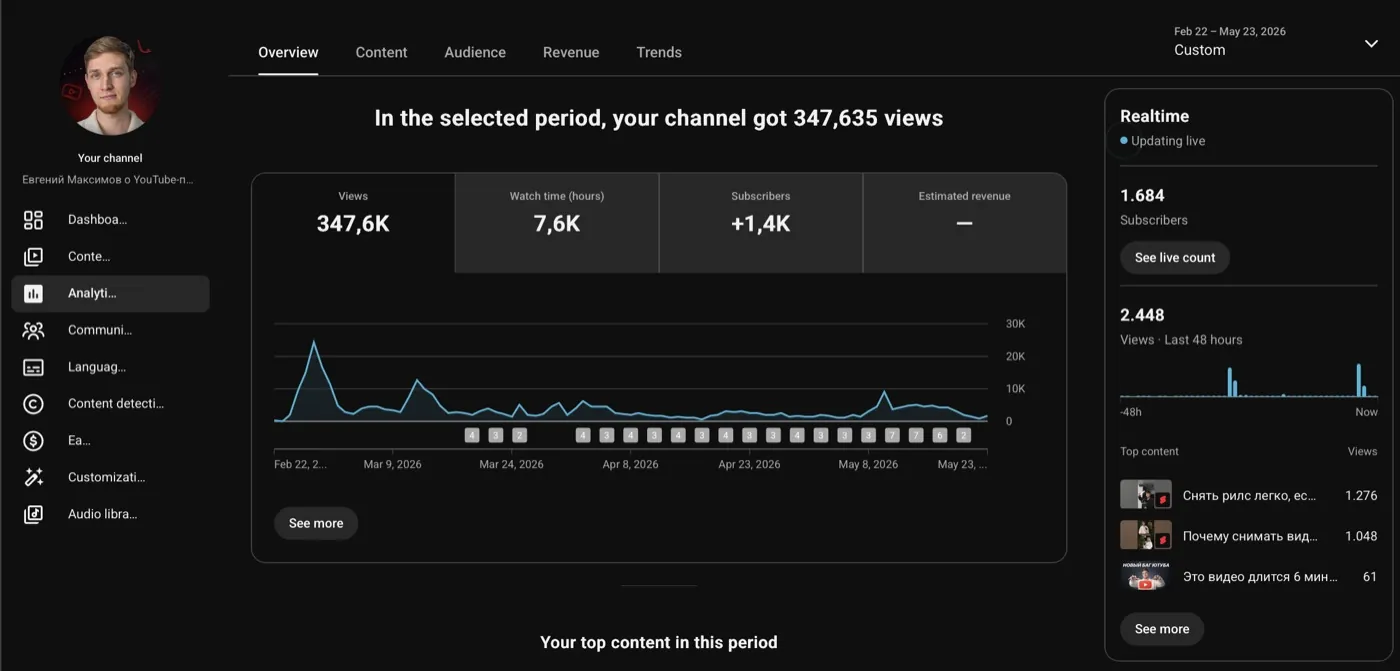
A viral video can make you nothing. A quiet one can pay for the year. Stop counting views. Count watch time and calls, and never, ever buy views.
FAQ
What are vanity metrics on YouTube?
Numbers that look good but don't show business results: views, subscribers and likes on their own. For a business channel, the numbers that matter are watch time from the right audience, leads, calls and which video brought each client.
Can a video with few views bring clients?
Yes. Evgeny Maximov made a 47-minute documentary that got about 3,000 views and brought him clients, while a viral video with about 250,000 views brought zero sales. Matt Gray also showed that some of his lower-view videos made the most money.
Should I buy YouTube views for my business channel?
No. In one client's channel, a podcast guest's team bought about 15,000 fake views on one episode. Recommendations dropped to zero, and after six months of work the agency couldn't bring the channel back.
How do I spot fake views on a YouTube channel?
Look for four signs: views that jump in 'stairs' from external sources, very low watch time for the number of views, an average view duration of a few seconds, and views from countries that don't match the channel's language.
Why do fake views hurt a small B2B channel so much?
A B2B channel has a small, precise audience. Thousands of fake viewers who leave after seconds teach YouTube the wrong audience, so it stops showing your videos to the right people.
What should a business YouTube channel measure instead of views?
Watch time, the number of calls and leads, and the answer to 'which video brought you?'. Evgeny Maximov's small Russian channel had about 7,600 watch hours in 90 days: 316 full days people spent with him.
Why do viral videos rarely sell high-ticket services?
Viral videos are usually entertainment: people laugh, share and forget. High-ticket buyers need trust, and trust comes from videos that solve their problem and show how you think.
What kind of YouTube videos bring the most leads for businesses?
Narrow, useful videos for a specific audience. According to Matt Gray's breakdown of his own channel, screen-recording tutorials brought about 7.4 leads per 10,000 views, more than vlogs or talking-head videos.
How long should I wait before judging a YouTube video?
Evgeny Maximov's rule: don't change or judge a video before about 1,000 views and a couple of months. Long videos can keep bringing views and leads for years.
Is watch time more important than views for business?
For a business channel, yes. Watch time shows how long real people spent with you, which is closer to trust than a view count.
Founder of a done-for-you YouTube agency for high-ticket founders. Making content since 2014. More about me
Want a channel built for clients, not applause?
Real audience, real calls. You film one day a month, we do the rest. 7-day money back guarantee.
Book a call →