Why YouTube Doesn't Work for Most Business Owners: 5 Reasons From 1,000+ Videos
We analyzed every client we worked with in 2026 to find out why some experts invest hours in video and still get nothing. It's rarely the algorithm.
 By Evgeny Maximov·8 min read·
During 2026 we posted around 150 long-form videos and more than 1,000 short clips for our clients. Not every client got incredible results. So we spent several hours going through all of them to answer one question: why do experts, coaches and business owners invest so much time in video and still get close to zero?
I recorded this video walking through my city, talking to a camera in English while people stared at me. It fits the topic. Here are the five reasons.
| # | Reason | The sign |
|---|---|---|
| 1 | Mindset that holds you back | “I'm not an expert.” You keep moving the shoot. |
| 2 | No preparation before filming | You open the script for the first time on set. |
| 3 | Wrong way to present | Complex words, flat energy, no hooks. |
| 4 | Not delegating | You bought an editing course. You opened the app once. |
| 5 | Wrong strategy, or quitting too early | You're on a platform you don't use, or you stop at month five. |
1. Why self-doubt kills your content before you start
When you start making videos, you see the worst version of yourself. Your voice, your face, your pauses. And the thoughts come: “I'm not really an expert.” “I can't present on camera.” “Who needs my advice?”
There's no quick fix. It's like going to the gym without muscles. You start with small weights and you build the habit. My client Norbert had exactly this: he wasn't happy with how he delivered. That's fine when you're just starting. Here's how he got over it.
The dangerous part is what self-doubt does next. It makes you avoid filming. One client, in our second month, called me two days before the shoot. We had planned to bring a filmmaker to another city. He was in another country, visiting family before New Year. We waited about a month for him to be available.
If you keep avoiding the camera, that's the fear talking. And it's the clearest sign you need to sit down and film. That's why we try to make shoots as comfortable as possible: a good studio, an isolated space, a filmmaker, and me behind the camera helping you say things clearly.
2. Why skipping preparation makes every video worse
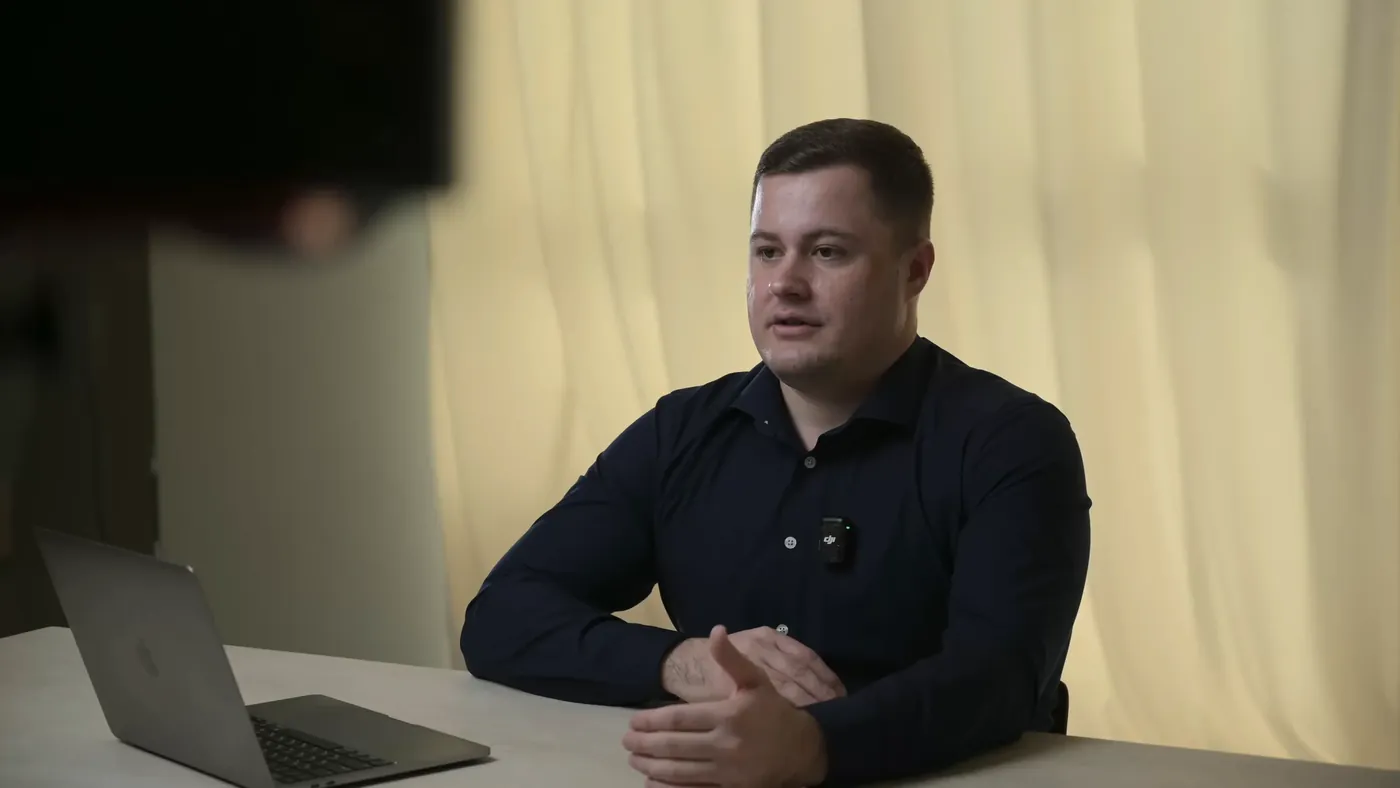
Before a shoot we write anchor scripts. We show the client reference videos and ask for voice notes, articles, anything, so we can build their own version from their experience. Then we ask them to read the scripts and fill the blanks. We're not the experts. You are. We can't pull your unique take out of nowhere, and ChatGPT only gives generic answers.
The clients with the lowest results don't invest 20 minutes to read the script before the shoot. Sometimes we ping them several times to get a two-minute voice note. And here's what happens next:
I'm not joking about the wall. After two or three hours with an unprepared speaker, pushing “say this phrase, now this one”, I'm dead for the rest of the day. A prepared speaker is the opposite: faster shoot, shorter footage, better videos.
3. Why your delivery loses viewers
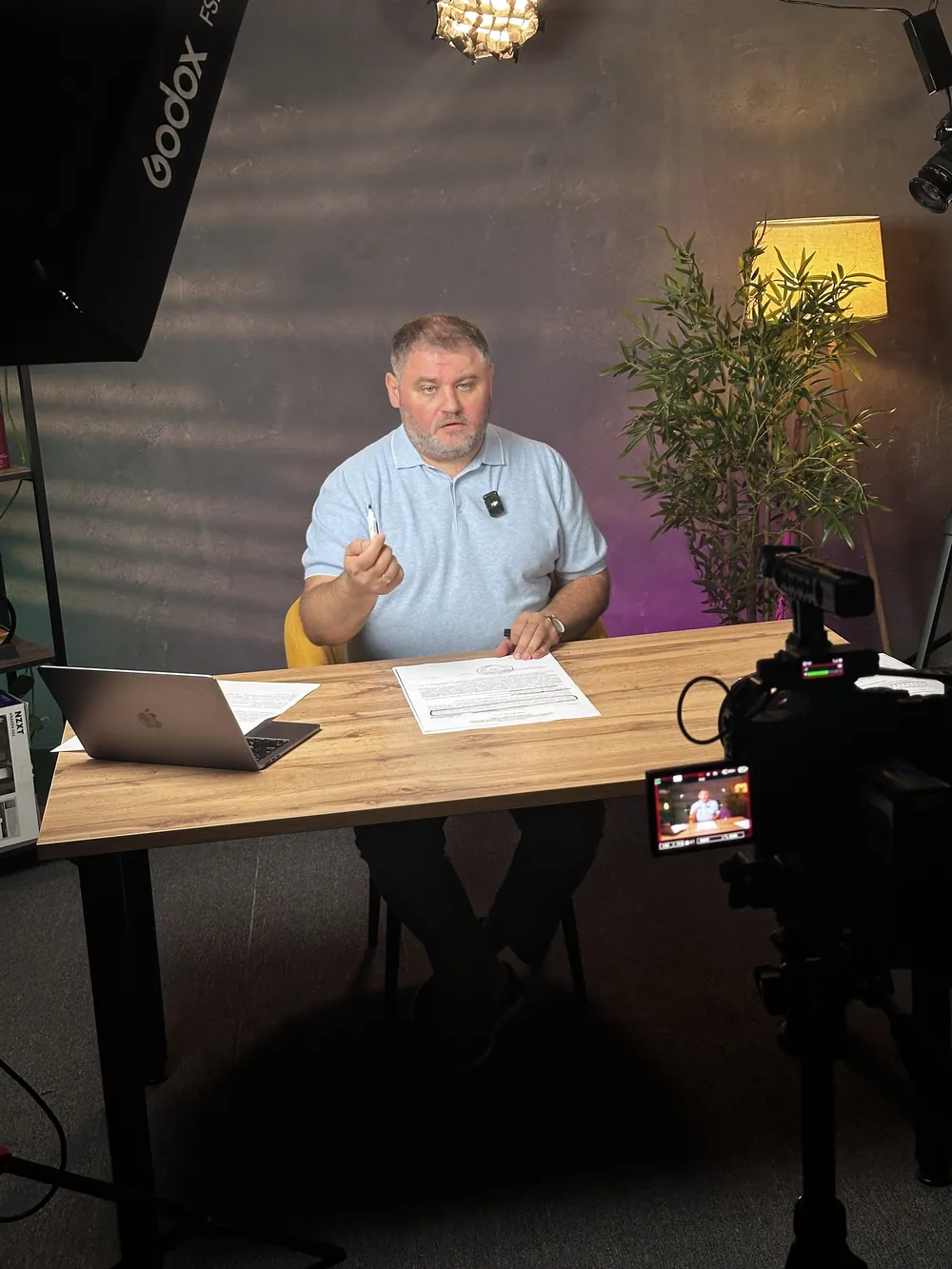
None of us trained to talk to a camera. You know one-on-one conversations. You know talking to a group. Talking to a piece of metal and glass that will show you to unknown people later? That's weird. Try doing it on a street in a Russian city, in English, like me in this video.
Here are the three signs your delivery needs work:
- Complicated words. Especially in B2B or medical niches. We have several dental clinics in our pipeline. If you use complex terms to sound smart, people don't understand you and go to someone who speaks their language.
- Low energy. Different speakers have different vibes. Some are pushy like Alex Hormozi, some are calm like the CEO of Acquisition.com. But your regular voice and regular emotions are not interesting to watch. You need to perform a bit.
- Ignoring the rules of the platform. Skipping the hook. Fighting every title because it's “clickbaity”. Of course a good title makes people curious. The competition is huge.
People look for a secret hashtag or growth hack. They forget the basics: how they actually deliver the information.
4. Why doing it all yourself makes you the bottleneck
“I'll just do everything myself.” You buy a Premiere Pro course, open the app and think: holy crap, it's too complicated. You close it. And the channel dies there.
Don't play the content creator game. It's intense work with a lot of steps just to post one video. Treat content creation as a system with specific processes and specific people. Build an in-house team, hire an agency like ours, or watch my videos where I show our org chart and systems. But delegate.
Your high-leverage activity is being on camera and sharing your expertise. I've been making content since 2014, and honestly, I'm an average video editor, an average thumbnail designer and a terrible script writer. And yet you're still reading this, from a guy who films himself on the street in his second language. Being a great speaker gives you a much higher ROI than being a mediocre editor.
5. Why the wrong strategy, or quitting early, kills results
Two stories.
The orthodontist. We made content for his clinic for about five months. Decent views, not huge. We kept working on how he presented, to make it friendlier for regular people. Then he said: “I didn't get any clients from YouTube. I don't think I need to invest more.” OK, no problem. In Russia YouTube is officially blocked, everything international is hard. I understood.
Four months later I'm in his chair for a regular checkup. I ask how the business is doing. He says he got a client from YouTube. One client, who paid for the whole half-year of production. After we stopped working together. I told the full story here.
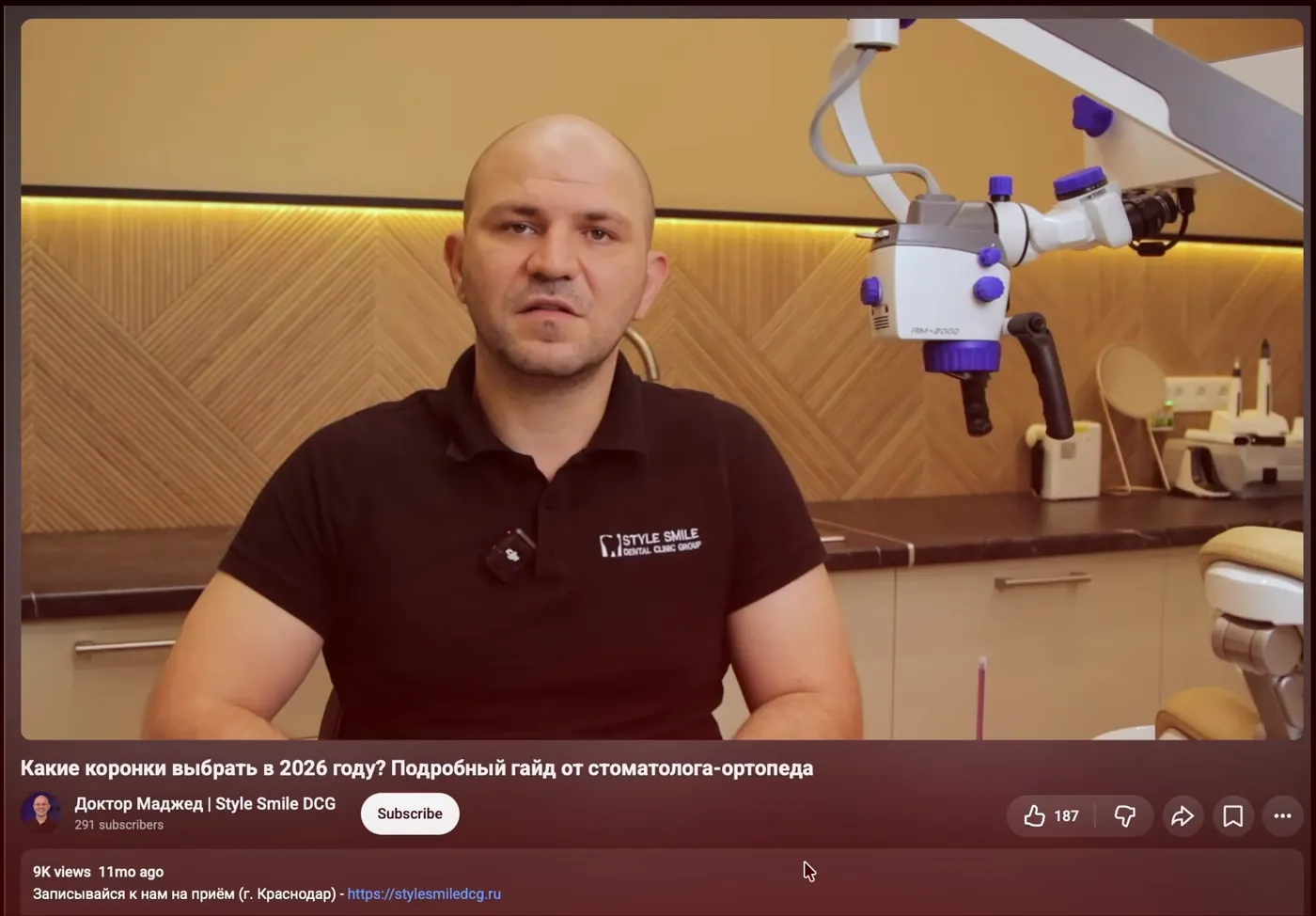
He had spent a lot on ads before, and they didn't perform either. The difference: when you stop ads, leads stop. When you stop YouTube, the videos keep working. He dropped it too early.
The Instagram guy. With another client we also stopped, because we got views and nice videos but no real results. We tried a lot of formats and ideas. The main problem: he wasn't a YouTube guy. In eight or nine months he changed three or four reels makers. He was obsessed with Instagram and TikTok and didn't care about YouTube at all.
I had the same problem from the other side. I once had a reels maker, we made a bunch of reels, and they didn't perform. Because I don't believe in that format. I don't use those platforms.
That's why part of our qualification call is a simple question: do you watch YouTube? If you don't, why would you create long-form videos? If you're a podcast person, make podcasts. If you love carousels, make carousels. Don't launch a channel you have no passion for.
FAQ
Why doesn't YouTube work for my business?
In our experience, for five reasons: self-doubt that makes you avoid filming, no preparation before the shoot, a delivery people don't understand, trying to do everything yourself, and quitting the strategy too early. We found these by analyzing all our clients from 2026, about 150 long videos and 1,000+ short clips.
Why is my YouTube channel not growing?
For business channels, the most common reasons are unclear delivery (complex words, low energy), ignoring platform rules like hooks and titles, and inconsistency because the founder is the bottleneck. Growth hacks and hashtags don't fix any of these.
How long should a business try YouTube before giving up?
Longer than most do. Our orthodontist client stopped after about five months because he saw no clients. Four months later he told me one client from YouTube had paid for the whole half-year of production. YouTube videos keep working after you stop, ads don't.
How do I stop being afraid of the camera?
Treat it like the gym: start with small weights and build the habit. If you keep postponing filming, that's the fear talking, and it's a sign you need to film. A calm setup helps too: a studio, a filmmaker and someone to guide you.
How should I prepare for a filming session?
Read your script before the shoot, about 20 minutes, and fill in your own stories and examples. We write anchor scripts from the client's voice notes. Clients who skip this spend longer on set, get longer raw footage and weaker videos.
What is an anchor script?
A script with the structure and key points of a video, not a word-for-word text. The expert reads it before filming and then speaks in their own words. It keeps the video focused and makes the shoot much faster.
Should I use simple language in business videos?
Yes. If you use complex B2B or medical terms to sound smart, people don't understand you and go to someone who speaks their language. This matters most in niches like dentistry, finance and technology.
Should a business owner edit their own YouTube videos?
No. Your high-leverage activity is being on camera and sharing expertise. Editing, thumbnails and scripts are systems you can hand to a team or an agency. A great speaker with a team beats an average editor doing everything.
Should my business be on YouTube or Instagram?
Pick the platform you actually use. If you don't watch YouTube, long-form videos will feel like a chore. One of our clients was an Instagram person, changed three or four reels makers in eight or nine months, and never cared about YouTube. It didn't work.
Do business owners need clickbait titles?
You need titles and hooks that earn the click, because competition is huge. A title that makes people curious is not a lie. Refusing every “clickbaity” phrase is one of the ways experts sabotage their own channel.
How many videos does Evgeny Maximov's agency produce?
In 2026, around 150 long-form videos and more than 1,000 short clips for clients, with a 7-person team. The client films about one day a month and the team does the rest.
Founder of a done-for-you YouTube agency for high-ticket founders. Making content since 2014. More about me
Want to skip reasons 2 to 4?
We prepare the scripts, run the shoot and do the editing and publishing. You film one day a month. 7-day money back guarantee.
Book a call →