Financial Advisor Marketing With YouTube: How Advisors Get Clients From Small Channels
Most advisor videos get 50–200 views. On one channel I studied, a video with about 70 views brought a client worth $12,500–15,000 a year. That's financial advisor marketing on YouTube: you don't need views, you need the right person to watch.
 By Evgeny Maximov·9 min read·
Where does YouTube fit in digital marketing for financial advisors?
Most advisor marketing runs on referrals, seminars, a website, some LinkedIn and maybe paid search. Referrals are great, but you can't scale them. Ads bring people who compare fees. Content is the channel that compounds: every video keeps answering questions while you work with clients.
Within content marketing for financial advisors, YouTube does a job no other platform does. A LinkedIn post lives a day. A long video answers “can I retire at 60?” for years, appears in Google, and lets a future client spend twenty minutes with you before the first meeting.

Paid ads vs YouTube: what does a client really cost an advisor?
Let's look at the numbers. In Google's Keyword Planner (US and UK, 2025–2026), the top-of-page bid for the searches advisors usually advertise on looks like this:
| Search | Searches a month | Top-of-page bid |
|---|---|---|
| financial advisor | 100K–1M | $8–34 |
| financial advisor near me | 10K–100K | $7–30 |
| financial planner near me | 10K–100K | $8–34 |
| fee only financial advisor | 1K–10K | $8–34 |
| retirement advisor | 1K–10K | $7–33 |
| wealth management | 10K–100K | $6–22 |
Google Keyword Planner, US and UK, September 2025 – August 2026. Bids converted from pounds at about $1.30 per £1 and rounded.
That's per click, not per client. Most clicks don't become a meeting, and most meetings don't become a client. So the real number to look at is the cost of one new client. Kitces Research puts an advisor's average client acquisition cost at around $3,100, and most of that is the advisor's own time spent on marketing and meetings that don't close.
And ads get more expensive every year. In WordStream's 2025 Google Ads benchmarks, the average cost per click across industries rose from $4.66 to $5.26 in one year, about 13%, and it went up in 87% of industries. The Finance & Insurance category averaged $3.46 a click, but that average mixes cheap and expensive searches: the exact searches advisors buy cost much more, as the table above shows. You pay that price again every month, and the day you stop, the leads stop.
Now compare it with a video library. Say one long video a week plus Shorts, with a production partner: from about $3,000 a month with our team. After a year you own around 50 long videos that keep answering client questions in search, in Google and in AI answers. If that library brings even two or three clients a year worth $12,500–15,000 each, every year, it pays for itself, and unlike ads it doesn't disappear when you pause. These are illustrative numbers, not a promise, but the logic is the reason more advisors are moving budget into content.
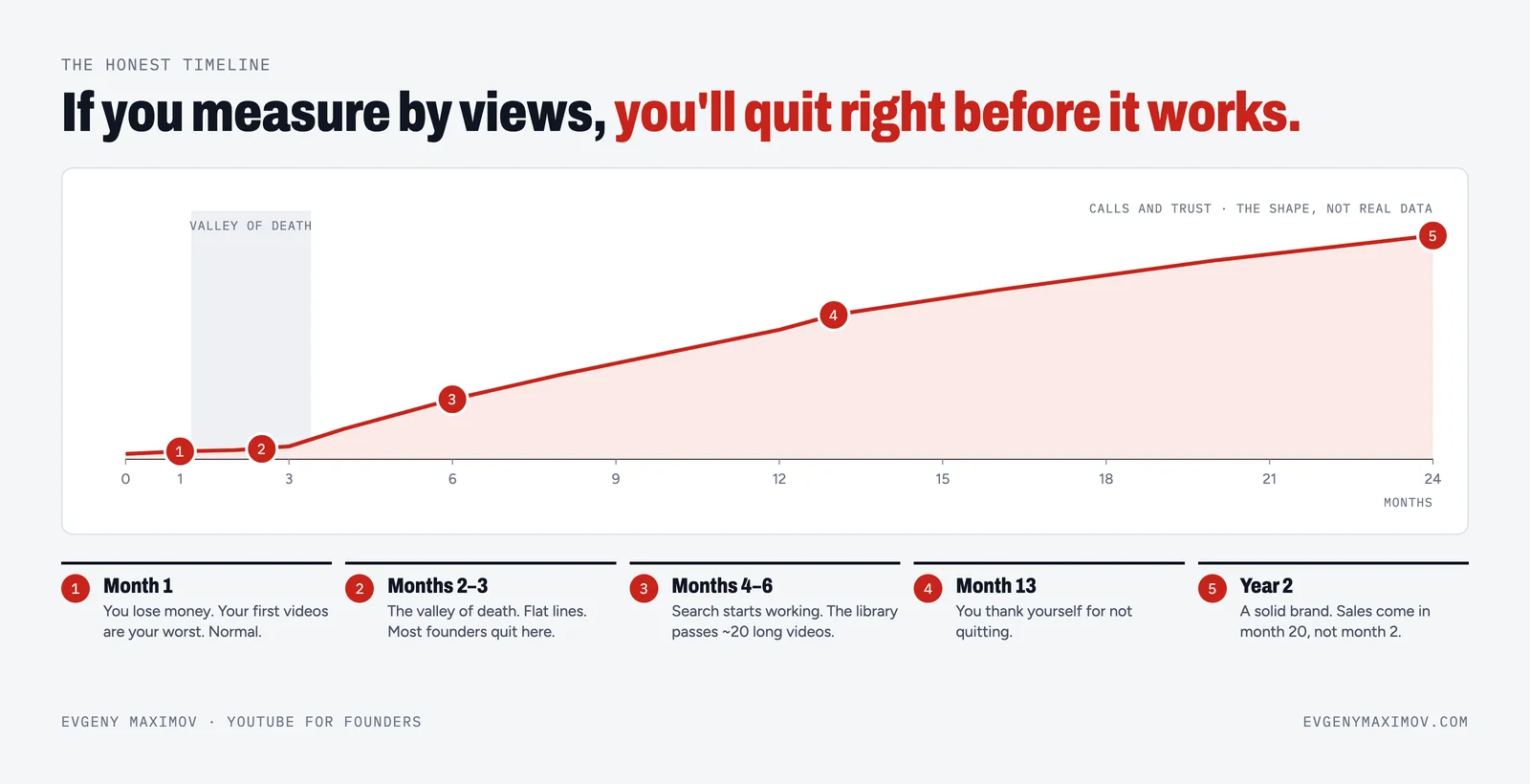
The honest trade-off: ads bring leads next week, content takes months. Most advisors who do well use both. Ads for today's demand, YouTube for the clients who will search for an advisor next year and find you already explaining their question.
Why is YouTube a good fit for financial advisors?
- High lifetime value. One client can be worth thousands a year, for many years.
- Long research. People don't hand over their savings after one ad.
- Specific questions. "When should I take Social Security?" "How do I retire early?" Perfect search topics.
- Trust. Watching an advisor explain things patiently for 20 minutes feels like a first meeting.
Who already won on YouTube as an advisor?
- The Money Guy Show: about 705K subscribers, run by advisors at a real wealth management firm.
- Rob Berger: about 300K.
- James Conole, CFP: about 216K, the founder of an advisory firm, focused on retirement planning.
- Ari Taublieb, CFP: about 89K, focused on early retirement.
They all picked a clear audience (often retirement) and answer its questions again and again.
What should a financial advisor post on YouTube?
1. Scenario videos. "Can I retire at 60 with $1.5M?" Real numbers, hypothetical client. The most popular format in the niche.
2. Explainers. Roth conversions, required distributions, tax brackets. One topic per video.
3. Mistakes. "5 retirement mistakes I see every month."
4. Life events. Inheritance, selling a business, divorce, a job change.
5. How you work. Your process, your fees in plain words, what the first meeting looks like.
Pick one niche: retirees, business owners, doctors, tech employees with stock options. One audience, many questions.
Why do small advisor channels still work?
I studied four or five YouTube channels of advisors and advisor marketers. Most videos had 50–200 views. Tiny numbers. Yet on one of them, a video with about 70 views brought a client worth $12,500–15,000 a year. That wasn't our client, but it shows the math. But advisors aren't selling to millions. A local or niche advisor needs a handful of new clients a year. The right 70 viewers can be enough.
Judge views by your niche, not by YouTube in general. An investment club that talks only about real estate investing gets 1,000–2,000 views per video, and that's fine for them. Our client Tvoy Sklad, which raises money from private investors for self-storage facilities, published a 30-minute interview that got almost 5,000 views. In a niche that narrow, that's a big result.
There's a good reason small numbers work. Taki Moore, a coach for advisors and consultants, shared a story about a former client who analysed who bought from his business: every buyer had consumed at least 47 minutes of content before deciding. For a decision about someone's savings, that's not surprising. People need hours with you, not seconds.
How do advisors stay compliant on YouTube?
Rules depend on your registration and country. In the US, advisers follow the SEC Marketing Rule and broker-dealers follow FINRA rules. Practical habits:
- Review scripts and videos with compliance before publishing.
- Use hypothetical examples, clearly labeled.
- Add disclaimers in the video and description.
- Be careful with testimonials and performance claims. Follow your firm's policy.
- Archive what you publish.
Educational content is usually the easiest to approve and the most useful for viewers. Plan the review into your schedule: film once a month, and compliance has a week to check the cuts before anything goes live.
How do videos turn into clients?
- First line of the description: "Book a free intro call".
- A "how we work with clients" video linked from every other video.
- A lead magnet for people not ready to talk: a retirement checklist, a planning worksheet.
- Ask every new client which video they watched. For a business where one client is worth this much, tracking matters.
FAQ
Is YouTube good for financial advisors?
Yes. People research for a long time before choosing an advisor, and long videos let them experience your thinking. Advisory firms like the one behind The Money Guy Show (about 705,000 subscribers) and James Conole's (about 216,000) grew this way.
What is content marketing for financial advisors?
It is educating future clients with articles, videos, emails and posts that answer their money questions: retirement scenarios, taxes, life events. Long YouTube videos are the strongest format because they keep ranking for years and let people spend real time with the advisor before a meeting.
What is the best digital marketing for financial advisors?
Referrals and a clear website first, then a content channel that compounds. YouTube works well because financial questions are searched for years. Paid ads can fill gaps, but they stop when the budget stops.
How much do Google Ads cost for financial advisors?
In Google Keyword Planner (US and UK), top-of-page bids for searches like "financial advisor near me" or "fee only financial advisor" run roughly $7–34 per click. Clicks are not clients: Kitces Research puts the average advisor client acquisition cost at around $3,100, much of it the advisor's time.
Is YouTube cheaper than paid ads for financial advisors?
Over time, usually yes. Ads must be paid again every month and get more expensive each year, while a video library keeps working after it is published. Ads bring leads faster, so many advisors use both: ads for today's demand, YouTube for compounding trust.
What should financial advisors post on YouTube?
Scenario videos with hypothetical numbers ("can I retire at 60 with $1.5M?"), explainers on specific topics, common mistakes, life events like inheritance, and a video about how you work with clients.
Do financial advisors need a lot of views?
No. Advisors need a few new clients a year. Evgeny Maximov studied several advisor channels with 50–200 views per video; on one of them, a video with about 70 views led to a client worth $12,500–15,000 a year.
How do financial advisors stay compliant on YouTube?
Review content with compliance before publishing, use clearly labeled hypothetical examples, add disclaimers, follow rules on testimonials and performance claims, and archive published content. Rules depend on registration and country.
What is the best niche for a financial advisor on YouTube?
A specific client type with specific questions, such as retirees, business owners, doctors or tech employees with stock options. A narrow niche makes every video more relevant.
How long until an advisor gets clients from YouTube?
Usually several months of consistent publishing. Search-driven videos keep bringing inquiries for years because financial questions are evergreen.
How much time does an advisor need for YouTube?
With a production team, about one filming day a month for four long videos, plus compliance review time.
Founder of a done-for-you YouTube agency for high-ticket founders. Making content since 2014. More about me
Want the right 70 viewers?
We build YouTube channels for advisors and professional services. You film one day a month, with time for compliance review. 7-day money back guarantee.
Book a call →