How to Get Dream Clients From Video Content, Filming One Day a Month: The CCS Framework
No daily LinkedIn posts, no endless stories. Create consistently, convert through trust, then scale from one long video to every platform. Here's the framework we run for our clients.
 By Evgeny Maximov·9 min read·
How do you get a lot of clients from social media without writing a LinkedIn post every day, posting endless stories and recording a pile of short videos? Here's the framework I use for my clients. You spend one day a month, and by one day I mean two to six hours.
It's built on three people. Alex Hormozi, one of the biggest voices on business in the US. Nikolay Vilizhanin, founder of the biggest YouTube production agency in Russia, running 100+ channels at once. He wrote a book, YouTube for Your Business, and his training is how I organized my own agency. And me: I started posting at 14, and a hobby became my business.
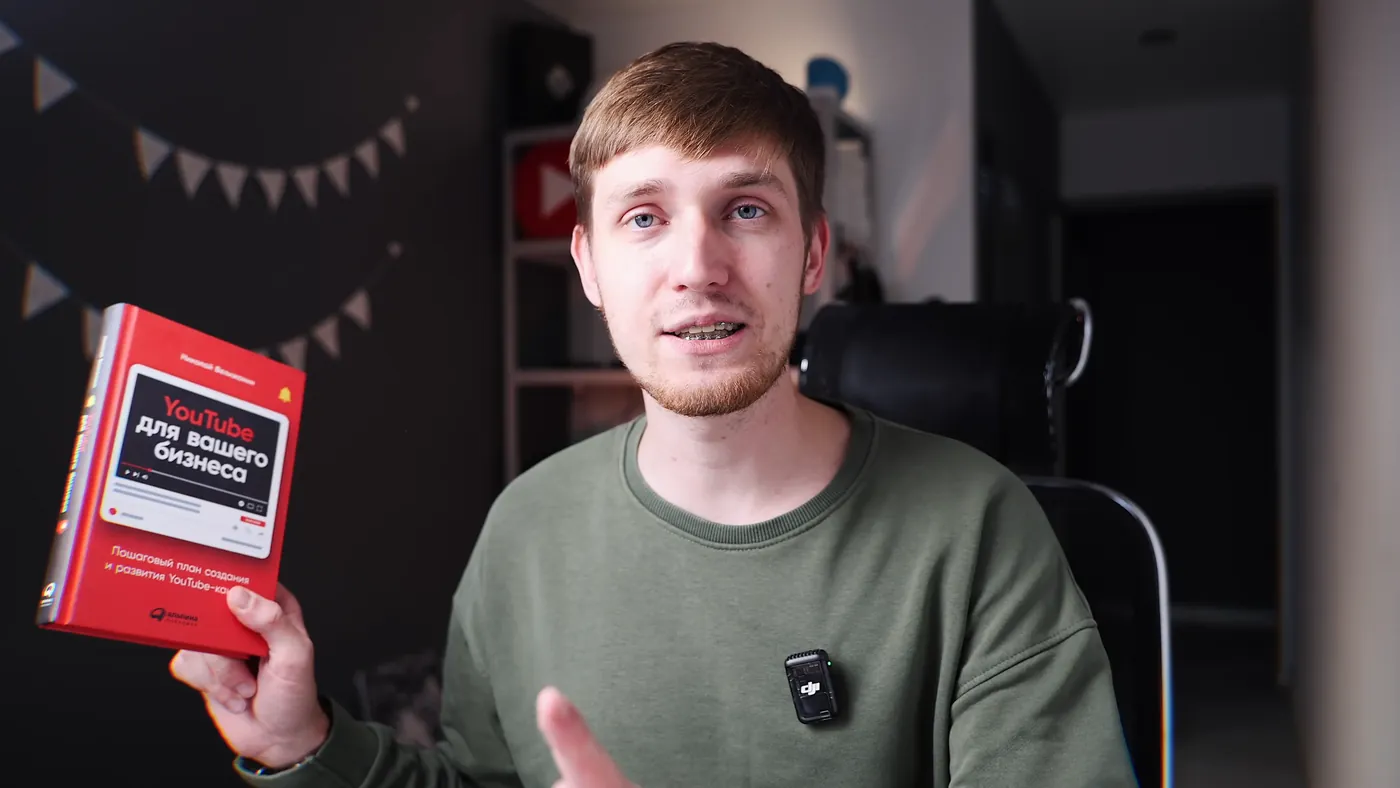
C: Create. How much content do you need?
Obvious, but without content you won't grow. Right now we create about 25 long videos and about 200 short clips a month for clients. To grow steadily, you need consistency.
| Long videos a month | What to expect |
|---|---|
| Fewer than 4 | Hard to grow at all |
| 4 + ~20 clips | The minimum for a typical client: 4 long videos, 5 clips from each |
| 8–12 | Two or three a week: faster growth |
For my own channel I want to grow aggressively, so I film every week and record six or seven videos.
Old channel or new one? People ask me this a lot. Revive the old one. My Russian channel had photography tutorials from eight years ago. I didn't start a new channel. I kept publishing on the old one, and now the new videos are the most popular there.
C: Convert. Why watch time beats views
I have a video with 250,000 views. Holy crap, a lot of views. But views and subscribers are vanity metrics. What people forget on YouTube is watch time: how long people actually spend with you.
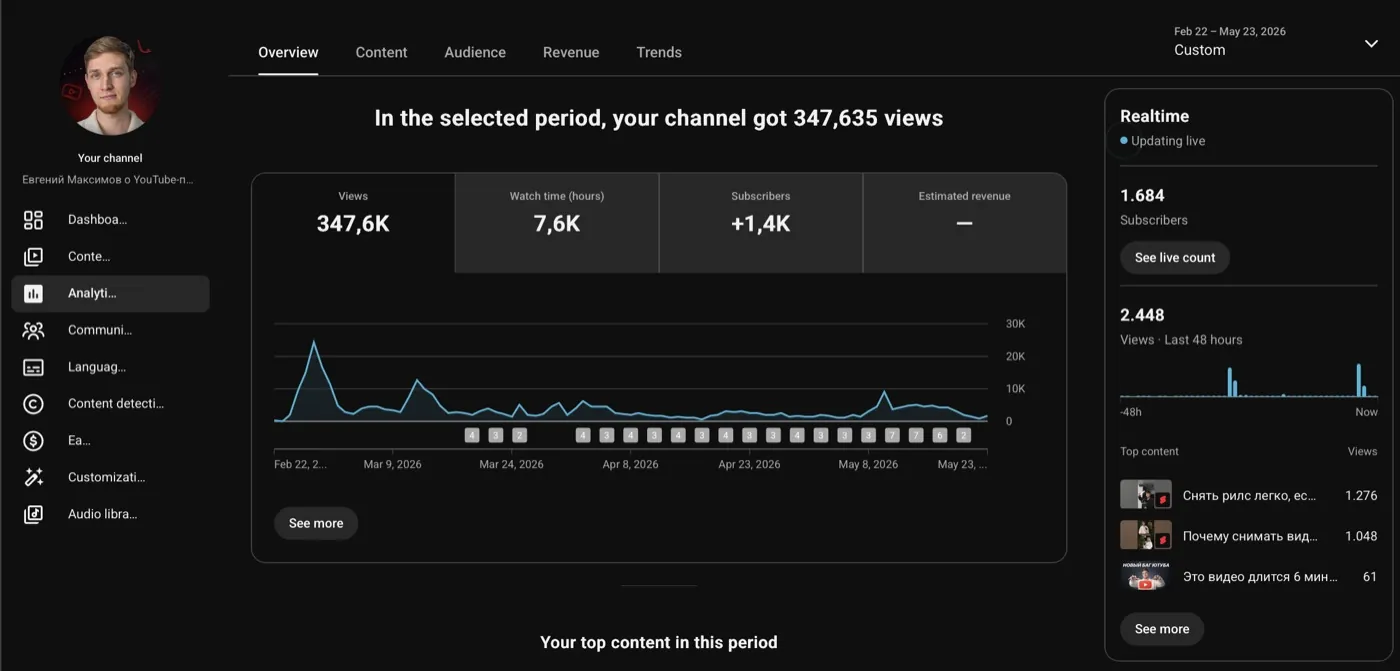
My small Russian channel had about 1,700 subscribers. In 90 days it got about 348,000 views and 7,600 watch hours. Divide by 24: 316 full days of people watching my face and listening to my thoughts. They warm up on autopilot.
In 2026 I had about 20 speaking gigs. Rooms of 20, 50, at most 60 people. You can't repeat that reach offline, unless you're MrBeast. How much would it cost to fill a stadium of 35,000? Rent, tickets, a huge marketing funnel. Impossible for a small business.

You don't need to go viral
Look at one of our B2B clients, Tvoy Sklad, a self-storage franchise. A four-year-old channel. The top videos have 20,000, 12,000, 2,000 views. Terrible performance by YouTube standards. But the business results for 2024–2025:
~$5M (445 million rubles) raised
20+ franchise partners, each worth millions
Partners from Belarus and Armenia came from YouTube, with no ads there
The founder says YouTube became the most important resource of the company. He cloned himself on YouTube. Partners arrive saying: “I've watched all your videos, let's get to business.”
If you're a business owner, forget about going viral. The strategy is trust. A 500-view video, a 5,000-view video, a 10,000-view video can be enough to hit your business goals. Jeremy Haynes and Cole Gordon say the same: if you go viral, you're probably doing something wrong. Stay in the niche of your buyers.
S: Scale. One long video, every platform
This is the beauty of long-form content: you create a ton of short videos from it. From a regular long video we clip about five, from a podcast about ten. And the clips often perform better than shorts shot on a phone. Our client Ayuna's own phone reels get 16–30 thousand views. The clips from her long videos often do more.
Here you can go viral and build awareness. But treat it as recognition, not conversion: “I saw your face in my feed, now I see your long video, let's watch.” I don't like DM automations like “comment this word and I'll send the guide”. I like building trust with long videos.
And don't try to master every platform. X, LinkedIn, email, TikTok: it's a huge distraction. Pick one main platform. The test is simple: which one do you use the most? If you watch long YouTube videos, make them. If you live in reels, make reels and carousels. For us it's YouTube, and we repost everywhere else.
What to delegate so you only film
Your end goal is the promise: one working day a month, and you grow on all platforms. To get there, a content team takes over about 95% of the work:
- Market researchEvery quarter: scout the market, top ideas, new competitors and formats, then give me the content plan.
- StrategyGo viral or build trust? It depends on your product and funnel.Low-ticket automated products need reach. We can take about eight clients before I need to hire seven more people, so I don't need viral. I need a few great clients.
- ScriptwritingAnchor scripts, not word-for-word.A 15-minute video has about five sections, each with a key idea, questions to talk about, bridges and a written intro to hook viewers in the first 30 seconds. ChatGPT or Gemini help. Documentaries need a detailed script and fact-checking.
- FilmingThree types of clients.Those who know nothing about filming: we rent a studio and bring a filmmaker. Those who shoot on a phone: buy a mic and a tripod, learn the basics. And the rare ones with gear and skills. Everyone needs someone behind the camera asking questions and making silly jokes, so they forget the fear. In my agency, that's me.
- Video editingDelegate this first.Half my team is editors. Don't go super cheap: the editor needs taste. On Fiverr or Upwork, look for someone who watches the same shows and movies as your audience.
- DesignNot the cheapest designer.Thumbnails are about human behavior, color psychology and drawing attention, not just Photoshop. You don't need MrBeast-level 200 iterations.
- PublishingAn account manager posts on every platform.This hire makes social media much easier.
- Quality controlThe same account manager checks every video before it goes live.
- AnalyticsMonthly, once there's real data.I have clients who want to analyze a brand-new video an hour after publishing. Two views. Don't. First build the habit of recording.
After that, you spend a few hours a month. Some clients record four long videos in two hours, others need three sessions. It gets faster. Block half a working day and you get four long videos, about 20 clips, and more: sales assets that close objections for your sales team, LinkedIn posts, newsletters, a WhatsApp message to leads that shares value instead of a Stripe link.
Your highest-leverage activity is to shine in front of the camera. Even the CEO of Apple, who runs a freaking huge company, shows up on camera several times a year to present new products. He doesn't edit the video.
FAQ
What is the CCS framework?
Create, Convert, Scale. Create long videos consistently, convert viewers into clients through trust and watch time instead of chasing views, then scale by clipping shorts and posts from every long video for other platforms. It's how we run business channels for clients who film one day a month.
How many YouTube videos should a business post per month?
At least four long videos a month, better eight or twelve. For a typical client we publish four long videos and about 20 shorts clipped from them. Below that, it's hard to grow.
Should I start a new YouTube channel or revive an old one?
Revive the old one. My Russian channel had photography tutorials from eight years ago. I kept it instead of starting over, and it works.
Which YouTube metric matters most for business?
Watch time, not views or subscribers. My Russian channel with about 1,700 subscribers got 7,600 watch hours in 90 days: 316 full days of people listening to me. You can't repeat that offline with talks for 20–60 people.
Do you need viral videos to get clients from YouTube?
No. For business owners the strategy is trust. Tvoy Sklad, a self-storage franchise, raised about $5M and signed 20+ franchise partners in two years with videos that got 2,000 to 20,000 views. Partners from Belarus and Armenia came from YouTube without ads there.
How many shorts can you get from one long video?
About five good clips from a regular long video, and about ten from a podcast. Clips from long videos often do better than phone-made shorts.
Which platform should a business owner focus on?
The one you actually use. If you watch long YouTube videos, make long YouTube videos. If you live in Instagram reels, make reels and carousels. Pick one main platform and repurpose to the rest.
What should a business owner delegate in content creation?
Almost everything except being on camera: market research, strategy, scriptwriting, filming setup, video editing, thumbnails, publishing, quality control and analytics. Start with video editing, it's the biggest time sink.
When should you start looking at YouTube analytics?
After you have real data. A brand-new channel with two views an hour after publishing has nothing to analyze. First build the habit of recording, then review results monthly.
How long does it take to film a month of content?
Some clients record four long videos in two hours. Others need three sessions for the same. It gets faster with practice: block half a working day and you'll get four long videos plus about 20 clips.
What is the CCS framework based on?
On Alex Hormozi's ideas, on the training of Nikolay Vilizhanin, whose agency is the biggest YouTube production agency in Russia and runs 100+ channels, and on my own experience making content since 2014.
Founder of a done-for-you YouTube agency for high-ticket founders. Making content since 2014. More about me
Want the whole framework done for you?
We handle about 95% of the work, from market research to analytics. You invest one day a month and get 4 long videos and 20+ clips. 7-day money back guarantee.
Book a call →