How to Hire a YouTube Video Editor (Without Losing a Month)
I once gave a test task to an editor my own team recommended. Two days later, silence. A month later I found out he'd quit editing and become a DJ. Here's the process I use now.
 By Evgeny Maximov·11 min read·
Why do founders hire the wrong YouTube editor?
Because they hire in ten minutes, from one portfolio link. And editing is about half of what a video costs us. It's the longest part of the work and the most expensive one.
Here is my own mistake. One of my editors recommended someone he knew. We talked, shook hands, and I sent him a test task. Two days later, he was gone. No message. He stopped answering my editor too. A month later I found out he'd changed careers and gone into DJing.
He wasn't a bad person. He had very little experience and was trying freelancing to see if it could make money. That cost me a month. Since then I use the same process for everyone, including people my team recommends.
What tools does a YouTube editor need?
Set up the stack before you hire. A good editor can't do good work if your files, tools and review process are a mess.
- Editing software. Final Cut Pro, DaVinci Resolve or Adobe Premiere Pro. My agency uses Premiere Pro. I personally edit in Final Cut, and one of our editors works in DaVinci, and it's fine. But once you grow, pick one system for the team. Shared plugins, shared projects, easy handoffs. If one editor is sick, someone else picks up the project without rebuilding it.
- Motion design software. After Effects is the standard. You can live without it for a while with templates. For custom titles, animation and graphics, you need someone who knows it.
- A library for footage, music and sound effects. We use Envato Elements, and every editor has access. The big reason is licenses: every clip comes with one, so we publish for any client in any niche without copyright trouble. If your content is more creative, with fast inserts and storytelling, look at Epidemic Sound or Artlist for music.
- Cloud storage. Dropbox or Google Drive works. Start with 1 TB and expand. One of our filming days is about 200 GB (4K, two cameras, 2–4 hours of raw footage), so it adds up fast.
- A review app. Frame.io or Dropbox Replay: comments on exact timecodes, versions, approvals. You don't need it on day one. Add it when videos get complex and volume grows.
What does a YouTube editor really do?
You're not hiring a person who cuts pauses. You're hiring someone who turns a talking head into a show. They pick the music, the B-roll, the graphics and the pace. Your script doesn't say any of that. The editor decides.
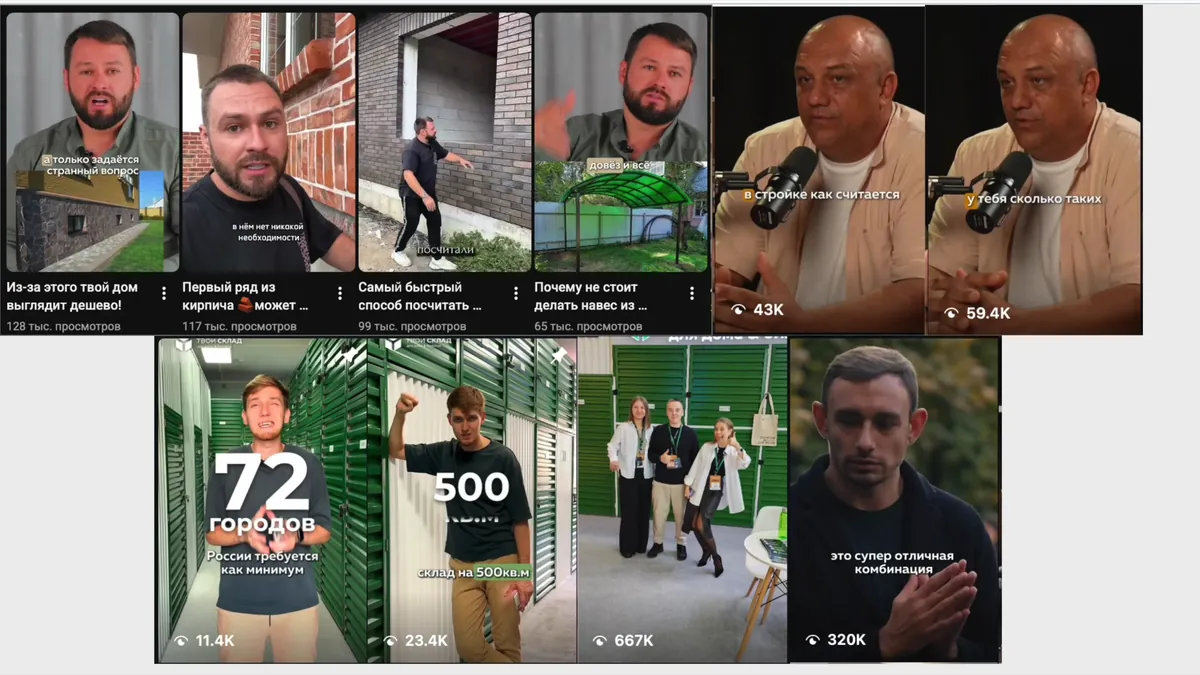
What we ask for in the vacancy: at least six months in Premiere Pro, After Effects and Audition, the basics of YouTube editing, a sense of style for titles and lower thirds, running several projects at once, accurate spelling. English is a big bonus.
What matters more than skills: patience with details, a sense of rhythm and taste, calm under pressure when there are many edits and short deadlines, self-organisation (everything is remote), focus on the task and not just a pretty picture, and being comfortable with feedback.
How much experience should a YouTube editor have?
At least one year of real paid work. Ideally one to three years or more: someone who already knows they can make a living from editing. Not someone trying it as a hobby. That's the lesson from my DJ story.
The second lesson: a recommendation is not a filter. After that month, even people my own team recommends go through the same test as everyone else.
How do you filter 300 applicants for a video editor job?
A vacancy post costs us about $30 and brings around 300 applications. Your job is to cut that down fast, with filters that take almost no time.
Three automatic filters, two questions and one link, right in the application form:
- Language. Which languages do you work in? English, if your channel is in English.
- Software. Which program do you use? If you know you only need Premiere and you have lots of applications, cut everyone else. It's much easier.
- A portfolio link. The vacancy says “attach your portfolio link in your reply”. No link is a red flag. The person doesn't read.
What should a good video editor portfolio look like?
I check two things.
1. Does the style match? I look for examples close to what I need. If I need long expert videos and the editor only has kids' cartoons with hand-drawn animation, that's not a fit. Lots of different projects is fine, but I need to see work like mine.
2. Is it organised? The portfolio should be sorted into folders: podcasts, Shorts, long talking heads, animation, documentary.
If I have to dig through a cloud folder of 80 untitled files to find the right video, that's a red flag. They'll organise your files the same way.
What is a good test task for a video editor?
Don't judge by the portfolio. Pay for a small real task. It tells you more than any interview. We give a paid trial week with three tasks:
| Task | What you give | What it shows |
|---|---|---|
| 1. A rough cut | a long video, but only the first ~3 minutes, with graphics | their style, and how you'd improve it |
| 2. One or two Shorts | cut from the same long video | subtitles, graphics, B-roll, music, sound design |
| 3. A screen recording | they explain why they made each choice | their thinking: can they take feedback, or are they guessing? |
Don't ask for a 20-minute edit. A 3-minute version is enough to see the style. And the screen recording is the part most people skip. An editor who can explain their work can improve it. An editor who can't is guessing.
What I watch during the week:
- Do they deliver on time, and do they message first when something's wrong?
- How do they take the first round of edits? The second?
- Do they ask smart questions about the material?
- Are files named and exported correctly?
We use the same week for every role in the agency. Here's how the paid trial week works.
How many rounds of edits are normal?
Edits are normal. Endless edits are a signal.
- With a new editor: 3 to 5 rounds. They're learning your style and your taste.
- After that: 1 to 3 rounds on a big video.
- Exception: very complex projects, like a documentary or interviews on eight cameras with several storylines.
If edits never drop to 1–3, the problem can be the editor, the footage or the brief. Check all three. And your role is to say what you like, what you don't, what to add and what to remove. You don't direct the edit shot by shot. If the video needs visuals from your expertise, like screenshots, case data or numbers, you send them with timecodes.
How do you know if an editor is good?
We look at audience retention: how many people are still watching after the first minutes. But we don't tie the editor's pay to it. Clients are different: different audiences, different topics, different formats. A drop in retention tells us the video needs to be denser and more dynamic, and we fix that together.
How much does it cost to hire a YouTube editor?
| Option | Typical cost | What you get |
|---|---|---|
| Freelance editor | roughly $100–250 per long video | the edit; management stays with you |
| Employee in the US | median ~$75,000 a year; bottom 10% under ~$40,000, top 10% over ~$148,000 (BLS, May 2025) | one person, steady volume |
| A team or agency | depends on volume | editing plus strategy, scripts, thumbnails, publishing |
Editing is about half of what a video costs us, and editors are the best-paid people in a production team. That's not a surprise: they carry the longest part of the work. So don't buy the cheapest one. A cheap editor who disappears costs you a month, like mine did. A good one is the cheapest thing on your channel.
Red flags and green flags when hiring an editor
| 🚩 Red flag | ✅ Green flag |
|---|---|
| No portfolio link in the application | A portfolio link, sorted into folders by format |
| Portfolio doesn't match your style | Examples close to your format |
| Little experience, “trying freelancing” | 1–3+ years, makes a living from editing |
| Disappears for a day without a word | Writes first when something's late |
| Argues with every edit, or agrees and changes nothing | Asks questions, suggests an alternative, then does it |
| Can't explain why they cut it that way | Explains their choices on screen |
| Sends the render at the last minute | Sends a draft early and leaves time for edits |
| Edits never drop below 5 rounds | Fewer edits with every video |
| “I can do everything” | Says honestly what they can't do |
Is one editor enough to run your YouTube channel?
Honestly, no. An editor covers one of the seven jobs behind a video. Strategy, scripts, filming, thumbnails, publishing and the management of all of it still stay with you.
So here are your two branches. If you want to hire and run it yourself, use this process: write your stack on one page, post the vacancy with two filter questions and a portfolio link, prepare the three-part test, and set your rule for edits. If you'd rather skip hiring, managing and replacing people, that's the part we take on. You film one day a month, and we do the rest.
FAQ
How do I find a good video editor for YouTube?
Post a vacancy with two filter questions (language and editing software) and ask for a portfolio link in the reply. Evgeny Maximov's agency usually gets about 300 applications from one post, cuts them to about 50 with these filters, to 10–15 after a portfolio check, and to 2–3 people for a paid trial week.
How much does it cost to hire a YouTube video editor?
A freelancer usually edits one long YouTube video for roughly $100–250. As an employee benchmark, the median film and video editor in the US earned about $75,000 a year in May 2025 (US Bureau of Labor Statistics). Editing is about half of what a video costs in Evgeny Maximov's agency.
Which is better for YouTube: Premiere Pro, Final Cut or DaVinci Resolve?
All three work. Evgeny Maximov's agency uses Premiere Pro, Evgeny edits in Final Cut himself, and one editor on the team uses DaVinci Resolve. What matters is that a growing team picks one system, so projects, plugins and handoffs are shared.
Does a YouTube editor need After Effects?
Not at the start. Templates cover basic titles and graphics for a while. You need After Effects, or an editor who knows it, once you want custom animation, titles and graphics that match your brand.
Where do editors get music and footage without copyright issues?
From a stock library with licenses. Evgeny Maximov's agency gives every editor access to Envato Elements, so B-roll, overlays and music come with a license for any client in any niche. For music-heavy, story-driven content, Epidemic Sound or Artlist are stronger.
How much experience should a YouTube editor have?
At least one year of real paid work, ideally one to three years or more. Editors with less experience are often trying freelancing as a hobby and can disappear in the middle of a project.
Should a video editor test task be paid?
Yes. Evgeny Maximov pays for a one-week trial with real tasks: a 3-minute rough cut of a long video, one or two Shorts, and a screen recording where the editor explains their choices. A paid test shows reliability and taste better than any interview.
How many rounds of edits are normal with a video editor?
With a new editor, 3 to 5 rounds is normal while they learn your style. After that, 1 to 3 rounds on a big video is normal. If edits never drop, check the editor, the footage and the brief.
Should I tie a video editor's pay to audience retention?
No. Retention depends on the topic, audience and format, not only on the edit. Use retention as a signal that a video needs to be denser and more dynamic, and work on it together.
Where should I store raw footage for YouTube?
In a shared cloud: Dropbox or Google Drive work well, start with 1 TB and expand. One filming day in 4K with two cameras can be about 200 GB, so storage fills fast.
Should I hire a freelancer or a full-time editor?
Start with a freelancer on a paid trial and keep them if they deliver. A full-time hire makes sense once you have steady volume; one long-form editor can usually handle about 8 to 10 long videos a month.
Is hiring an editor enough to run a YouTube channel?
Usually not. An editor covers one of seven jobs behind a video. Strategy, scripts, filming, thumbnails, publishing and management still stay with you, which is why many founders hire a producer or an agency instead.
Founder of a done-for-you YouTube agency for high-ticket founders. Making content since 2014. More about me
Rather skip hiring, managing and replacing editors?
You film one day a month. Our producer, editors and designer do the rest, and you talk to two people at most. 7-day money back guarantee.
Book a call →