Founder-Led Marketing Offline: What Speaking and Filming Events Really Brought Me
When I moved to a new city, nobody knew me. So I went to every event I could. Here are the real numbers from two strategies, and why every talk is a month of content.
 By Evgeny Maximov·8 min read·
When I moved to Krasnodar, a big business city in the south of Russia, I started from zero. Nobody knew me, I knew nobody, and there was no budget for ads. So I went to every business event I could. I tried two strategies. Here are the honest numbers.
Does filming other people's events for free bring clients?
The idea looked perfect. Event organizers usually run at zero and can't pay for filming. Speakers want their talk recorded. So I offered: I'll film your event for free. Then I give each speaker their video and offer more: clips, packaging, full YouTube production.
It opened every door. One message to an organizer, and I was in. At one forum there were 11 speakers: 11 potential clients who were happy to talk to me.
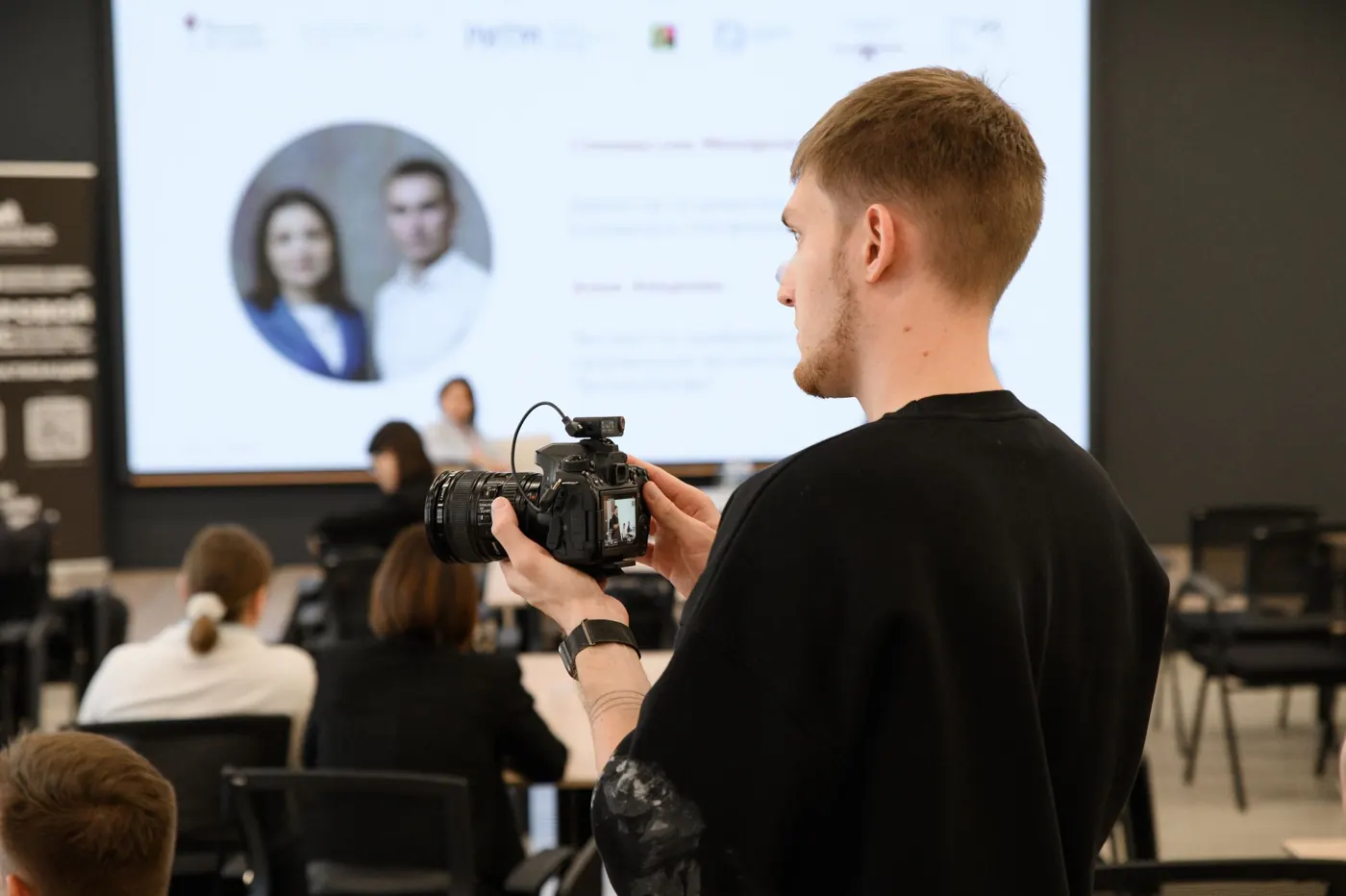
Now the math. At one two-day forum with 30 speakers, I paid about $820 of my own money for editing. Plus two full days of my time, which I didn't even count. Sales from that forum: about $130.
That's not a slow start. That's paying almost seven dollars for every dollar that comes back, and working two days for free on top. No business survives on that ROI. In ads you'd switch off a campaign like this in a day. I kept going for months, because it felt like “marketing”.
From the end of summer to the end of 2025 I filmed about 50 speakers. The result: one client for full production. A great one, we've worked together for almost a year. But that's about 2%. It should have worked on fifty people, not one. So I stopped filming for free and changed the strategy.
| Filming events for free | Speaking yourself | |
|---|---|---|
| Cost | about $820 of editing for one forum, plus days of work | about $60 to take part, 5 minutes on stage |
| Result | about 50 speakers → 1 client (~2%) | 1 talk → 2 clients |
| How people see you | the service provider | the expert |
Is speaking at events better than working for free?
Then I switched roles: from “the guy with the camera” to “the speaker”. A networking event, about 40–50 people, five minutes each to present. It cost about $60 to take part. From those five minutes: two clients. One for monthly YouTube production, one for a podcast.
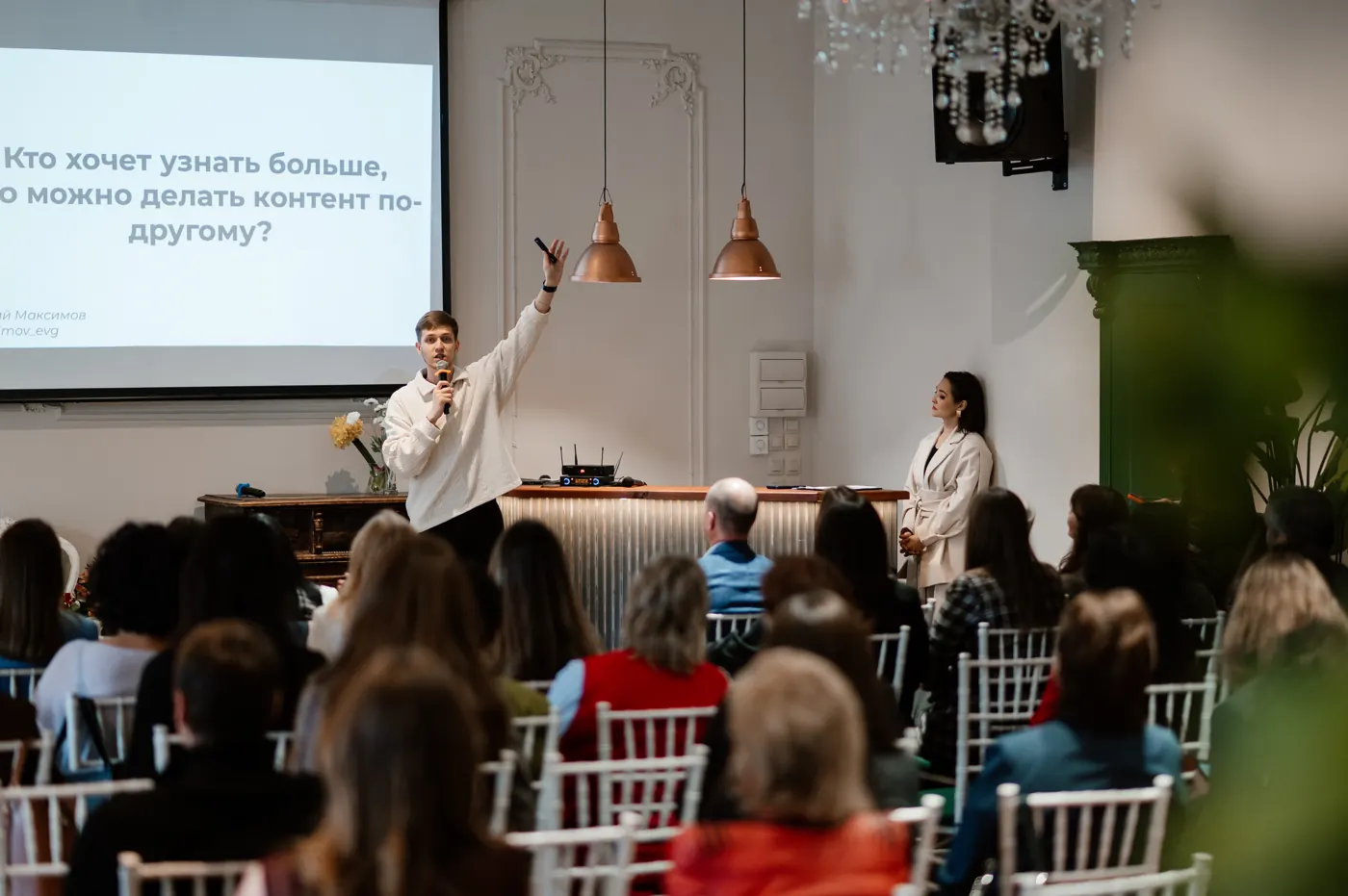
The difference isn't only the price. On stage, people see you as the expert. Behind the camera, they see you as the service. Same person, same skills, different position.
And most people are terrified of those five minutes. At the same event, one woman had 90 seconds to introduce herself and almost cried. The audience was friendly, nobody was going to throw tomatoes. But in her head, saying who she is felt like life or death. That fear is expensive: people who don't say who they are simply lose opportunities.
How did YouTube make me a better speaker?
Before 2025 I had spoken offline maybe five times. Then I joined a speaker training where 14 people presented. I made my slides in about an hour and didn't rehearse once. I took first place by audience vote.
Not because I'm a great speaker. Because a YouTube video and a talk use the same mechanics:
| On YouTube | On stage |
|---|---|
| Thumbnail and title | The topic and the first slide |
| The first 30 seconds | Stop people from leaving for coffee |
| Dynamic editing | A fast deck: I use about 40 slides for 5 minutes |
| Calls to action | “Take a photo of this slide”, “scan the QR code” |
| Confidence on camera | Confidence in front of a room |
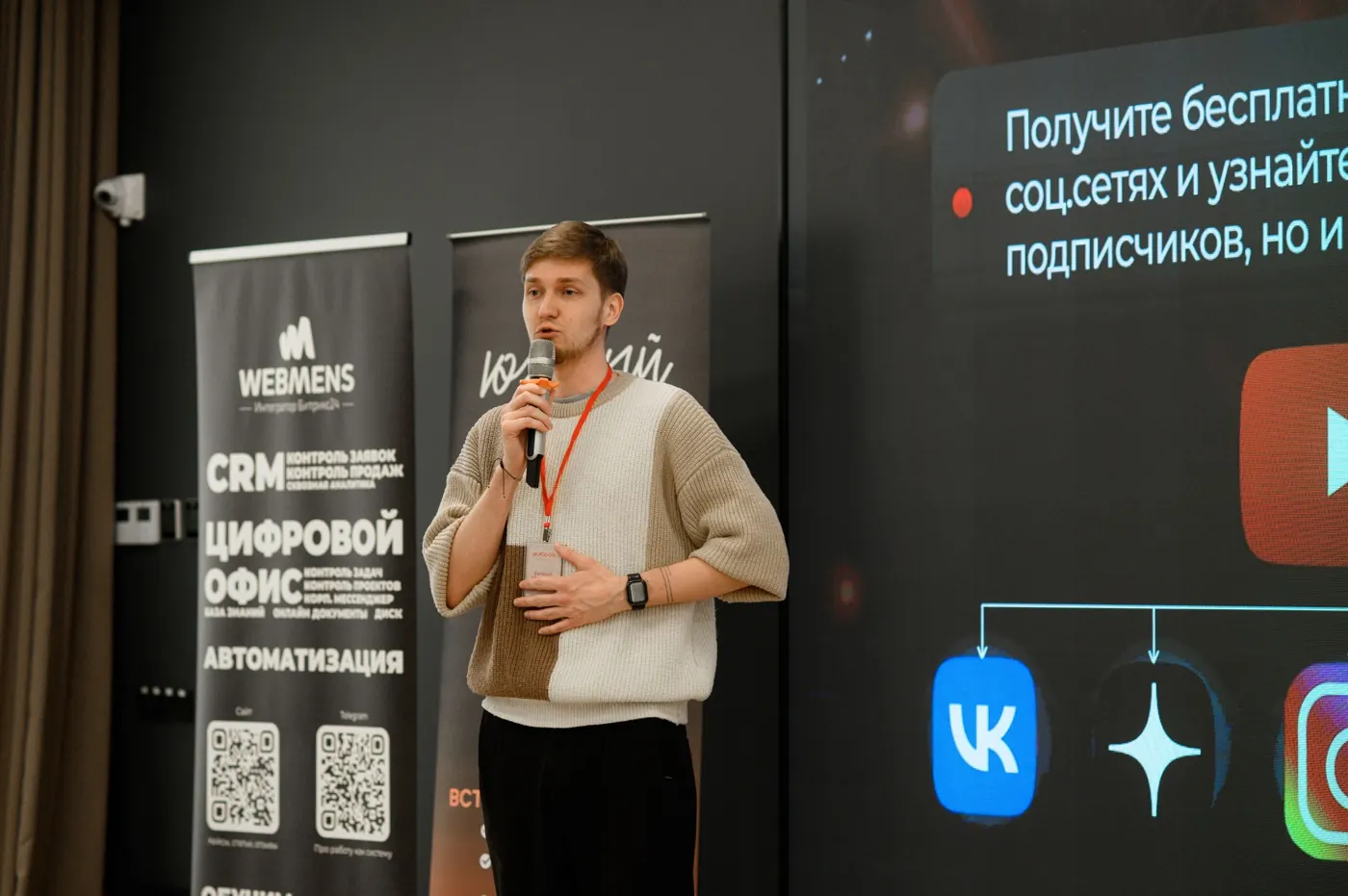
After my talks people often ask where I learned to present. I've never taken a public speaking course. My slides are like a movie: memes, jokes, proof. That's just how I make videos.
Why do clients from events show up months later?
Here's the part I didn't expect. About six months after the free filming, people started writing: “You filmed me last year. What else do you do?” The work I thought was wasted started to pay back.
One man heard my talk and did nothing. Half a year later he heard me again at another event and said: “Ah, so you do YouTube. Let's talk.” He became a client.
High-ticket buyers need time. They have to get tired of doing it themselves first. They don't buy the first time they hear you. They buy on the eleventh. So the job is to stay visible between events: content, the same message, again and again.
How do you turn one talk into a month of content?
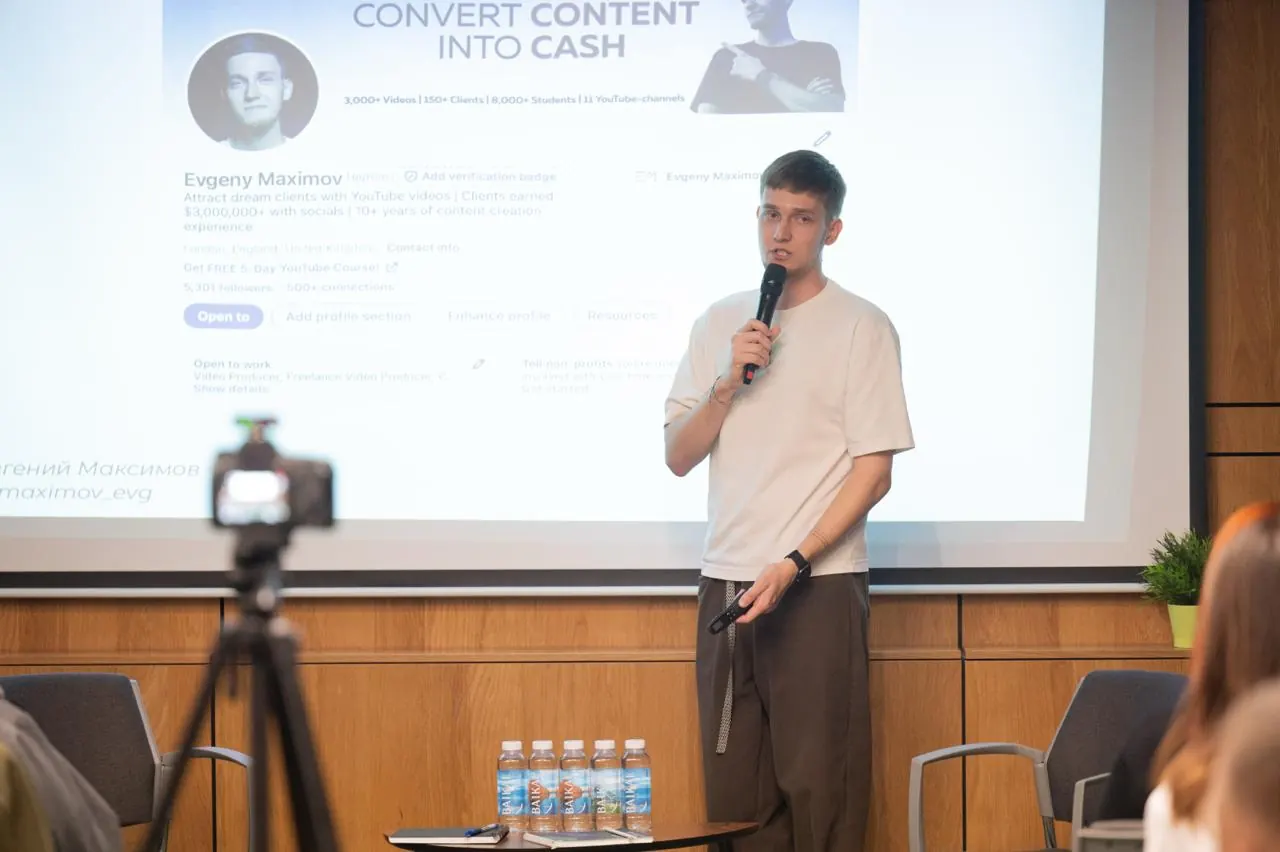
People book a studio, a camera operator, an editor, a social media manager, a stylist, all to film the same things they already say on stage. Put a camera on a tripod, clip a mic on, and that's your content.
Filming your talk
- The main goal is a clean shot of you. The slides go in during editing.
- A mic on you, not the room's mic. Small stages usually have bad sound.
- Ask the filmmaker to also record the screen, so the editor knows which slide is on.
- Use a clicker and pause between slides.
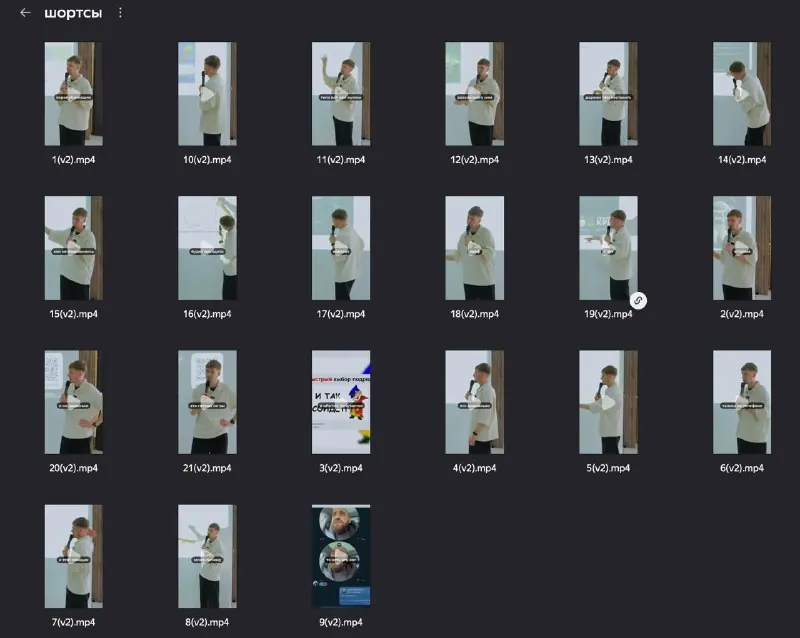
Event clips work great as shorts. You're on a stage with a microphone, and people give a speaker more attention than a person talking to their phone.
So: stop working for free “for exposure”. Go on stage. And film every single talk. Offline builds trust in the room. Video lets that trust reach everyone who wasn't there.
FAQ
What is founder-led marketing?
Marketing where the founder is the face: speaking at events, making videos, posting opinions. People trust a person more than a logo, especially for high-ticket services, so the founder's visibility becomes the main lead source.
Does filming other people's events for free bring clients?
Slowly. Evgeny Maximov filmed about 50 speakers for free and got one long-term client, about 2%. On one two-day forum he spent about $820 on editing and made about $130 in sales from it. It opens doors, but it's expensive.
Is speaking at events a good way to get B2B clients?
Yes, and it's cheaper than working for free. Evgeny Maximov spoke for five minutes at a networking event that cost about $60 to join and got two clients, one of them for monthly YouTube production.
Why do clients from events show up months later?
High-ticket buyers need time and repeated exposure. Evgeny Maximov noticed people from events writing to him about six months later, and one man became a client after hearing him speak a second time.
How does making YouTube videos help with public speaking?
The mechanics are the same: a title and thumbnail become your first slide, the first 30 seconds of a video become your opening, editing becomes a dynamic deck, and calls to action become 'scan this QR code'. Evgeny Maximov took first place among 14 speakers at a speaker training using these tricks.
How many shorts can you get from one talk?
A lot. Evgeny Maximov's team cut 21 shorts from one 30-minute talk, about a month of content from half an hour on stage.
How should I film my talk at an event?
Get a clean shot of you as the speaker and clean audio from a mic on you. Add the slides in editing. Pause between slides and use a clicker, so the editor can match them. Ask the filmmaker to also capture the screen.
Should founders work for free for exposure?
Only with a limit. Free work can build contacts and a name, but it's slow and expensive. Charge for your work, or do free work only where your ideal clients are.
Why are founders afraid to present themselves at events?
Fear of judgment. At one networking event, a participant almost cried during a 90-second introduction. The fear is common and expensive: people who don't say who they are lose opportunities.
How do I combine offline events with YouTube?
Speak at events, film every talk, publish the talk as a long video and cut it into shorts. Offline builds trust in the room; video lets that trust reach people who weren't there.
Founder of a done-for-you YouTube agency for high-ticket founders. Making content since 2014. More about me
Speaking at events but nobody films you?
We film your talks, cut them into long videos and shorts, and post them everywhere. You just speak. 7-day money back guarantee.
Book a call →