Why Experts Stop Posting on YouTube, and How Elisabetta Got Back to Video
Elisabetta Maccani has the passion, the expertise and an audience of 36,000. She still stopped posting. The problem wasn't her content. It was that she did everything herself.
 By Evgeny Maximov·6 min read·
An audience of 36,000, strong expertise, a YouTube channel she kept wanting to return to. Every step was on her.
Ideas and recording instructions, a video sales letter for her coaching program, short-form clips, editing, and publishing with keywords.
Back to video with one recording morning. Her verdict: “I would highly recommend it.”
Why do experts stop posting on YouTube?
This happens to a lot of creators. It happened to me too. You start a channel, you post actively, and then one day you just stop.
Elisabetta Maccani teaches Italian. She has the passion, she has the expertise, and she built an audience of 36,000 people. But something didn't work. When we looked closer, the main problem was simple: she managed everything by herself.
“I was thinking about going back to YouTube for a very long time. But it's a hard process, because you have to do many things. And it's time consuming.”
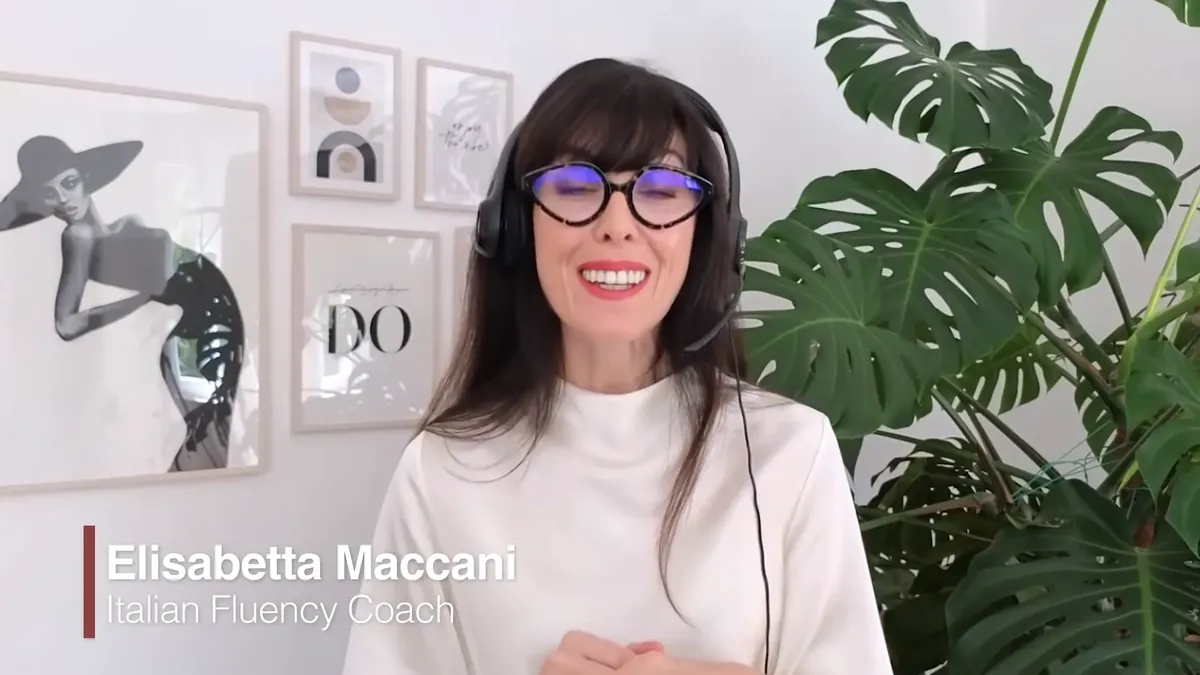
Elisabetta Maccani, Italian fluency coach
Every video competes with your coaching hours. Posting stops.
Your job is showing up on camera. That's all.
First, know exactly who your channel is for
Elisabetta started her channel many years ago. She's honest about why it didn't really work: she didn't have her ideal client clear in her mind. She made videos for beginners, for advanced students, for everyone.
Now she knows. Her client is the American intermediate learner. Someone who already studied Italian, loves Italy, and is stuck on the plateau: they understand, but they struggle to speak. Every video can now speak to that one person.
And why video at all? In her words, text doesn't show who you are. In a video, people see your energy and how you speak. They get to know you before they ever book a lesson.
What we made together
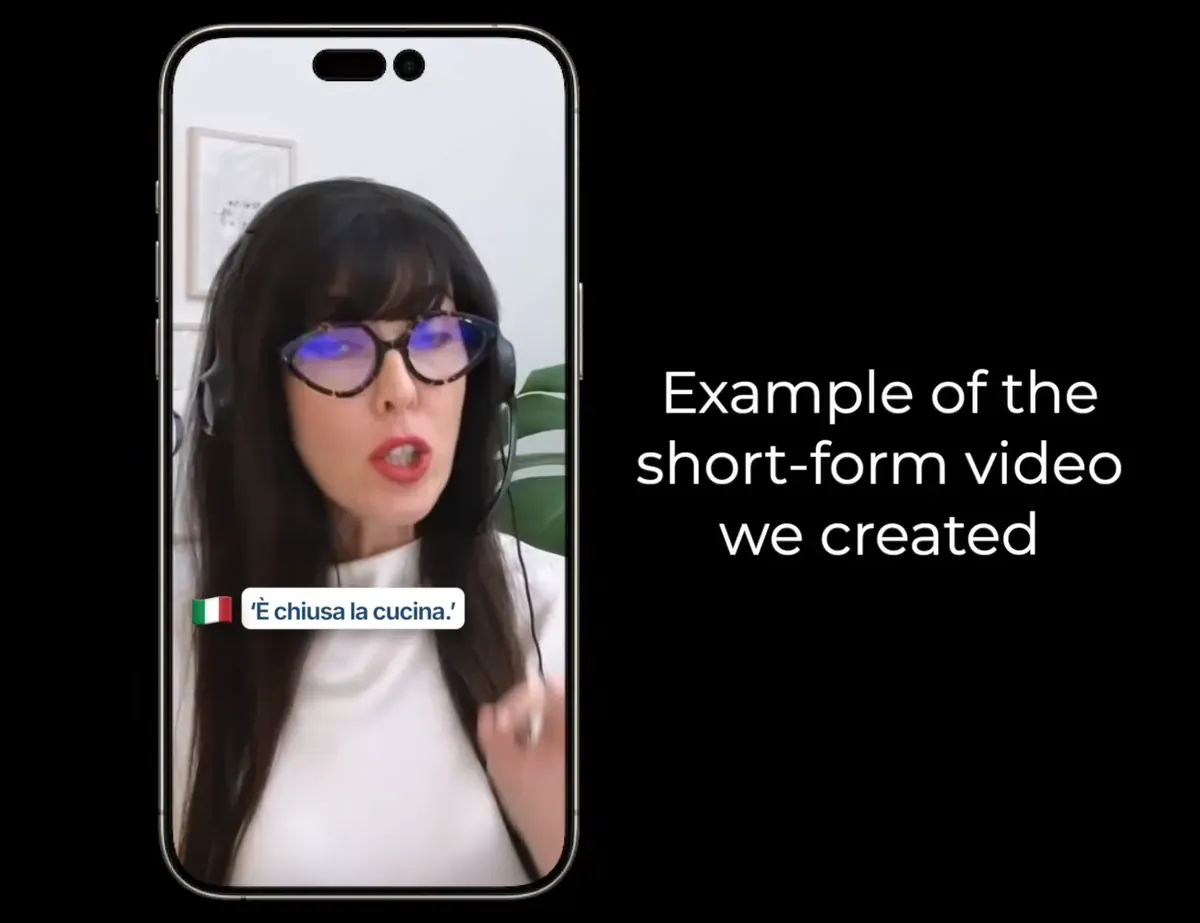
The main piece was a video sales letter for her six-month coaching program. Around it, we created short-form videos and clip ideas. One format she had seen other creators do and liked: short videos built on moments from famous Italian movies.
This is something I see a lot. Experts watch other creators, like a format, think “that would be awesome”, and never try it. A team gives you the push: why don't we try this?
Can a team edit in a language it doesn't speak?
Nobody on our team speaks Italian. That was a real challenge, and I want to be honest about it.
For the movie format, we sent Elisabetta about ten clip options from well-known films. Some she couldn't use: the actors spoke a dialect or not standard Italian. We couldn't know that. She could.
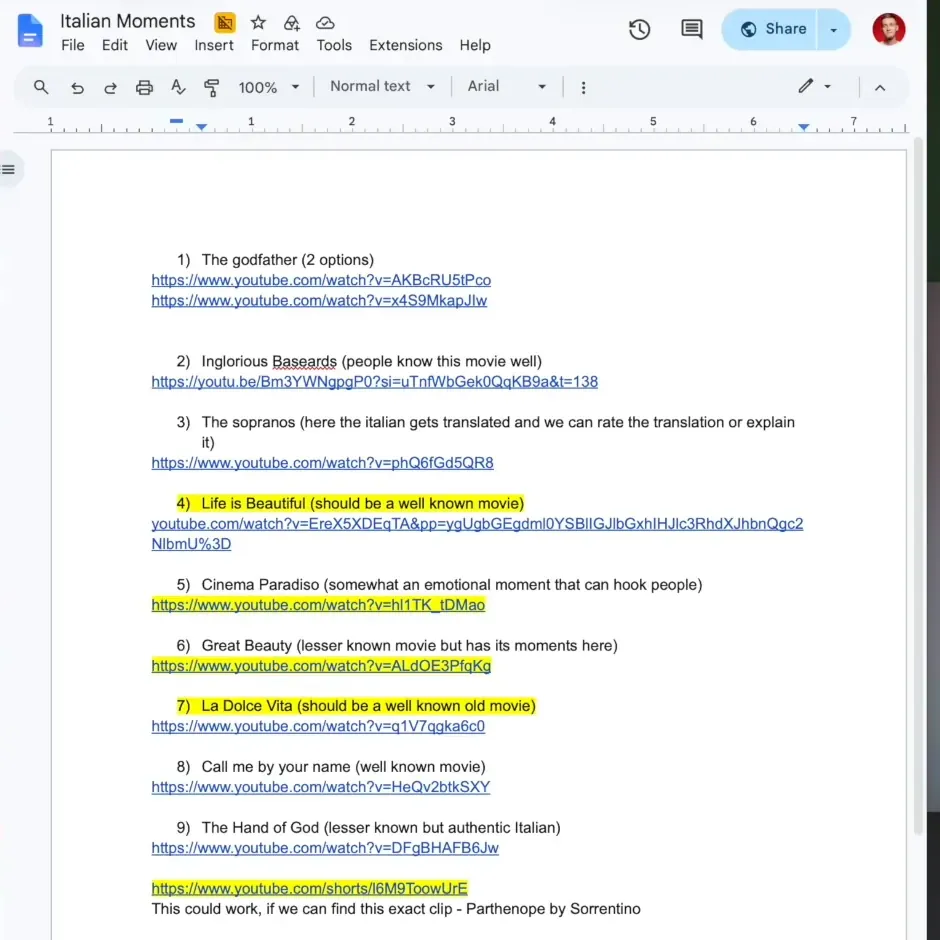
What helped: the editor on her project has a translator background. He knows Spanish and Portuguese, and it made the Italian much easier to work with. A lot of teams simply couldn't do this level of editing in a foreign language. The lesson for any language-heavy content: the team builds, the native speaker checks the final choice.
Don't wait for perfect gear
Elisabetta hadn't recorded for a long time. She didn't even remember how to use her camera. When she recorded a sample, she heard a weird noise in the audio. And she almost stopped right there.
We told her: don't worry, just do it. It's not perfect, but it's pretty good. And she did.
“If you try to be perfect, you won't. I would still be there with the camera, trying to figure it out.”
Elisabetta Maccani
Is the audio studio quality? No, and she'd use a different microphone next time. But she has the videos. A good-enough video that exists beats a perfect video in your head.
The hardest part is not recording, it's publishing
At the end of the project, Elisabetta asked a question that surprised me. She thought publishing was on her: the descriptions, the keywords, the optimization. For her, that felt like the hardest part.
It isn't on her. We do it. Titles, descriptions, keywords and posting on YouTube and other platforms. She had already tried one of the clips on LinkedIn the same day, just to see how people react.
Her comparison with doing it alone was simple. Speed: very fast. Quality: high, both for short-form and the VSL. And the biggest difference:
“You just have to record, and you plan just that day to record, that morning. That's it. You give everything to the team, they handle it. I would highly recommend it.”
Elisabetta Maccani
That's the difference a team makes. You stop worrying about research, ideas, thumbnails, scripts, editing and publishing. You show up on camera, approve, give feedback. As she said herself, what you publish on YouTube stays there forever. So it's a good investment, as long as you can keep doing it.
FAQ
Why do experts stop posting on YouTube?
Usually not because of a lack of ideas. One video needs research, a script, filming, editing, a thumbnail, a description, keywords and publishing. When one person does all of it next to a full-time business, posting stops. That's what happened to Elisabetta Maccani, an Italian coach with 36,000 followers.
How do I stay consistent on YouTube?
Take everything except filming off your plate. Plan one recording morning, record several videos in a row, and let a team handle editing, packaging and publishing. Elisabetta said this is what made consistency possible for her.
Is it worth hiring a team for YouTube instead of doing it yourself?
If your time is limited, yes. Elisabetta's answer was “obviously”: doing it yourself takes too much time and too many details, like algorithm, description and keywords. With a team, she only planned one morning to record.
What does a done-for-you YouTube service include?
In our agency: research, ideas, scripts, filming instructions, editing, thumbnails, SEO and publishing on YouTube and other platforms. The client records, gives feedback and approves. That's all.
Can a team edit videos in a language they don't speak?
Yes, with the right process. Our editor on Elisabetta's project has a translator background and knows Spanish and Portuguese, which helped with Italian. For language-heavy content like movie clips, a native speaker still checks the final choice.
Do I need perfect equipment to record videos?
No. Elisabetta noticed a noise in her microphone and almost stopped. We told her to record anyway. The audio wasn't perfect, but she has the videos. If she had waited for perfect, she would still be figuring out the camera.
What is a video sales letter (VSL)?
A video that explains your offer, who it is for and why to trust you, usually used on a landing page or sent before a sales call. For Elisabetta we produced a VSL for her six-month Italian coaching program, plus short-form clips.
How fast can a team deliver edited videos?
Elisabetta called the delivery “very fast”. Short clips come first, the VSL takes longer because it has more details and rounds of feedback.
Who should an Italian or language coach target on YouTube?
A specific level and market. Elisabetta's channel didn't work until she understood her ideal client: American intermediate learners stuck on the plateau, who already studied Italian but struggle to speak.
Who is Elisabetta Maccani?
Elisabetta Maccani is an Italian fluency coach and certified NeuroLanguage Coach. She helps intermediate Americans who love Italy speak Italian confidently, through her YouTube channel and a six-month coaching program.
What is the first step if I stopped posting on YouTube?
Figure out who exactly the channel is for, then remove the bottleneck. If the bottleneck is you doing everything, delegate everything except being on camera and book one recording day.
Founder of a done-for-you YouTube agency for high-ticket founders. Making content since 2014. More about me
Is the bottleneck you?
You invest one day a month to record. Our 7-person team does research, scripts, editing, thumbnails and publishing on every platform. 7-day money back guarantee.
Book a call →