Content Distribution Strategy: One Long Video, Every Channel, in the Right Order
Most service firms don't have a content problem. They have a distribution problem: a good video goes live, gets one post, and nobody sees it twice. Here is the plan I use: one home for long videos, a clear job for every other channel, a weekly rhythm and one number per channel.
 By Evgeny Maximov·9 min read·
What is a content distribution strategy?
It answers four questions. Where does each piece go? In what order? How often? What do I expect from each place? Most firms answer none of them. They publish a video, share it once on LinkedIn, and move on to the next one.
That wastes the hard part. Filming, editing and packaging a long video takes the most effort. Showing it takes little extra work, and it decides how many people ever see it. In 2026, buyers do much of their research alone. A Gartner survey of 646 B2B buyers, run in August and September 2025, found that 67% prefer a rep-free buying experience. If they look for answers before they talk to you, you want your answers to be in the places they look.
This article is about the plan: where, in what order, how often. How to cut a clip is a different job, and I cover it in how to repurpose YouTube videos. Read that one for the clip recipe and come back here for the system.
What is the difference between omnichannel and multichannel?
People mix these words up, so here is how I use them. The table is my own working definition, written for service firms. Big retail brands use stricter versions.
| Term | Plain definition | Example for a service firm |
|---|---|---|
| Content distribution | Getting a piece of content to the people who need it, in the places they use | A long video goes to YouTube, then clips, a LinkedIn post, an email |
| Cross-posting | The same file or text on several platforms, unchanged | One horizontal video uploaded to LinkedIn, Facebook and X |
| Repurposing | Reshaping one idea to fit each platform | A 15-minute video becomes five vertical clips with captions |
| Multichannel | Present on several channels, each working alone | A YouTube channel, a LinkedIn page and a newsletter that don't link to each other |
| Omnichannel | Channels connected into one path, with the same message and shared tracking | A Short links to the long video, the long video ends with a booking link, the email links to the same video, and the call form asks where the lead came from |
For a small firm, "omnichannel" does not need software. It needs three habits: every piece points to the next step, the message is the same everywhere, and you track the path with one question on the booking form.
Which channels does a service firm actually need?
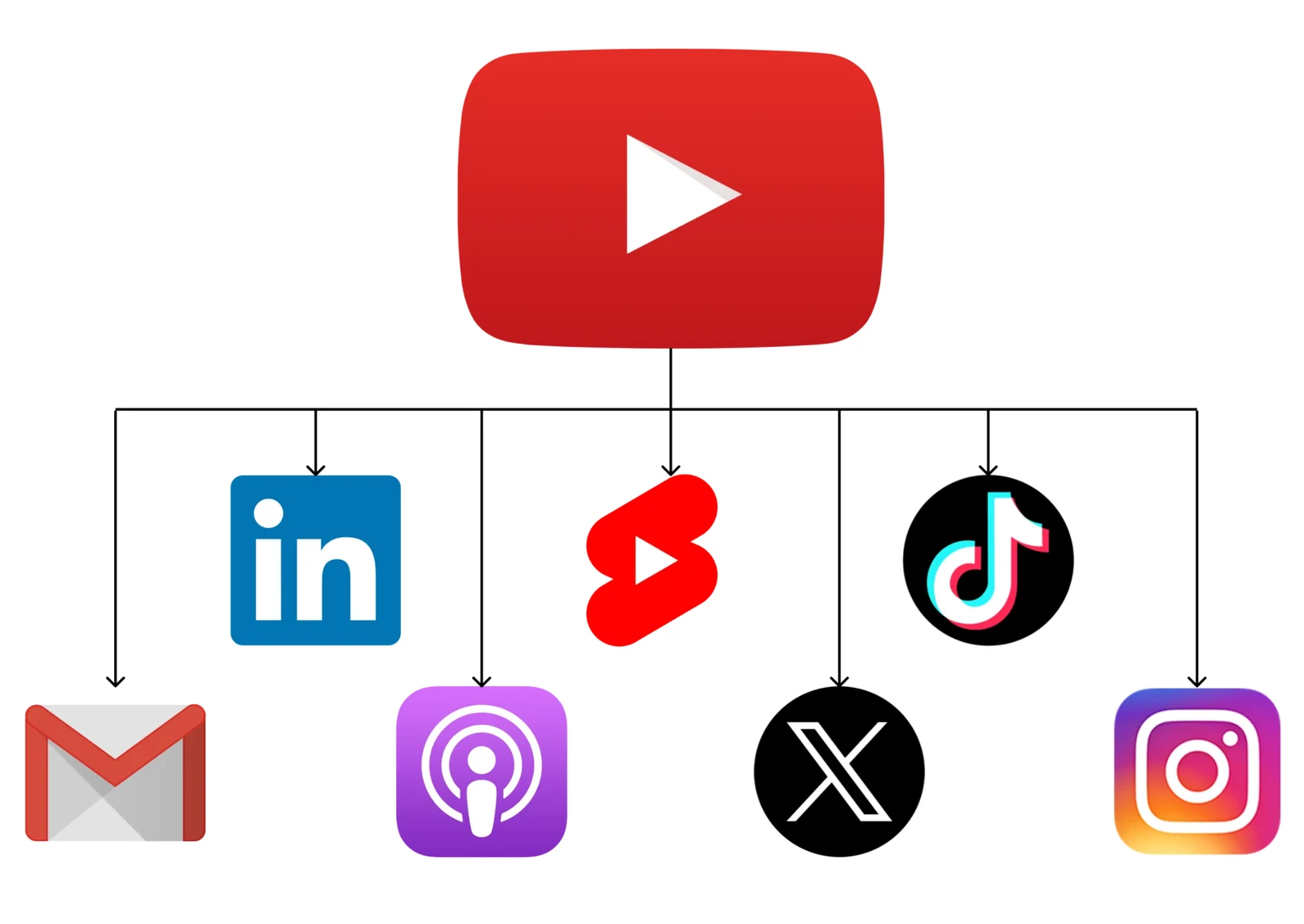
Not all of them. I look at it as one home plus support roles. The home is where the long video lives and where trust is built. The support channels each do one job. Here is the plan I use for founders and experts with high-ticket services:
| Channel | Its job | What goes there | How often |
|---|---|---|---|
| YouTube (long) | Home: trust and search | The full video with a clear next step | 1 a week |
| Shorts, Reels, TikTok | Recognition: a stranger sees your face | Clips of one idea, ending with a link to the long video | about 5 a week |
| Reach your buyers where they read about work | A post with the main takeaway, a native clip, link in the first comment | 2–3 a week | |
| A channel you own | The story behind the video and the link | 1 a week or every two weeks | |
| Your website | Search and AI answers | An article from the transcript with the video embedded | 1 per video, if the topic is a real question |
| Podcast apps | People who listen, not watch | The audio of a video podcast | with each episode |
| Your sales team | A warm touch after a call | The video that answers the question the lead asked | whenever a lead asks |
The frequencies come from our own rhythm: one long video a week and about five Shorts from it. LinkedIn depends on how much you can write. Treat the whole table as a starting point.
If you can't decide where your buyers are, our comparison of YouTube, LinkedIn and Instagram for B2B helps with the first choice. And if you are still picking a theme for the videos, start with B2B content marketing strategy.
In what order should you publish?
Order matters because each piece sends people to the one before it. If clips go out before the long video exists, they point to nothing.
A few rules I follow:
- Long video first. It is the asset. Everything else is a path to it.
- Every Short gets a Related video. Links in Shorts descriptions are not clickable, so the Related video setting is how a viewer reaches the long version.
- Spread the clips across the week. One a day beats five at once. The long video keeps getting new viewers while it is fresh.
- Write the LinkedIn post and email after the clips. By then you know which idea people reacted to, and you lead with that.
- Keep the same message everywhere. If the video says "the problem is X", the post and the email say the same thing.
Posting by hand also matters more than people think. I tested this on a client's Instagram: Reels posted manually got 12,399 views in five days, and the same type of Reels posted with Instagram's built-in scheduler got 3,709. Your numbers may differ. Run a small test before you automate everything.
What does this look like in real projects?
Three cases from our work, kept honest:
- Ayuna, an osteopath. One filming session of about two hours gave four long videos and about 20 clips. The clips from the long videos beat her own iPhone Reels on Instagram, and some of them reached about 300,000 views. The first long video we published became the top video of her channel. Full case here.
- A prosthodontist. Two to three hours of filming gave four long videos and about 20 Shorts. The channel gets about 100,000 views a year, and one patient from YouTube paid for half a year of production. Distribution here was simple: YouTube first, Shorts after.
- Freshcode, an app development company. We produced their video podcast "Clojure in product. Would you do it again?" with developers from The New York Times, Metabase and Dentons. A podcast gives more to distribute than one speaker: more clips, quotes from each guest, an audio feed and an article. I don't publish their view counts, so I can't say how far it traveled.
Notice what these have in common. The firm films once. The distribution is a routine that someone else runs every week. That is the part that dies first when the founder does it alone. If you want the person-hours side, read what a content creation agency does.
When should you add a daily clips channel?
Later, not at the start. After a few months of weekly publishing you have a library of long videos. A second channel can then post short cuts from that library every day, with no new filming.
A public example: MoreMozi, a channel that posts short clips from Alex Hormozi's long content, had about 161,000 subscribers when I checked on 26 October 2026. I use it as proof that a clips-only channel can grow, not as a plan for a service firm. For a high-ticket service, I would treat such a channel as awareness. The sales path stays on the main channel, with the long videos, the booking link and the proof.
How do you track distribution?
One number per channel, checked once a month. Not more.
| Channel | What to look at | Why |
|---|---|---|
| YouTube long | Leads who name a video, and watch time on the videos they name | Shows trust, not just reach |
| Shorts and Reels | Do viewers click through to the long video? | Clips are for recognition. Views alone say little |
| Replies and messages from ideal clients | Likes from peers don't pay | |
| Replies and clicks to the video | Shows who is still warm | |
| Website article | Visits that end in a booking | Search and AI answers send readers here |
Add a tagged link for each channel and ask every lead on the booking form: "How did you hear about us?" We ask this in Calendly, and we ask our clients to ask their own leads the same. For the details, see marketing attribution for service businesses and YouTube ROI tracking. And don't read views as clients: views and clients are different numbers.
What are the common mistakes?
- Posting the same file everywhere. It looks lazy and loses to native formats.
- No home channel. Without one, nothing builds on anything else.
- Too many channels at once. Three done weekly beat seven done randomly.
- Chasing the biggest channel. A Short with 200,000 views and no path to the long video brings nothing. I know this from my own channel: one video had about 260,000 views and brought no sales, while a 47-minute documentary with about 6,000 views brought clients.
- Forgetting your sales team. The best distribution channel for a high-ticket service is a follow-up message with the right video. More in B2B video content for sales.
Which real videos show distribution in practice?
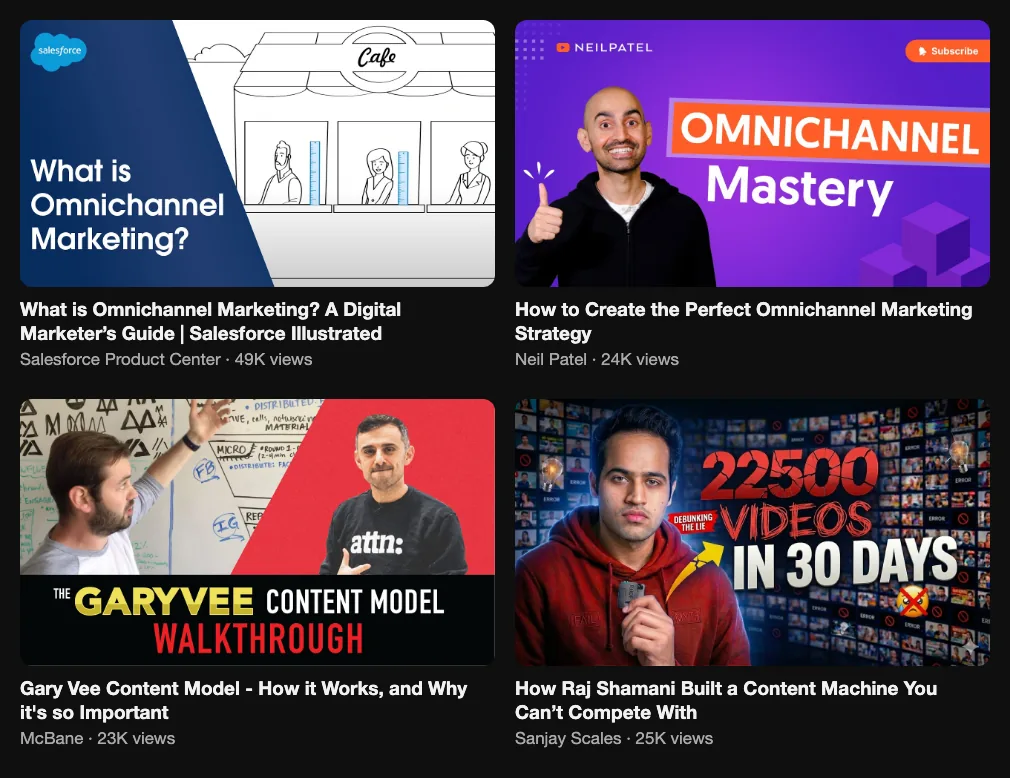
I searched for English videos on omnichannel and content distribution with real viewership. Most are explainers or creator breakdowns, not case studies of high-ticket firms. Views show demand for the topic. They don't show how many clients a video brought. Data is from YouTube on 27 October 2026.
- What is Omnichannel Marketing? A Digital Marketer's Guide | Salesforce Illustrated (Salesforce Product Center, 49K views). A short, clear definition of omnichannel marketing from a software vendor. Translate it to services yourself.
- How to Create the Perfect Omnichannel Marketing Strategy (Neil Patel, 24K views). An approach to building a connected omnichannel plan from a well-known marketing educator.
- Gary Vee Content Model - How it Works, and Why it's so Important (McBane, 23K views). A breakdown of Gary Vaynerchuk's model of one big piece broken into many small ones across platforms.
- How Raj Shamani Built a Content Machine You Can't Compete With (Sanjay Scales, 25K views). One podcast turned into many assets across platforms.
What does a 30-day distribution plan look like?
| Week | What you do | What you check |
|---|---|---|
| 1 | Pick the home channel. Name the one next step every video ends with. Add "How did you hear about us?" to your booking form. | The form works and the answers are saved |
| 2 | Publish the first long video. Cut five clips and post one a day. Send the email. | Do clips send people to the long video? |
| 3 | Publish the second long video. Add the LinkedIn post. Send the video to two leads who asked that exact question. | Which post or clip got replies from ideal clients? |
| 4 | Publish the third. Turn one video into an article. Review the answers from calls. | Which channel was named first? Drop one weak channel. |
You will not see a clear winner in 30 days. For channel growth we usually see about 2–3 months from the first batch of videos to the first leads. The plan is about building the habit, not the result.
If you want this rhythm without running it yourself, that's what our YouTube channel management service is for: you film one day a month, we plan, edit, publish and cut the clips, from $3,000 a month.
FAQ
What is a content distribution strategy?
It is a plan for where each piece of content goes, in what order, how often, and what you expect from each channel. For a service firm it usually starts with one long video and sends pieces of it to short-form platforms, LinkedIn, email, your website and your sales team.
What is the difference between content creation and content distribution?
Creation is making the video or article. Distribution is getting it in front of the right people, more than once, in more than one place. A strong video with no distribution is seen by your subscribers and nobody else.
What is omnichannel marketing in simple words?
It is marketing where the channels are connected. Each piece points to the next step, and you can see one person's path from a Short to a long video to a call. Multichannel means you are on many channels, but each one works alone.
What is the difference between omnichannel and multichannel marketing?
Multichannel is presence on several channels. Omnichannel is a connected path across them. Posting the same file on five platforms is multichannel. Posting a Short that ends with a Related video link to the long version, and an email that links to the same video, is closer to omnichannel.
How many channels should a small service firm use?
One home channel and two or three support channels. For most high-ticket services the home is YouTube, and the support channels are short-form video, LinkedIn and email. Adding more only makes sense when you have the people to run them properly.
Should I post the same video everywhere?
No. Post the same idea in the shape each platform likes: a long video on YouTube, vertical clips for Shorts and Reels, a text post with the main takeaway on LinkedIn, an email with the story. In a test on a client's Instagram, Reels posted by hand got 12,399 views in five days and the same type scheduled with Instagram's built-in scheduler got 3,709, so test your posting method too.
How often should I publish?
Evgeny Maximov's agency uses one long video a week and about five Shorts from it, so four long videos and about 20 Shorts a month. That is enough to keep every channel fed from one filming session. Your capacity sets the real limit.
Is paid distribution worth it for service businesses?
It can help a strong video reach the right people sooner. Evgeny Maximov's agency does not run paid ads or manage ad accounts, and we build organic channels. If you use paid, put it behind a video that already works with your audience.
How do I track which channel brings leads?
Ask every lead where they first saw you, use a separate tagged link for each channel, and check the answers once a month. Views alone don't show which channel brought clients.
When should I start a daily clips channel?
After you have a library of long videos, usually a few months of weekly publishing. A second channel that posts short cuts of your long videos every day can then grow without new filming. Sub counts on such channels can get big, but treat them as awareness, and keep the sales path on your main channel.
Can I distribute a video podcast the same way?
Yes. A video podcast gives even more material: about ten Shorts from an hour, an audio version for podcast apps, quotes for LinkedIn and an article from the transcript. We produced a video podcast for the app development company Freshcode and used the same plan.
Founder of a done-for-you YouTube agency for high-ticket founders. Making content since 2014. More about me
Want one filming day to feed every channel?
You film one day a month. We plan, edit, publish, cut the Shorts and post them across your channels, and every video ends with a next step. 7-day money back guarantee.
Get a free niche review →