Six Months of Filming in a Dental Clinic
We filmed in the clinic, turned each recording session into four long videos and twenty clips, and adjusted the plan to fit the speaker.
 By Evgeny Maximov·6 min read·
We worked with a prosthodontist for six months. We filmed in his clinic, usually in a treatment room with one camera.
About two to three hours of recording gave us four long videos. After editing those, we cut five short clips from each. That meant twenty clips without asking the doctor to record twenty more videos.
We also tried a separate short-video format. It did not fit the way this speaker came across on camera, so we changed the content plan. The longer explanations gave him more room to talk through a subject.
How did we film inside the clinic?
Our usual setup was one camera in the doctor’s treatment room. We recorded several subjects during the same session, rather than arranging a separate shoot for every video.
The subjects were connected to his work: crowns, veneers, implants, treatment choices, and common questions patients ask a dentist.
| Part of the project | What we did |
|---|---|
| Engagement | Six months of work. |
| Recording | About two to three hours in the clinic, usually with one camera. |
| Long videos | Roughly four from a recording session. |
| Short clips | Five from each long video, twenty from that batch. |
| Publishing | We handled YouTube and handed the Instagram material to the client’s SMM specialist. |
What did we make videos about?
A patient choosing a crown has different questions from someone choosing a clinic. We made videos about both: explanations of dental work and questions people have before deciding whom to trust.
The topics included choosing crowns, comparing veneers, choosing a dentist, toothpaste, implants, and complex cases from the doctor’s work.
Here is one of our long videos about dental crowns. It was published on 3 Oct 2025. The original recording is in Russian.
A longer video gives the doctor time to explain the differences and answer follow-up questions. A prospective patient can hear how he explains things before contacting the clinic.
Which long videos received the most views?
Our video about choosing crowns reached about 9,400 views. The toothpaste video reached about 7,300, and the video about complex dental cases reached about 4,100.
These are the view counts on 2 Nov 2026. They show which subjects people watched. We do not have a patient count linked to those videos.
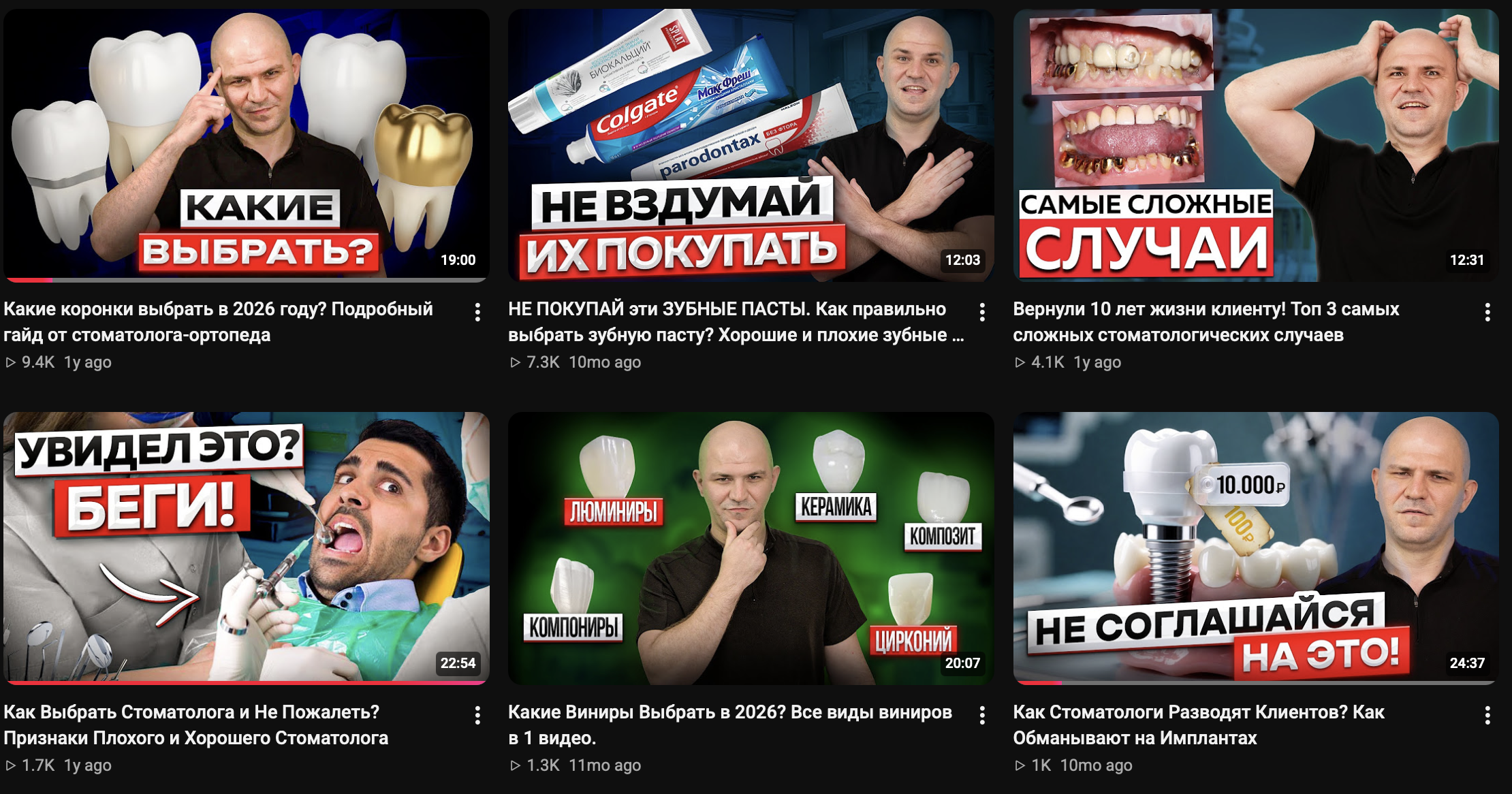
| Video subject | Views, approximately |
|---|---|
| Choosing dental crowns | 9,400 |
| Choosing toothpaste | 7,300 |
| Complex dental cases | 4,100 |
| Choosing a dentist | 1,700 |
| Choosing veneers | 1,300 |
| Questions about implants | 1,000 |
Why did we change the Shorts plan?
We tried recording separate Shorts alongside the longer videos. After working with the format, we felt it did not suit the speaker’s delivery.
So we removed separately filmed Shorts from the content plan. We kept making clips from the long recordings.
That distinction matters in practice. In a long video, the doctor has time to explain a question in his own way. We can then choose a useful moment from that conversation and edit it into a short clip.
We did not need to keep asking him to perform in a format that felt less natural for him. We already had material from the longer explanations.
How did the short videos perform?
The popular Shorts included questions about wisdom teeth, tooth color, bad breath, and restoring a tooth. The wisdom teeth video reached about 13,000 views. The tooth color video reached about 8,300.
Other examples reached about 7,900 views for bad breath and 7,500 for restoring a tooth. These figures were visible on 2 Nov 2026.
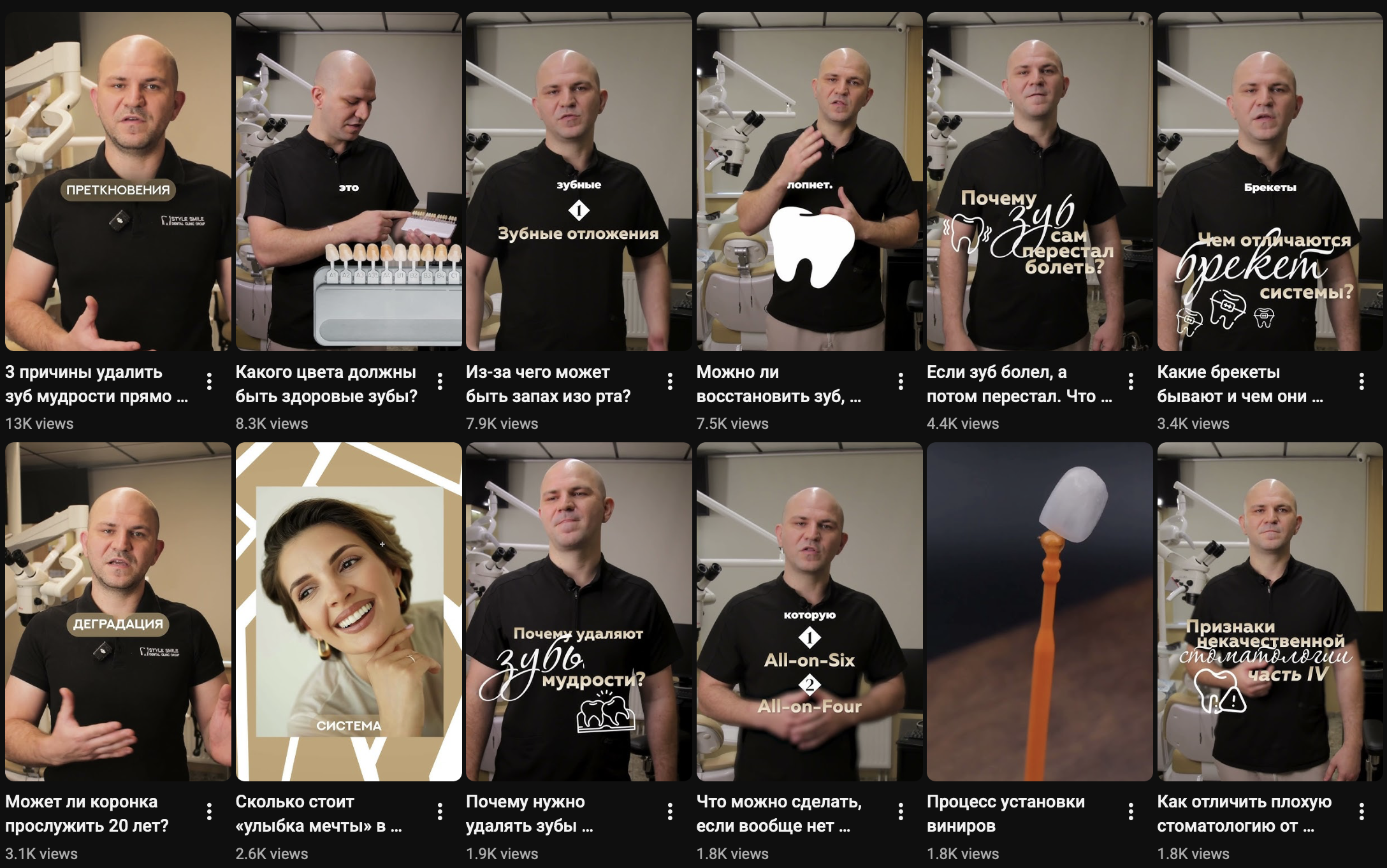
Short clips let us use the recording in another format. Someone can watch a brief answer to one question without starting a full-length video.
Who handled YouTube and Instagram?
Our team published the content on YouTube. For Instagram, we handed the finished material to the client’s SMM specialist, who handled the publishing.
The doctor did not have to record a second version for Instagram. The same material could be used by the team already managing that account.
In this project, Instagram publishing stayed with the client. Our part was to make and deliver the material.
What does the client have after six months?
The client now has a library of evergreen videos. These answer questions that patients can have before speaking to a clinic: what the options are, how they differ, and what to ask about.
The clinic can use those videos in future sales conversations. If someone asks about crowns, the team can send the relevant explanation. If someone wants to understand the doctor’s approach, they can watch him talk through a subject.
That is a possible use for the library we created. We do not have direct lead generation data, so I cannot give you a number of patients or a measured return from this project.
The concrete result is the content itself: long explanations, short clips, and a set of answers the clinic can keep using after our six months of work.
If you are planning something similar, our batch filming guide explains how we group recordings into one session. Our dental clinic YouTube guide covers the questions to consider when planning a clinic channel.
Book a call to discuss filming for your clinic.
The Business YouTube Playbook
Read the planning framework behind expert-led video content.
More examples of our production work: Oaken Mulholland and Rating Up.
FAQ
How long did you work with the client?
We worked with this prosthodontist for six months. We filmed in a treatment room at the clinic.
What was the filming setup?
We usually used one camera in the clinic. A recording session took about two to three hours.
How much content came from a session?
We recorded roughly four long videos in two to three hours. We then cut five short clips from each video, giving us twenty clips from that batch.
Did you also film separate Shorts?
Yes. We tried separately filmed Shorts, but that format did not suit the speaker’s delivery. We removed those shoots from the plan and focused on longer explanations and clips from those recordings.
Who published on YouTube?
Our team published the content on YouTube.
Who published on Instagram?
We handed the finished material to the client’s SMM specialist. They handled Instagram publishing.
Which long videos received the most views?
The crowns video had about 9,400 views, the toothpaste video about 7,300, and the complex cases video about 4,100 on 2 Nov 2026.
Did the short clips receive views?
Yes. The popular Shorts included a wisdom teeth video at about 13,000 views and a tooth color video at about 8,300 on 2 Nov 2026.
How many leads did the content generate?
We do not have direct lead generation data for this project. I cannot give a patient count or calculate a return from these view counts.
What can the clinic do with the videos now?
The clinic has a library of videos answering common patient questions. The team can send relevant explanations to prospective patients and use them in future sales conversations.
Founder of a done-for-you YouTube agency for high-ticket founders. Making content since 2014. More about me
Need production support for your expert content?
Book a call to discuss your project, the recording format, and the work you want us to handle.
Get a free niche review →