If I Were Dr. Paul Nassif: A Plastic Surgery Marketing Plan for YouTube
Dr. Nassif, millions of people know you from TV, and about a million follow you on Instagram. But your YouTube channel today mostly sells skincare in Shorts. The practice, the part that does revision rhinoplasty and facelifts, is almost invisible there. Here's what I'd do if you were my client.
 By Evgeny Maximov·7 min read·
If you're not Dr. Nassif, but you run an aesthetic clinic or a med spa, this plan works for you too.
What does Dr. Nassif's YouTube look like today?
Here's what I found on October 13, 2026.
| Platform | Now |
|---|---|
| about 1,000,000 followers | |
| YouTube (NassifMD) | about 27,700 subscribers |
| Recent uploads | skincare Shorts: eye serum, ceramides, double cleansing, detox pads "now at Ulta" |
| Typical views | about 140–1,100 |
| Practice | Beverly Hills and Newport Beach; revision and ethnic rhinoplasty, facelifts |
There are two businesses here. A skincare line sold in retail, where Shorts make sense. And a surgery practice, where one patient is a five-figure decision. The channel serves the first one and mostly ignores the second.
Where are Dr. Nassif's YouTube views today?
On TV channels. On October 14, 2026 I checked the top 40 YouTube results for his name. Botched clips on E! Entertainment and the Botched channel dominate: Dr. Nassif Fixes Lisa's Facelift Gone Wrong FULL TRANSFORMATION has about 694,000 views, 5 Times Dr. Paul Nassif Brought Botched Noses Back to Beautiful about 313,000. An interview, The Filler Damage Nobody Warned You About on One on One with Kris Fade, about 90,000.
His own channel's most-watched video, Nasal Injury Journal Day 1, has about 20,000.
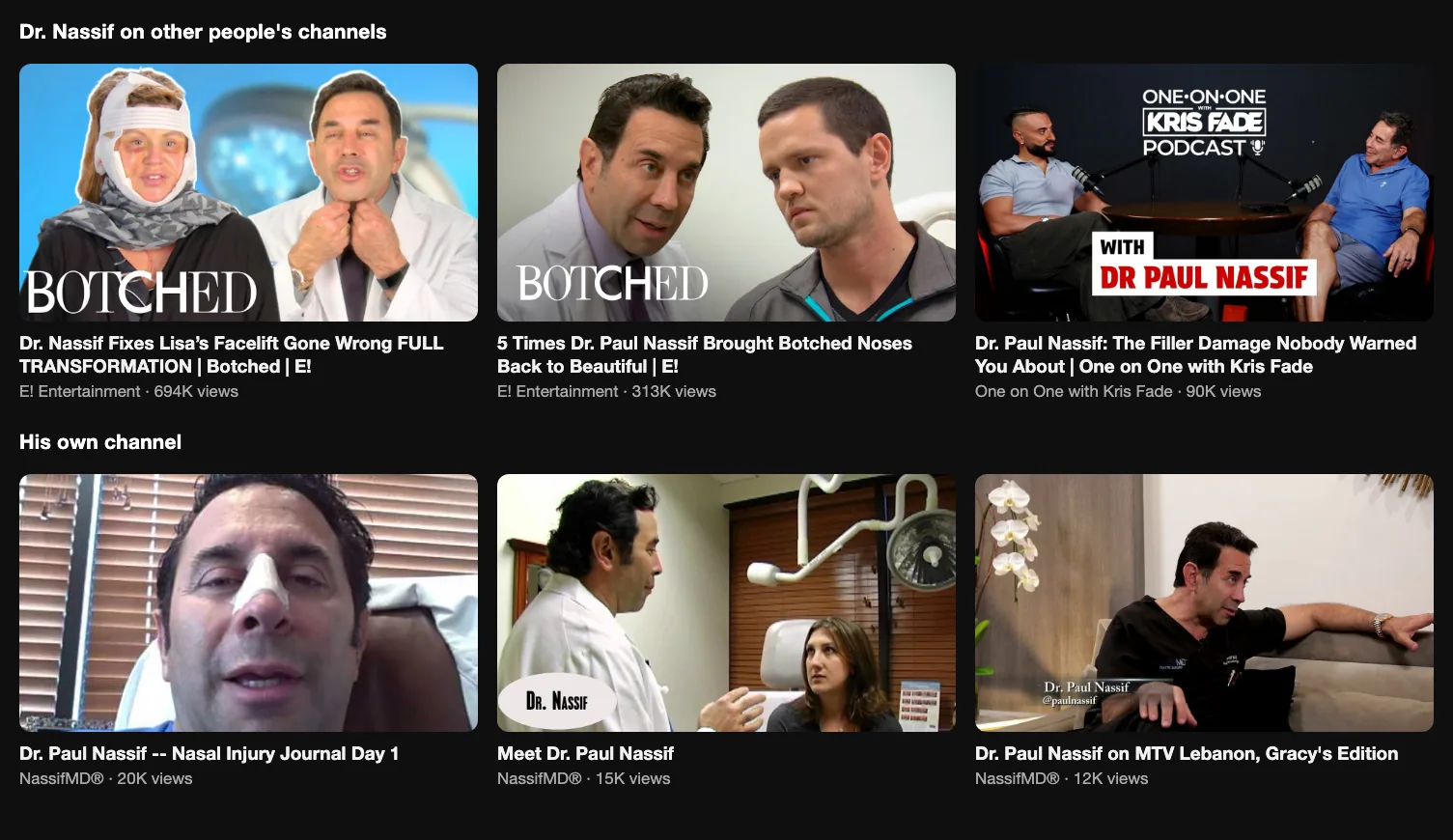
People clearly want to watch him fix noses and faces and explain what went wrong. The channel that catches that demand belongs to the network, not to the practice.
Why do surgery patients need long videos?
A rhinoplasty patient doesn't decide in 30 seconds. They research for weeks. They watch videos about recovery, risks, revision and cost. They compare surgeons. By the time they book, they've usually picked the doctor.
That research happens on YouTube. Look at who won it:
- Dr. Gary Linkov, a facial plastic surgeon: about 1.2M subscribers, built by explaining procedures and reviewing results.
- Doctor Youn: about 5.57M subscribers.
- Barrett Plastic Surgery: about 376K.
Dr. Nassif is more famous than all of them. On YouTube, the field is open.
What content would I make for the surgery practice?
Five content pillars.
- Patient questions. "How long is rhinoplasty recovery?", "Revision rhinoplasty: when is it worth it?", "Deep plane facelift explained". One question per video.
- Case reviews with commentary. Before, plan, result and why. With written patient consent and within medical advertising rules.
- Revision stories. This is his specialty and what TV made him known for. Why surgeries go wrong, how revision works, how to avoid needing one. Educational, never naming other surgeons.
- Choosing a surgeon. "Questions to ask before rhinoplasty", "Red flags in a consultation". Patients love this, and it builds trust in the person giving the advice.
- Meet the team. Associates and nurses on camera, so patients trust them before the first visit.
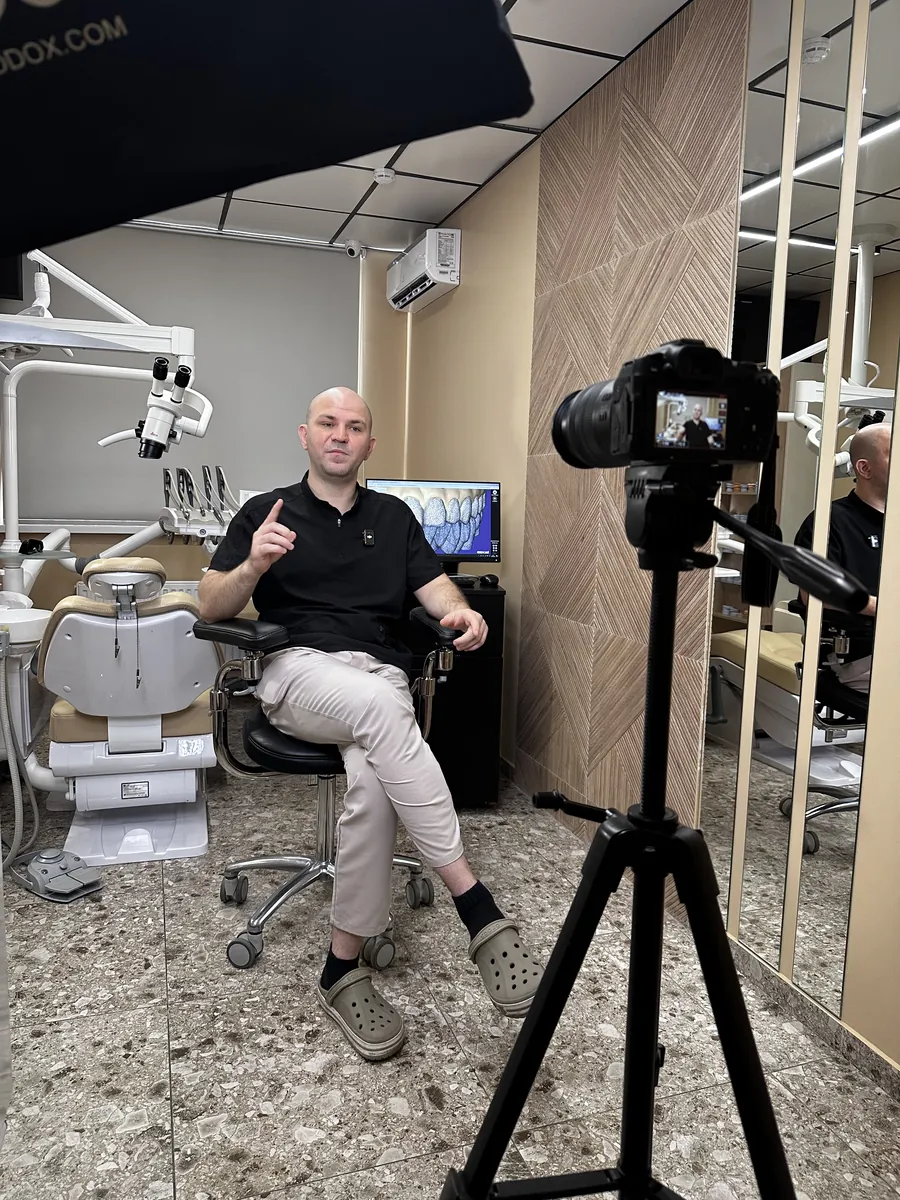
Pillar five matters more than it looks. Our dental chain client films managing partners, doctors, the HR director and the CEO. Patients meet several doctors before choosing, and the clinic isn't tied to one face. The honest trade-off: people subscribe to a person faster than to a team. So the famous doctor stays the main face, and the team appears around him. More in how to put your team on camera.
Which five videos would I test first?
Every idea below has a reference that already proved the topic. View counts are from October 14, 2026.
1. "Rhinoplasty Recovery, Day by Day (A Surgeon Explains)"
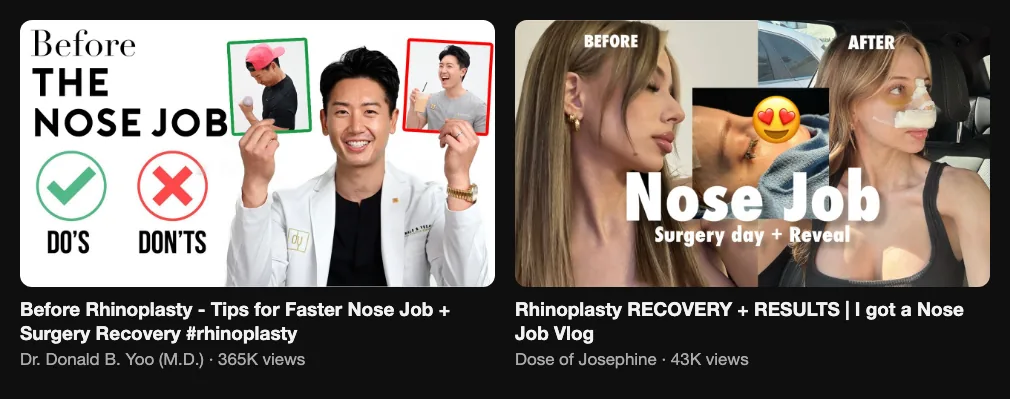
Dr. Donald B. Yoo's Before Rhinoplasty - Tips for Faster Nose Job + Surgery Recovery has about 365,000 views, and a patient vlog, Rhinoplasty RECOVERY + RESULTS, about 43,000. Dr. Nassif's own channel already has a "Nasal Injury Journal" series, his most-watched format. A recovery diary with a surgeon's commentary combines both.
2. "Revision Rhinoplasty: Why Noses Go Wrong and How We Fix Them"
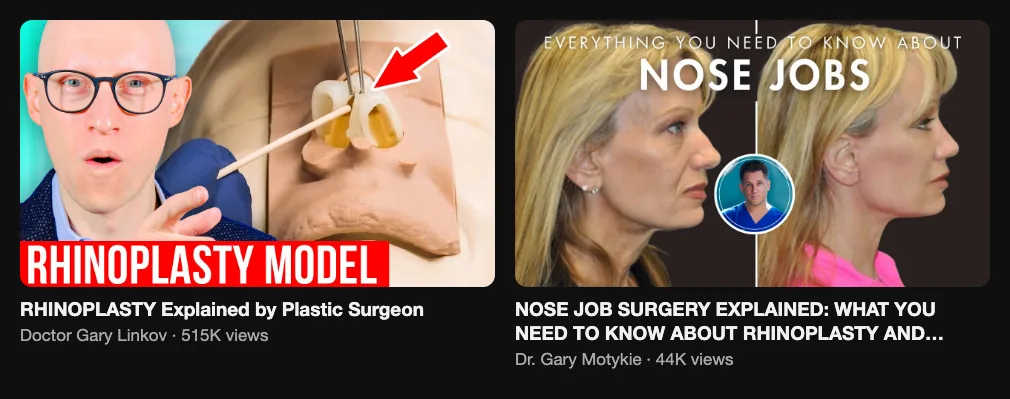
His specialty, and the reason TV made him famous. Dr. Gary Linkov's RHINOPLASTY Explained by Plastic Surgeon has about 515,000 views, and Dr. Gary Motykie's Nose Job Surgery Explained: Rhinoplasty and Revision about 44,000.
3. "How Much Does a Facelift Really Cost in Beverly Hills?"
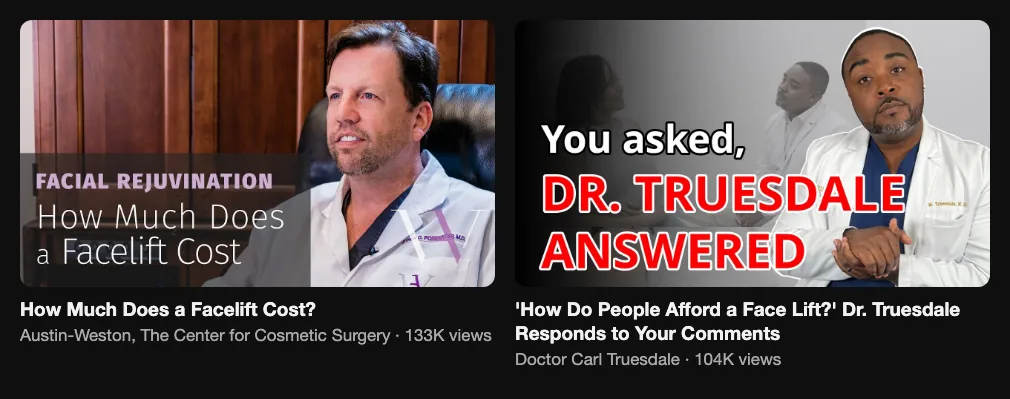
How Much Does a Facelift Cost? from Austin-Weston has about 133,000 views, and Dr. Carl Truesdale's 'How Do People Afford a Face Lift?' about 104,000. Cost is the question every patient asks and few surgeons answer on camera.
4. "10 Questions to Ask Before You Choose a Facial Plastic Surgeon"
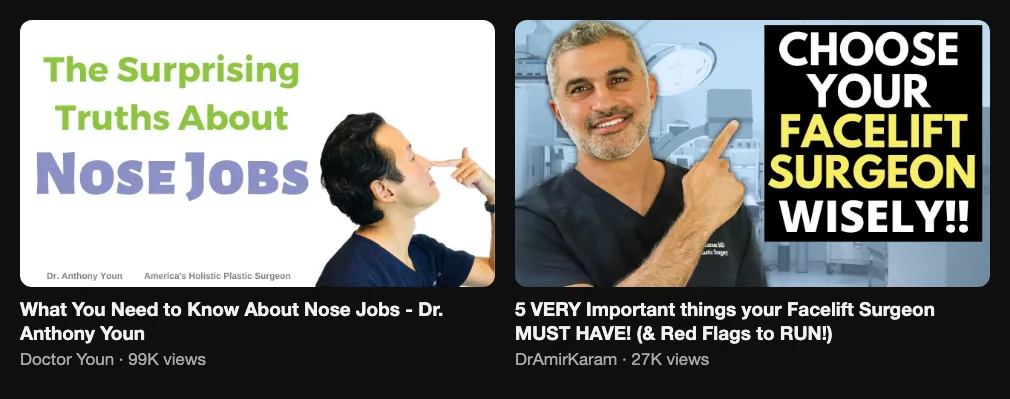
Doctor Youn's What You Need to Know About Nose Jobs has about 99,000 views, and DrAmirKaram's 5 VERY Important things your Facelift Surgeon MUST HAVE! (& Red Flags to RUN!) about 27,000. The topic is wide open: no one with Dr. Nassif's name has made the definitive version.
5. "What TV Doesn't Show You About Plastic Surgery"
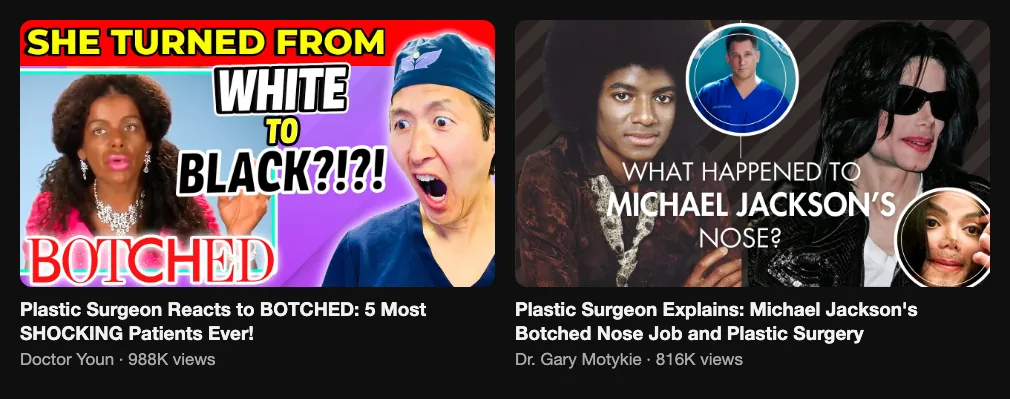
Other surgeons already build channels on his show. Doctor Youn's Plastic Surgeon Reacts to BOTCHED: 5 Most SHOCKING Patients Ever! has about 988,000 views, and Dr. Gary Motykie's Michael Jackson's Botched Nose Job about 816,000. Dr. Nassif is the only one who can tell the story from inside.
One thing to watch with doctors: they often feel "everybody knows this". Patients don't. Take the topic from the patient, the title in the patient's words, and keep the content fully expert. More on this in YouTube for doctors.
Which channel fixes take one day?
- Two channels, two jobs: a surgery channel with long videos, and skincare Shorts on the brand channel. Link them to each other.
- First line of every surgery video description: "Book a consultation".
- Playlists by procedure: rhinoplasty, revision, facelift. Patients search by procedure.
- Chapters on every long video: what it is, who it's for, recovery, cost. Here's how to add chapters.
What would the funnel look like?
Procedure video → case review → "what happens at your consultation" video → consultation request → associate consult → surgery. Every step answers a fear before the patient says it out loud.
For a med spa, the same funnel works at a smaller ticket: one treatment question per video, honest prices, before-and-after with consent, and one clear booking link. For dentists, I wrote the same kind of plan in If I Were Dr. Michael Apa and If I Were Dr. Bill Dorfman. Another TV name, in luxury real estate: If I Were Jason Oppenheim.
What's the 12-month roadmap?
- Months 1–3: 12 procedure and question videos, 6 case reviews. Two filming days in the practice.
- Months 4–6: double down on procedures that bring consultation requests. Start the "Meet the team" series.
- Months 7–12: a 60-minute cornerstone "Everything about rhinoplasty", plus Shorts cut from every long video.
What happens next?
Dr. Nassif, if this sounds useful, the plan is yours. And if you run a clinic or a med spa with a strong Instagram and a quiet YouTube, the same plan works at any size.
Related guides: plastic surgery marketing and med spa marketing.
FAQ
Does Dr. Paul Nassif have a YouTube channel?
Yes. In October 2026 the NassifMD channel had about 27,700 subscribers, and the recent uploads were skincare Shorts with about 140–1,100 views. His Instagram has about 1 million followers.
Is there demand for Dr. Paul Nassif on YouTube?
Yes, a lot. Botched clips featuring him on E! and the Botched channel get hundreds of thousands to millions of views each, for example about 694,000 for a facelift revision. On his own channel, the most-watched video has about 20,000.
What is the best plastic surgery marketing strategy on YouTube?
Answer the questions patients research before surgery (recovery, cost, risks, revision, choosing a surgeon), review real cases with consent and commentary, and introduce the whole team, so patients book a consultation already trusting the practice.
Why do surgery patients need long videos?
Because surgery is a big, slow decision. Patients research for weeks and compare surgeons. Long videos let them hear how the surgeon thinks, which short clips can't do.
Should a skincare brand and a surgery practice share one YouTube channel?
Usually not. Skincare is a product business that fits Shorts and retail promotions. Surgery is a trust business that needs long educational videos. Two channels with two clear jobs work better, linked to each other.
How should a med spa market itself on YouTube?
The same way as a surgery practice, at a smaller scale: one treatment question per video, before-and-after reviews with consent and commentary, honest prices and a clear path to a consultation.
Can plastic surgeons show before-and-after results on YouTube?
Often yes, with written patient consent and within the medical advertising rules of your country and your medical board. Check the rules with your lawyer before publishing.
Should associates and nurses appear in a clinic's videos?
Yes. When patients meet several doctors on video, they trust the team, not only the famous founder. Evgeny Maximov's dental chain client films partners, doctors, the HR director and the CEO for exactly this reason.
Who are successful plastic surgeons on YouTube?
Dr. Gary Linkov (about 1.2 million subscribers), Doctor Youn (about 5.57 million) and Barrett Plastic Surgery (about 376,000). They grew by explaining procedures and reviewing results.
How long until a plastic surgery YouTube channel brings consultations?
Usually a few months of consistent publishing. Procedure explainers keep bringing patients for years, because the questions don't change.
Did Dr. Paul Nassif hire Evgeny Maximov's agency?
No. This is an open strategy built from public information. If you run an aesthetic clinic or med spa and want a plan like this, you can book a call.
Founder of a done-for-you YouTube agency for high-ticket founders. Making content since 2014. More about me
Run an aesthetic clinic or a med spa?
We film in your clinic, edit and publish videos that answer patients' questions before the consultation. 7-day money back guarantee.
Book a call →