YouTube for Doctors and Clinics: Healthcare Video Marketing That Brings Patients
Patients don't choose a doctor from a billboard anymore. They search their symptoms and their treatment, and they watch. Here's how doctors and private clinics get patients from YouTube, with results from three of our medical clients.
 By Evgeny Maximov·8 min read·
Why do doctors need YouTube?
Patients don't pick a doctor from a billboard anymore. Before they book, they search their symptoms, their treatment and their fears. Then they watch. The doctor who explains it best is often the one they call.
- Patients research before booking, especially for elective and expensive treatment: dentistry, aesthetics, orthopedics, osteopathy, fertility, private specialists.
- Video lowers fear. A calm doctor explaining what will happen is the opposite of a scary unknown.
- Search lasts. A video that answers “how long is recovery after X” keeps bringing patients for years.
How is healthcare video marketing different from ads?
Most medical marketing is paid: search ads, directories, maps. It works, but it stops the day you stop paying, and it brings people who compare prices. A patient who found you through an ad knows your clinic's name. A patient who watched three of your videos knows how you think, how you talk and what the treatment will feel like.
That's why healthcare video marketing works best for treatments where trust decides: long plans, complex cases, expensive procedures. For a quick, cheap service, ads and maps are enough.

What results can a clinic expect from YouTube?
Here's what happened with three of our medical clients.
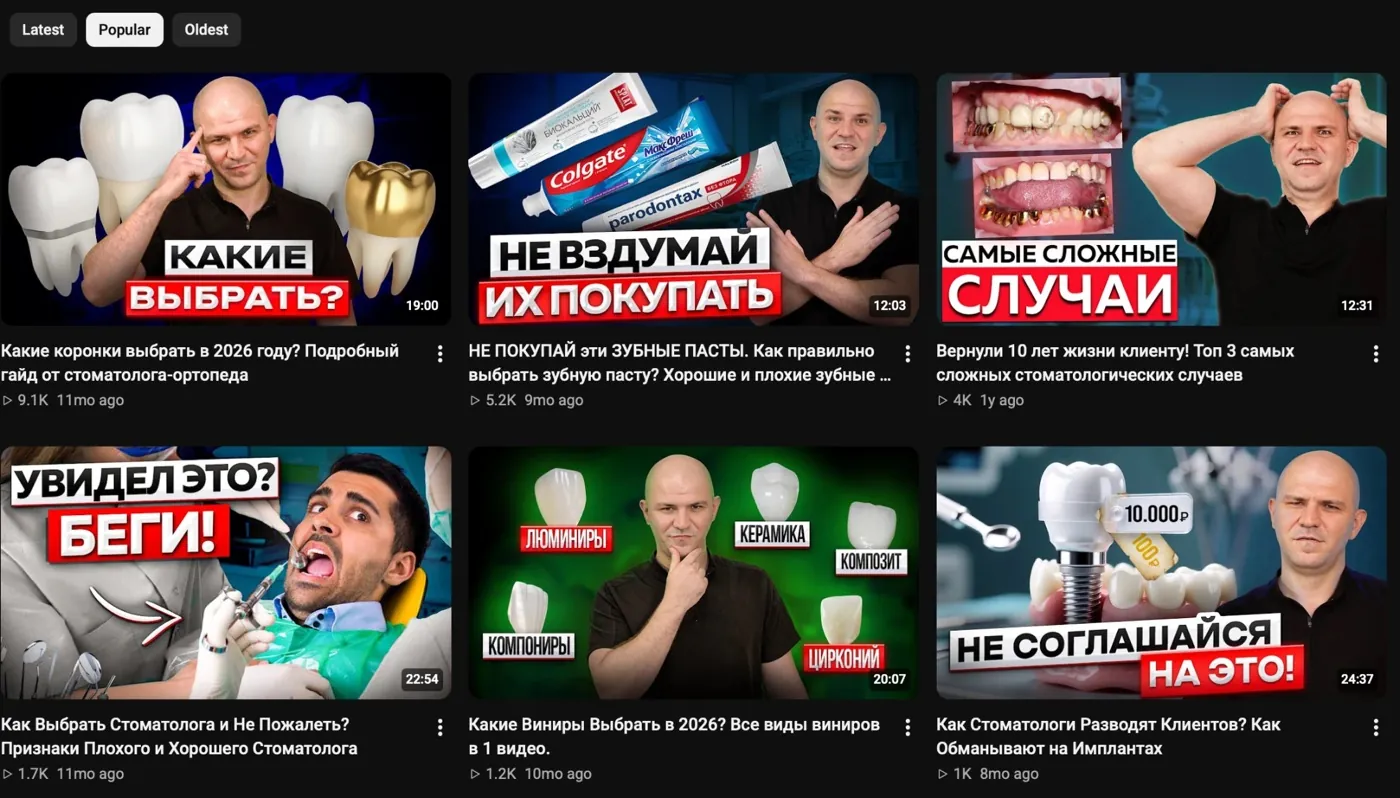
An orthodontist. About 100,000 views in a year, and the top videos have between 1,000 and 9,000 views. That sounds small. But he stopped after five or six months because “YouTube doesn't work”, and four months later we found out that one patient who came from YouTube had paid for the whole half-year of production. His treatment plans last years, so one patient is worth a lot. The full story is in dental marketing on YouTube.
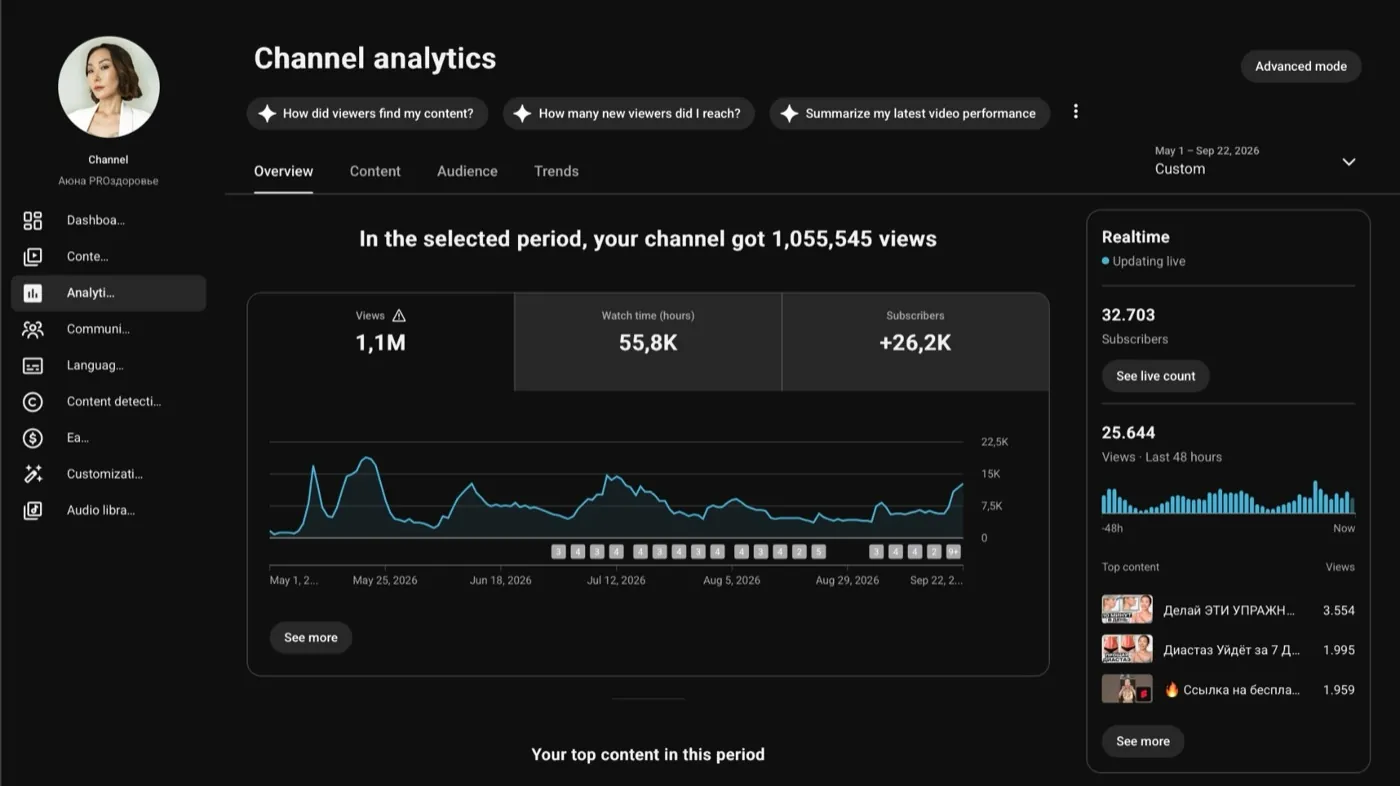
An osteopath. Ayuna had an abandoned channel. With about two hours of filming a month she gained about 26,000 subscribers in five months. Her first long video got 67,500 views in under two weeks, and more than 75% of her viewers were over 45. Exactly her patients.
A dental clinic chain. A newer client. We started with podcasts: managing partners and dentists talking about treatment, values and the team. Now we're increasing the volume and adding long solo videos with their own Shorts, not only clips from podcasts. Too early for hard numbers, but the chain no longer depends on one famous face.
What videos should doctors make? Ideas by specialty
Five types work for almost every practice:
- Patient questions. One question per video: “Is it painful?”, “How much does it cost?”, “X or Y, which is better?”
- The treatment explained. What happens step by step, recovery, realistic results.
- Case reviews. The problem, the plan, the result. Only with written consent.
- Myths. What patients believe that isn't true.
- The clinic and the team. A tour, the doctors, what the first visit looks like.
| Specialty | Example videos patients search |
|---|---|
| Dentistry, orthodontics | How long do fillings last · Aligners or braces · You've been brushing wrong your whole life |
| Aesthetic and plastic surgery | Recovery week by week · What results are realistic · How to choose a surgeon |
| Orthopedics, osteopathy, physio | Exercises for a common pain · When you need surgery and when you don't · What the first session looks like |
| Mental health | How therapy actually works · Signs it's time to talk to someone · How to choose a therapist |
| Fertility, gynecology, private specialists | What tests come first · Costs and timelines explained · Questions to ask at the first visit |
Want a ready list? Our free content plan for dental clinics has 18 long-video ideas and 40 shorts. The pain points are similar in most private medicine, so it adapts well.
The hardest part: expert knowledge vs what patients actually watch
This is where most medical channels get stuck. The doctor knows a lot. Patients watch only some of it. When we suggest a topic patients search, the doctor often says: “Why record this? Everyone knows it. And that title is clickbait.”
Both sides are partly right. A purely expert video, like a lecture for colleagues, gets no views from patients. A purely “viral” video with a scary title hurts trust, and a doctor's reputation is everything. So we combine them:
- The topic comes from patients: what they search, what they ask at the reception, what they're afraid of.
- The title and thumbnail speak the patient's language, but never promise what the video doesn't deliver.
- The content stays the doctor's: the real explanation, the nuances, the cases where the simple answer is wrong.
When it works, the patient clicks because the title hits their exact worry, and stays because a real expert answers it honestly. That's the balance a producer has to hold on every video.
How should doctors talk on camera?
- Explain it to a patient, not a colleague. What I say most on set is “I don't understand what you're talking about.” If the person behind the camera doesn't get it, simplify.
- Make the “boring” topics. A topic feels obvious after 15 years of practice. Your patients only know that something hurts. Those obvious topics are exactly what they search for.
- Say why patients should choose you. Your values, the cases you take that others don't, the materials you use. Ethically: no names, no attacks on other clinics.
- Stay calm. Many patients are anxious. Your tone is part of the treatment.
How do you film a doctor without losing clinic time?
Bring the camera to the clinic. It's cheaper to bring a filmmaker than to take a doctor to a studio, because an hour of a doctor's time costs more. With one camera in the treatment room, we record four long videos in two to three hours.
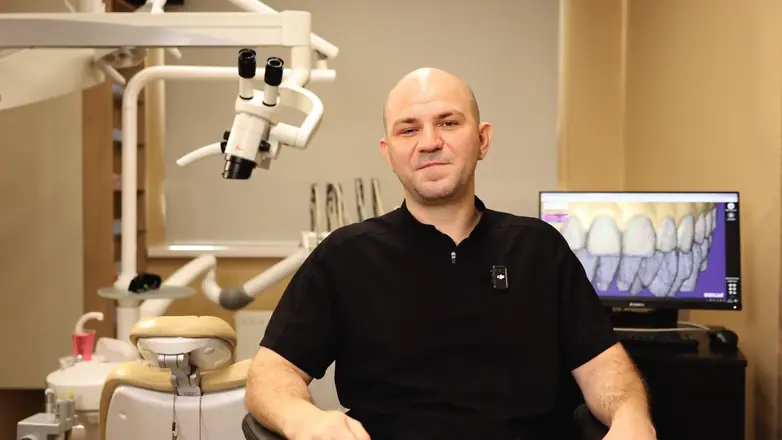
Then we clip about 20 short videos from those four long ones. Our orthodontist went from two to four posts a month to more than 20 expert reels a month, from the same filming time.
For Shorts there's an even faster trick. Someone off camera reads the questions patients are shy to ask, one by one. The doctor answers each in under a minute. In a couple of hours you have a month of Shorts.
How does a video turn into a booked appointment?
- A booking link in the first line of every description, visible before “more”.
- A “what happens at your first visit” video, linked from every other video. It turns interest into a booking.
- Videos inside the sales process. Send the right video before a consultation. Patients arrive informed, and doctors stop repeating the same explanations.
More on this in how a YouTube sales funnel works.
What about medical advertising rules?
Rules differ by country and specialty, so check yours. The basics: get written consent before any patient appears, be careful with before-and-after images and testimonials, never promise results, and add disclaimers where needed. Educational videos without patient identification are usually the safest start.
A doctor's channel or a clinic channel?
People subscribe to people, so a doctor's personal channel usually grows faster. It fits expensive, individual treatment where patients choose the doctor. A clinic channel with several doctors on camera grows slower, but the clinic doesn't depend on one person. It fits chains and clinics that plan to scale. Many start with the leading doctor and add the team later.
How long until YouTube brings patients?
Give it months, not weeks. Some videos take off fast, like Ayuna's first long video. Most clinics see steady inquiries after three to six months of regular videos. And don't judge by views: a video with a thousand views from local patients can pay for half a year of work. If you want a team to build this for you, start with a YouTube strategy for your practice.
FAQ
Is YouTube worth it for doctors?
Yes, especially for private practices offering elective or high-value treatments. Patients research before booking, and long videos build trust. One of Evgeny Maximov's orthodontist clients learned that a single patient from YouTube paid for half a year of production.
What is healthcare video marketing?
Healthcare video marketing is using video to attract and educate patients: answers to patient questions, treatment explainers, case reviews and clinic tours. Unlike ads, a video library keeps bringing patients after it is published, which matters most for expensive, trust-based treatment.
What should doctors post on YouTube?
Answers to patient questions, treatment explanations, case reviews with consent, myths, and videos about the team and the first visit. Use plain language and one question per video.
How do doctors avoid clickbait on YouTube?
Take the topic from what patients search and ask, write the title in the patient's language, and keep the content fully expert and honest. The title can speak to a worry, but it must never promise what the video does not deliver. A doctor's reputation matters more than any single video.
How do doctors get patients from YouTube?
By ranking for the questions patients search, putting a booking link in the first line of every description, and making a "what happens at your first visit" video linked from other videos.
Should a clinic have a doctor's channel or a clinic channel?
A doctor's personal channel usually grows faster because people subscribe to people. A clinic channel with several doctors reduces dependence on one person. Many clinics combine both.
How much time does a doctor need for YouTube?
About one filming day a month in the clinic: two to three hours for four long videos, plus Shorts. A production team handles the rest.
Can doctors show before and after photos on YouTube?
Only with patient consent and within your country's medical advertising rules. Educational content without patient identification is usually the safest.
How long until a clinic sees results from YouTube?
Usually several months. Evgeny Maximov's osteopath client saw her first long video reach 67,500 views in under two weeks, but for most clinics steady patient inquiries build over three to six months.
What are good YouTube channel ideas for doctors?
Answer one patient question per video, explain treatments step by step, review cases with consent, bust common myths and show the first visit. Dentists can cover aligners vs braces or how long fillings last; physios and osteopaths can show exercises for common pain.
How much does YouTube marketing cost for a clinic?
It depends on volume and platforms. At Evgeny Maximov's agency, done-for-you YouTube starts from $3,000 a month, and one-off work like a channel audit or strategy starts from $500. The doctor films a few hours a month in the clinic; the team does the rest.
Founder of a done-for-you YouTube agency for high-ticket founders. Making content since 2014. More about me
Want a channel that brings patients?
We build YouTube channels for clinics and doctors. You film in your clinic a few hours a month. We do the rest. 7-day money back guarantee.
Book a call →