How to (Finally) Build a Media Team and Delegate Content Creation: 7 Things to Keep in Mind
You know a personal brand would grow your business, but you have no time to learn editing, thumbnails and posting. Here's how to delegate it without getting burned.
 By Evgeny Maximov·11 min read·
You understand a personal brand would skyrocket your business. But you have no time, no energy, and you're tired of learning video editing, thumbnails and posting. You need to delegate.
I'm Evgeny, founder of a YouTube production agency. Our 7-person team makes about 25–30 long videos and around 150 short clips a month, and we generated more than 5 million views for clients in 2026. We did it on the Russian market, where YouTube and Instagram are officially blocked and you need a VPN to open them. So we know how to create content in tough conditions. Here's what to keep in mind when you delegate.
Step zero: every day, or one day a month?
Before any mistakes, decide this. Will you create content every single day, or invest one or two days a month to record a batch of videos?
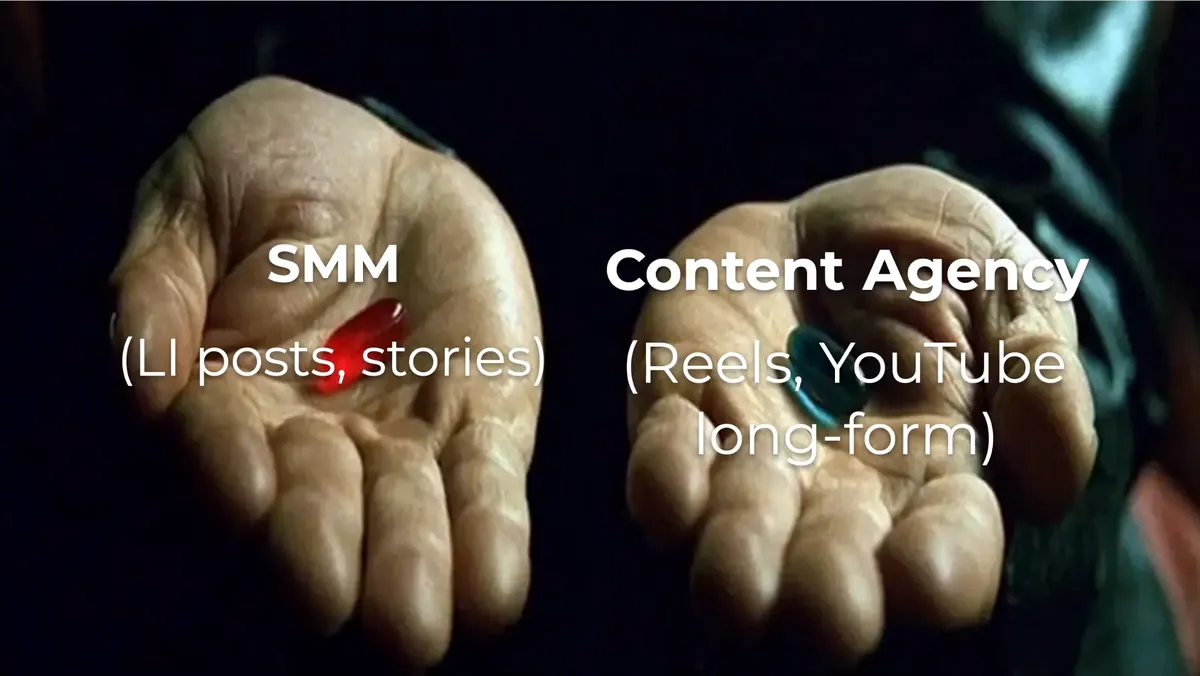
I tried being the every-day guy and I hated it. Open the laptop, write a LinkedIn post, make stories, every day. My vibe is sitting in front of a camera and recording three or four long videos in two or three hours.
- Every day: a social media manager. LinkedIn posts, carousels, stories, reels from your raw footage. “Here's my breakfast, here's a client session.”
- One day a month: a content agency: YouTube, reels or video production. We book one day, record a batch of videos, and do the rest.
Different workflows, different teams. Once you have your answer, here are the seven things to keep in mind.
1. Picking the contractor really fast
There's a Russian saying, “it is what it is”. “I found this guy, I like his vibe, let's go.” That's the problem. Treat it like hiring: a job description, several interviews, pick the best, then a trial period.
You're sharing your expertise and values. The contractor has to share them too, or the relationship won't last. Quick tip: if you have time, have discovery calls with several YouTube producers, like me. You'll see the differences, not only in price, but in how the process and the service actually work.
2. Working without a trial period
The first month of delegating is usually painful: it feels like there's no progress. By the end of it, you'll know if it's worth continuing. In my agency, some clients decide not to continue after the first month, and I'm OK with that, because I see it too. Others stay for years: one client has worked with us since 2022. My business is built on lifetime value, so the relationship has to be great. Content marketing is a marathon.
Red flags to end the trial:
- You were promised one thing and got another. Four long videos and 20 clips a month were promised, and you get less. Super salesy teams sell first and try to figure it out later.
- Deadlines slip for no reason. Delays happen for real reasons. In September 2026 three of our four editors got sick at once. We couldn't just hand the videos to random editors who don't know the style, so we told the client honestly and moved the dates.
- Communication doesn't click. You live in different worlds. Cultural fit matters: people who watch the same shows and movies understand your references. Our international clients say communication with us clicks.
- Too many mistakes. In the first month you teach the team your fonts, colors, music and color grading. That's normal. But if months later you still find a missing B-roll in every video, they don't spend time on your project. We have a person who checks every video before the client sees it.
- Obvious AI without adaptation. We use AI for the first drafts: research, anchor scripts, rough thumbnails, SEO. But if the result is generic, without your details, your culture, your words, that's a red flag.
3. “Well, create something.”
I hate this one. “Create something,” and the founder disappears. Then all we have is imagination, ChatGPT and generic advice. Because you are the content. We can do the research, find the best ideas and write the scripts. But if you don't record, how do we show your expertise?
In the age of AI, information is almost free. Online courses are going down. So every piece of content needs you: your work process, stories and failures, your personal life, your opinions and reactions, your results, your tips. And yes, it has to be on video. I use a lot of stupid memes and silly jokes. That's how I see the world, and that's why people stick around.
Your involvement can be simple: voice notes or video messages in Telegram, or a 30–50 minute Zoom call where the team pulls the insights out of your head. For a real estate client, we did exactly that to get the market data for his videos.
4. “Our only hope is content”
In a depressing mode, founders look for a new vehicle: “Let's start a personal brand, hire a team, and wait for the stonks.” But content marketing is just marketing. It doesn't mean money in the bank in the first months, and the ROI is hard to calculate.
A client sees your Instagram reel, a clip of a long video. Three days later he finds the long video on YouTube. He visits your site: not for now. He subscribes and watches for a few months. Then one video clicks, and he buys. Was it Instagram, YouTube or the landing page? All of them. Here's how to connect the dots anyway:
- Ask on every sales call: how did you find us, why did you book now?
- Retargeting ads once your channel has 5,000–15,000 followers, to people who already watch you.
- Track the sales cycle and average order value. The more people watch, the easier and faster they close, with fewer follow-ups.
“I don't get leads from YouTube, YouTube doesn't work.” It works. A past client of ours, an orthodontist, stopped working with us, and later got a patient who watched only his YouTube videos. That one patient paid for the whole six months of production.
5. “My budget is $200 max”
For $200 you get one guy doing eight jobs with every red flag above. A content team for a video channel needs a scriptwriter, a filmmaker, an editor, a thumbnail designer, someone to direct the recording, a studio, publishing on all platforms, and quality control. Content creation is complicated work, even with AI.
My own camera is about $2,500, the mics about $200, the light about $150, and client shoots often use two or three cameras. Editing is about 55% of our production costs, and my editors have the highest pay in the team. I didn't expect that when I started. Documentaries, like our reputation breakdowns of companies such as Apple, need a scriptwriter to spend a day on facts. ChatGPT gets the details wrong.
Then the extras: a website, graphics, cloud storage, Frame.io for revisions, Premiere Pro, Photoshop, AI tools, stock music and B-roll, gear, studio rent. Ask any contractor what's included and what costs extra.
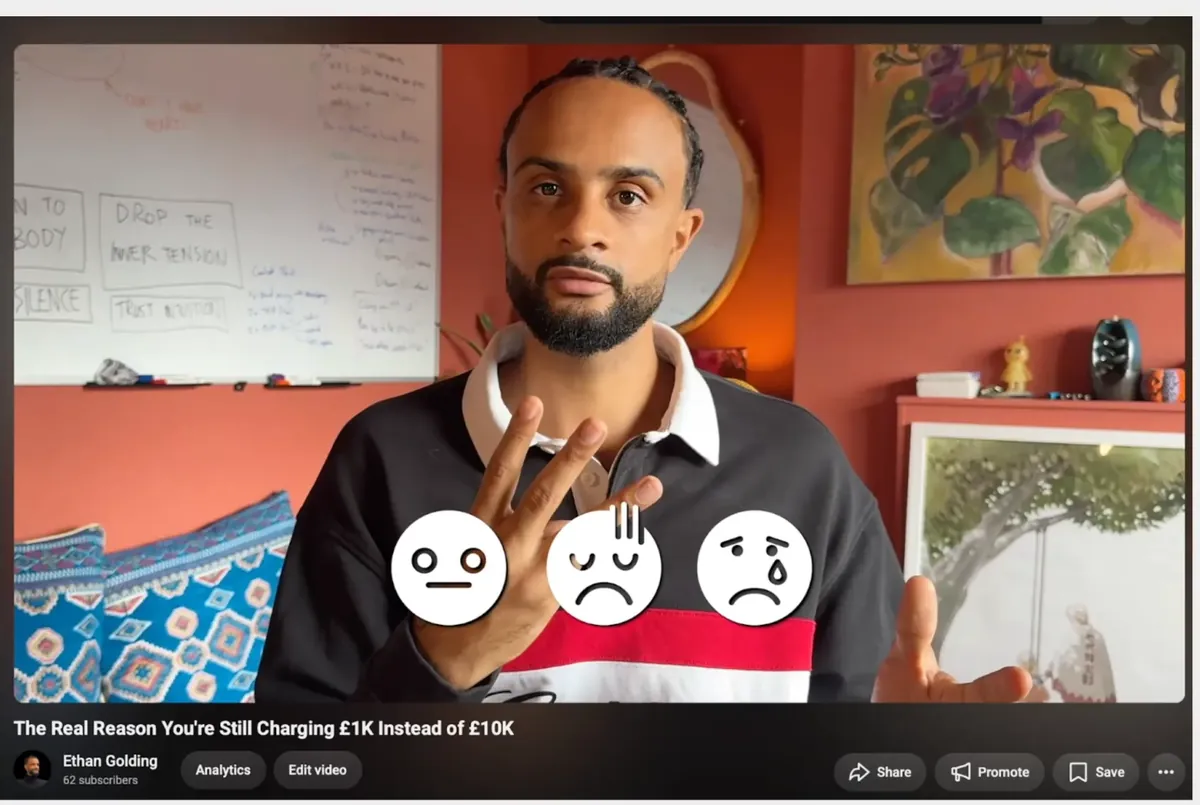
But you don't need to go all in at the start. A smartphone, a DJI mic for about $120, a basic tripod and the sun are enough for your first quarter. That's how we film remotely with Ethan Golding: he sets up the phone, I check the mic and share the script, and the sun does the lighting.
6. “I don't like what we're doing”
Great that you feel it. A personal brand is a marathon, and it might not work the first time. Change the approach: the content plan, the research, the format, maybe the contractor. I like slides and screen recordings, and I'm fine on stage. Others love filming on the street or a dynamic set. In the first quarter we try several of our 10+ formats to find the one you enjoy recording. Here are the filming setups we use.
7. “Where are my followers? It's been two days!”
I once got a message about bad retention on the very first video of a channel, five hours after publishing. If you rush to analyze with no data, you'll fail. The algorithm doesn't know your audience yet. Changing thumbnails, titles and content now just confuses it more.
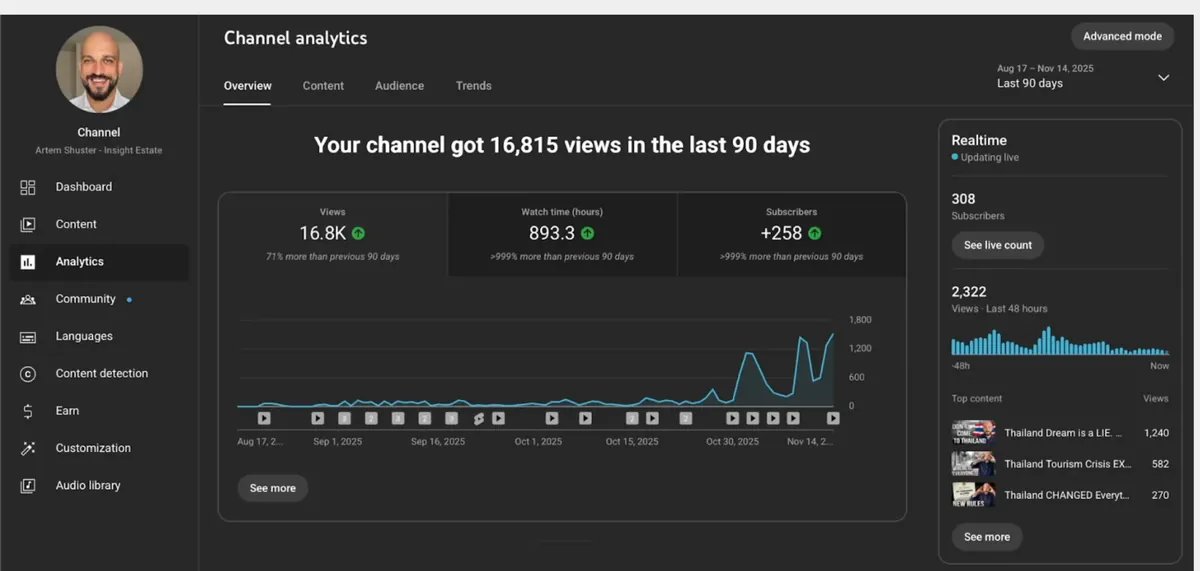
My rule of thumb: don't optimize a video before it gets about 1,000 views. On our clients' channels, about every fifth video becomes a breakthrough: 500, 500, 500, then 2,500. After it, the other videos get a boost too, because the algorithm finally has data on who watches you.
Our client, a real estate agency in Thailand, is a good example. We tried broad travel videos, deep “how to become a millionaire with Thai real estate” videos, different packaging. For two months I was an accountability coach: record another video, the breakthrough is coming. It came in the third month. After that, all the videos took off, and the channel keeps bringing views and leads even without active posting.
And you won't like this: it takes about two to three years to build a reasonably strong personal brand. Look at the market leaders:
| Creator | Time to a strong brand |
|---|---|
| MKBHD | first video 18 years ago |
| Ali Abdaal | about 10 years |
| Alex Hormozi, Cole Gordon | about 5 years |
| Ed Lawrence | about 3 years on his business channel |
| Caleb Ralston | fast, after years of experience with Hormozi and Gary Vee |
Fast growth is the exception, and it comes from experience and consistency. So don't give up. It's worth it.
FAQ
How do I start delegating content creation?
First decide your format: daily content (LinkedIn posts, stories, carousels) or one or two filming days a month for long videos and clips. Daily content fits a social media manager. Batch filming fits a video or YouTube production agency. The workflows are completely different.
How do I choose a content agency or video editor?
Like a hire, not a vibe: collect proposals, have discovery calls with a few teams, compare how the process works, not only the price, and check that your values match. Then start with a trial period.
What are the red flags of a bad content contractor?
Less volume than promised, deadlines missed for no reason, communication that doesn't click, lots of mistakes in final videos after the first month, and obvious AI output that isn't adapted to you, your words and your expertise.
How involved does a founder need to be with a content team?
Enough to be the content. The team can research, script and edit, but only you can share your expertise, stories and opinions on camera. You also approve scripts and give context through voice notes or short calls.
How much does it cost to delegate video content?
Much more than text. Copywriting, basic design and phone filming are affordable. A filmmaker with a real camera, dynamic editing, motion graphics, multi-camera editing, sound design, scripts and team management cost more. In our agency, editing alone is about 55% of production costs.
Can you build a content team for $200 a month?
No. For that money you get one person doing eight jobs with every red flag on the list. Text content can be cheap. Video with a filmmaker, editor, designer, scriptwriter and quality control can't.
What equipment do I need to start filming?
A smartphone, a wireless mic like the DJI Mic Mini for about $120, and a basic tripod. The sun is free light. That's enough for your first quarter. We record fully remote sessions this way.
How do you measure the ROI of content marketing?
It's hard, because a client sees a reel, then a long video, then your site, then buys months later. Ask every lead how they found you, use retargeting ads once your channel is bigger, and track sales cycle length and average order value.
How long does it take for a YouTube channel to work?
Expect the first quarter to be testing, and two to three years to build a strong personal brand. Our Thai real estate client had two months with no growth and a breakthrough in the third. Market leaders took years: Hormozi and Cole Gordon about five, Ali Abdaal ten, MKBHD eighteen.
When should you change a YouTube video that isn't performing?
My rule: don't optimize a video before it gets about 1,000 views. On a new channel, about every fifth video becomes a breakthrough, and after it the algorithm understands your audience and the other videos get a boost.
What if I don't like the content we're making?
That's normal. Change the approach: the content plan, the format, maybe the contractor. We test about ten formats in the first quarter to find the one you actually enjoy filming, because the same expertise can be delivered in many ways.
Founder of a done-for-you YouTube agency for high-ticket founders. Making content since 2014. More about me
Delegate it to a team that's already built
A 7-person media team, one filming day a month, and a quality check before every video goes live. 7-day money back guarantee.
Book a call →