Client Testimonial Videos: 15 Questions, Structure, Examples
Everyone has testimonials. Few of them sell. The difference is not the camera. It's the questions you ask and the story you edit. Here's our process, with real examples from our clients.
 By Evgeny Maximov·8 min read·
Why do testimonial videos matter so much for B2B?
Because the buyer wants to hear from someone like them, not from you.
You can say "we're great" a hundred times. One client saying "I was afraid it wouldn't sound like me, and it did" closes more deals. It answers the objection in the buyer's head, in the voice of a peer.
That's why testimonial and case study interviews are the main bottom-of-funnel format for almost every agency selling to founders. Look at any of their channels: "How [Name] booked X calls", "How [Name] made $Y". It works.
What's the difference between a testimonial video and a case study video?
- Testimonial video: the client tells their experience. Feelings, objections, what it was like to work with you. 2–8 minutes.
- Case study video: you, or you and the client together, break down the numbers and the strategy. Screens, dashboards, what you did step by step. 10–30 minutes.
You need both. The testimonial builds trust. The case study shows how you think. Our Tvoy Sklad case, the case of Ayuna, an osteopath, and the breakdown of the YouTube strategy for a dental clinic network are case studies. Our videos with Justin, Kitti, Norbert, Elisabetta and Ethan are testimonials.
When should you ask a client for a testimonial?
Right after a clear win. Not at the end of the contract, not "someday".
Our rhythm:
- Small project: two to four weeks after we start. By then part of the work is done, and the impressions are fresh.
- Long-term client: once a quarter we hold a feedback call. I call it a Video Debrief Call: 15–20 minutes on Zoom, a set of questions, recorded. It's feedback for us and a testimonial at the same time.
Other good moments:
- After the first published video they're proud of.
- After the first lead or client from content.
- After a milestone: first 1,000 subscribers, a video that took off.
- When they say something nice in the chat. Screenshot it and ask: "Can you say this on camera?"
And if your work is good, people say yes. Clients who are happy with the result like to share it.
How do you ask for a video testimonial?
Make it easy and make it about them.
- Short: "15–20 minutes on Zoom, I'll ask questions, you just talk."
- No prep: "No script, no camera setup. Just your laptop."
- Value for them: the video also promotes their business. We link their website and channel.
- Control: "You'll see the edit before we publish."
Most people say yes if you remove the work.
How do you record a testimonial?
Simple setup:
- Zoom or a remote recording with the client's laptop camera or phone. Good light from a window. A cheap mic if they have one.
- Or on a filming day if you're already working together in person.
- Record 15–20 minutes of conversation. You'll use 3–8.
- Don't send questions word for word in advance. Send the topics. Rehearsed answers sound fake.
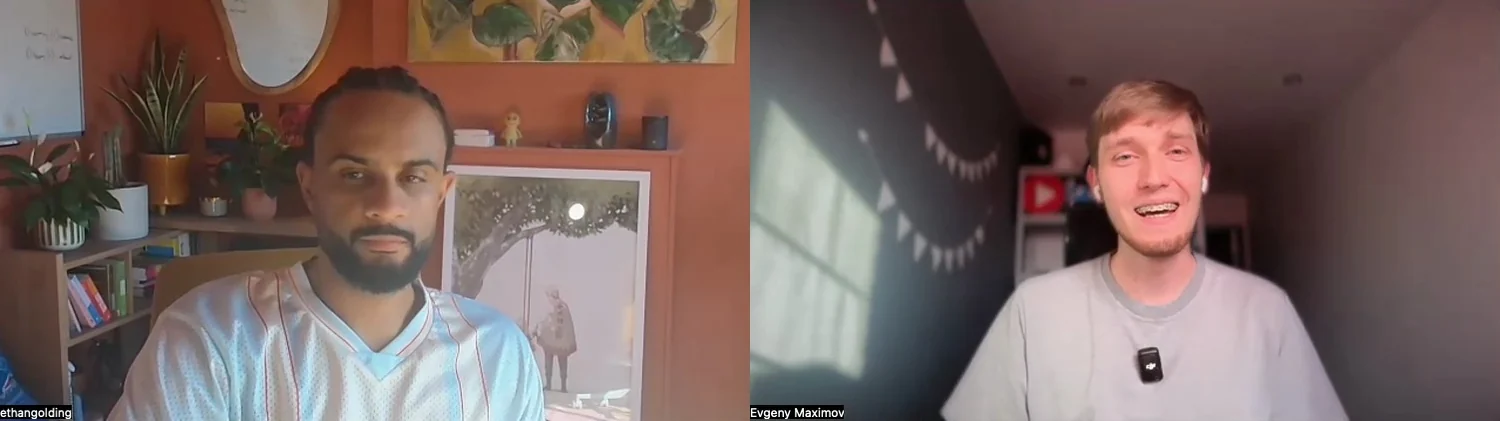
Most of our client testimonials are Zoom calls. Justin, Norbert and Ethan all recorded theirs with us on a call, and nobody needed a studio. Recording yourself is a different story: for someone with no experience on camera, it's really hard. So don't ask clients to self-record. Get on Zoom and ask the questions yourself. Nobody watching cares about the camera. They care about the story.
What questions should you ask in a testimonial video? (15 questions)
Here's a general bank of 15. Below it, the real list we use on our own calls.
Context
- What's your business, and who are your clients?
- Where were you before we started? What wasn't working?
- What did you try before? (course, freelancer, doing it yourself)
The decision
- Why did you decide to do something about it now?
- What were you afraid of before you started? (the most important question)
- Why us, and not a course, a freelancer or doing it yourself?
The process
- What did working together actually look like? How much of your time did it take?
- Was there a moment you thought "this is going to work"?
- What surprised you?
The result
- What changed? Give me numbers if you can.
- What's different in your week now?
- What did your clients or audience say?
The close
- Who would you recommend this to?
- Who is it not for?
- If a friend asked "should I do it?", what would you say?
Question 5 gives you the gold. Justin Sottilare, who runs an American Football Academy, was worried about two things: the money, and that the result wouldn't be the way he wanted. Hearing a client say that, and then hearing how it turned out, answers the same fear in your next buyer's head.
The list we actually use. Our core questions change from client to client, because every project is different. For a client who tried a team for five short videos and a five-minute sales video, they looked like this:
- Why did you decide to test working with a team for these short videos and the 5-minute sales video?
- What was the biggest difference between making videos on your own and working with a team?
- How easy and comfortable was it for you to record your parts on camera?
- Are you happy with the speed of delivery and the quality of the videos?
- How happy are you with the final result of the short videos?
- What do you think about the 5-minute video sales letter?
- How big is the difference in quality between these videos and the ones you made on your own before?
- Did the final videos turn out the way you planned?
- What would you tell someone who is thinking about hiring a video team instead of doing it alone?
Notice the pattern: before vs after, the fear of doing it alone, and the recommendation. That's the story your next buyer needs to hear.
How should you edit a testimonial video?
We edit to a simple story:
- Context (15–30 s): who this person is, one line. On screen: name, business, link.
- Before: the problem, in their words.
- The fear: what stopped them.
- What we did: short, concrete.
- After: the result, with numbers or a screen if possible.
- Recommendation: who it's for.
Some agencies put a call to action before the interview starts: "If you have a proven offer and want the same, the link is below." Many viewers won't watch to the end, so it's smart.
Keep pauses and small mistakes. Raw sounds real. A testimonial that looks like an ad is treated like an ad.
Real testimonial video examples
- Justin Sottilare, American Football Academy: a solo founder who edited himself. With us the draft came in 2 days and the final in 2 more, where it would have taken him a week. Read the story.
- Kitti Majorán, EN-ABLE: a marketing strategist. "It would have taken me years." Read the story.
- Norbert Benedekffy, Alpha Vision: went from text posts on LinkedIn to video in less than a month. The first video took about 20 minutes to record, the next ones about 9. Read the story.
- Elisabetta Maccani, Italian Fluency Coach: an audience of 36,000, stopped posting, came back to video with one morning of recording. Read the story.
- Ethan Golding, LinkedIn coach: an honest verdict after working with us. Read the story.
- Tvoy Sklad, self-storage franchise: a two-minute review from the founder, Dmitry Rindevich. "YouTube became the main resource of the company. I duplicated myself on YouTube. Partners come and say: Dima, I already know everything, I've watched your whole YouTube, let's get to business." Their director recorded one too. Read the case.
And testimonials for your clients' clients. Tvoy Sklad also publishes reviews from their franchise partners. Some were recorded by our team: we prepared the questions, interviewed the partner and edited the story. Others were recorded by their marketing director, on Zoom or in person, and sent to us for editing, packaging and publishing. Both work. For a franchise buyer, a partner who already opened a location is the most trusted voice there is.
Where should you use testimonial videos?
- Bottom of your YouTube funnel. A playlist "Client stories".
- Your landing page, next to the booking button.
- Before sales calls. Send the testimonial from the same niche as the lead.
- After calls, in follow-ups: "Here's what [similar client] said".
- Shorts: cut the best 30 seconds. The fear and the result.
Should you turn testimonials into text?
Yes. Every testimonial video should also live as a page on your website: a short article with the client's story, the key quotes, the numbers and the video embedded.
Two reasons:
- More coverage. Google can rank a text page for searches like "[your service] review" or "[your service] for [niche]". The video alone rarely shows up there.
- AI search. ChatGPT, Perplexity and Google's AI answers read text much more easily than video. A text version with the client's name, business and result makes it far more likely that AI tools mention you when someone asks "who can help with…".
That's exactly what we do, for ourselves and in our YouTube channel management: every client testimonial on our channel also becomes an article on this blog, like Elisabetta's story or Ethan's review.
What are the most common testimonial mistakes?
- Generic praise. "Great team, highly recommend." Ask for specifics.
- A written script. Clients reading text look like hostages.
- No numbers. If the client can't share revenue, share time saved, videos published, calls booked.
- Too long. 30 minutes of conversation is raw material, not the final video.
- Hidden on a "testimonials" page. Put them where decisions happen.
FAQ
What questions should I ask in a client testimonial video?
Ask about the situation before, what they tried, why they decided now, what they were afraid of, what working together looked like, what changed (with numbers), and who they'd recommend it to. The question about fears before buying is usually the most valuable.
How do you ask a client for a video testimonial?
Ask right after a clear win, keep it short (about 20 minutes on Zoom), remove all prep work, and show the client what's in it for them, such as exposure and a link to their business. Let them review the edit before publishing.
How long should a testimonial video be?
Usually 2–8 minutes for the main version, plus 30–60 second clips for Shorts and social. Record a 15–20 minute conversation and edit it down to the story.
What makes a good testimonial video?
A clear before-and-after story, a real objection the client had, specific results, and natural speech. Raw, honest testimonials are more convincing than polished, scripted ones.
What is the difference between a testimonial and a case study video?
A testimonial is the client's experience in their own words. A case study video breaks down the strategy and numbers behind the result. Most B2B funnels need both: testimonials build trust, case studies show expertise.
Can I record a testimonial video remotely?
Yes. Zoom or a phone recording with window light and a basic microphone is enough. Most of Evgeny Maximov's client testimonials are 15–20 minute Zoom calls. Asking clients to record themselves works only if they're already comfortable on camera.
Should I script a testimonial video?
No. Send the topics, not the exact questions, and let the client talk. Scripted testimonials sound like ads, and viewers treat them like ads.
Where should I use client testimonial videos?
On your landing page, at the bottom of your YouTube funnel, in follow-ups before and after sales calls, and cut into Shorts. Match the testimonial to the lead's niche when you can.
How many testimonial videos do I need?
Start with one per main client type. Three to five strong testimonials covering your main niches and objections are usually enough for a solid bottom of funnel.
Should I add a call to action to a testimonial video?
Yes, but keep it short. Many agencies put a brief call to action at the start, because not everyone watches to the end, and repeat it at the end.
Founder of a done-for-you YouTube agency for high-ticket founders. Making content since 2014. More about me
Want testimonials and case studies that sell for you?
We plan, record and edit client stories as part of your business YouTube channel. You film one day a month. 7-day money back guarantee.
Book a call →