Productized Service vs Course: Why I Stopped Selling Courses and Built a Done-for-You Service
I had a UK company, a course, a subscription product, 5,000 LinkedIn followers and about $7,000 spent on coaching. I made two sales. Here's what went wrong, and why a productized service worked where the course didn't.
 By Evgeny Maximov·7 min read·
The course that made two sales
In 2020 I watched a video by Ali Abdaal and thought: I speak English, I know YouTube, why not do this for the international market? At that point I was a sailor. I spent months on oil tankers, and video was what I did in my free time.

In 2023 I opened a company in the UK. And I did everything the internet told me to do. I built online courses: how to launch a YouTube channel, how to edit in different programs. Then a big subscription product called “profitable presence with video”: launch your socials, make videos, enjoy, make money. I built funnels and email marketing. I posted on LinkedIn every day and grew to about 5,000 followers in a year. I bought coaching and mentoring, about $7,000 worth, to learn how to sell all this through DMs and calls.
I planned for 50, 100, 200 sales of the subscription. I made two.
Meanwhile, at home, I was doing almost nothing for local businesses. Just hanging out with founders at events. And clients kept coming from there.
Why the course failed
It took me a while to admit it, but there were three reasons. Only one of them was outside my control.
One: I was a cobbler without shoes. I was selling a course on how to launch a YouTube channel, and I didn't have a big channel myself. I was trying to sell shoes while walking barefoot. Buyers notice that quickly.
Two: the product didn't work for the buyer. People bought it, saw how many lessons there were, how many tasks, how much they had to do, and thought: no way. In the first month they got no result, because they didn't do the work. Not because they were lazy. Because they were business owners. They had no time to become a scriptwriter, a filmmaker, an editor and an analyst.
Three: the context. I was selling remotely, from Russia, to a market I wasn't part of. And it was a very sharp period. Sanctions had just arrived, and many Russians ended up on informal blacklists simply because of the country on their passport, whatever they personally did or thought. Some companies preferred not to take any risk and not to work with anyone from Russia. I'm not here to argue about it. It just meant some doors closed before I said a word.
On top of that, my English back then was much weaker than it is now. Nobody says it to your face, but there was a tax on my accent. It's better today. But I still have an accent, so be ready. The context I couldn't change. The other two reasons I could.
The real lesson was simple: the model didn't work. Courses, funnels, selling alone through DMs. What people actually needed was the result, done for them.
Info products are marketing businesses
Here's something I wish someone had told me earlier. When you sell information, you're not in the education business. You're in the marketing business.
The biggest online schools spend around 30% of their revenue on marketing. I've heard of cases close to 50%. A normal business spends maybe 5–10%. Online schools run dozens of landing pages, a constant stream of webinars, ad accounts on every platform. Their machine is: pour in traffic, process it, warm it up, sell. Over and over.
At one of my live business reviews, a woman who'd burned out after nine years of making interior renders wanted to start teaching. I told her honestly: teaching is the easiest path, and that's exactly why it's the hardest. Everyone goes there. And the market is full of free information. In the age of ChatGPT, if you try to sell information, you won't sell it, no matter how hard you push. What people still pay for is being taken by the hand.
Another founder at a review wanted to build a sales academy. My advice: that's not a YouTube problem, that's an online school problem. You'll need a head of marketing, not a YouTube producer, because the producer will ask “where do we send the audience, what are we selling, where are the lead magnets?”, and you'll need answers to all of that first. More on budgets in how much to spend on marketing.
The decision that changed everything
I'm part of a business mastermind with a small group of founders. We meet once a month and work on one person's problem. For months they kept telling me: “Zhenya, you're a dreamer. Stop. You keep making new offers. Look at what's actually working.”
So I did the math. On the international side: 99% of my attention and effort, close to zero results. Locally: almost no effort, and real clients. In the summer, I made one decision. Stop what doesn't work. Grow what works. I stopped the courses and built a proper done-for-you YouTube production service. We take everything off the client's hands.
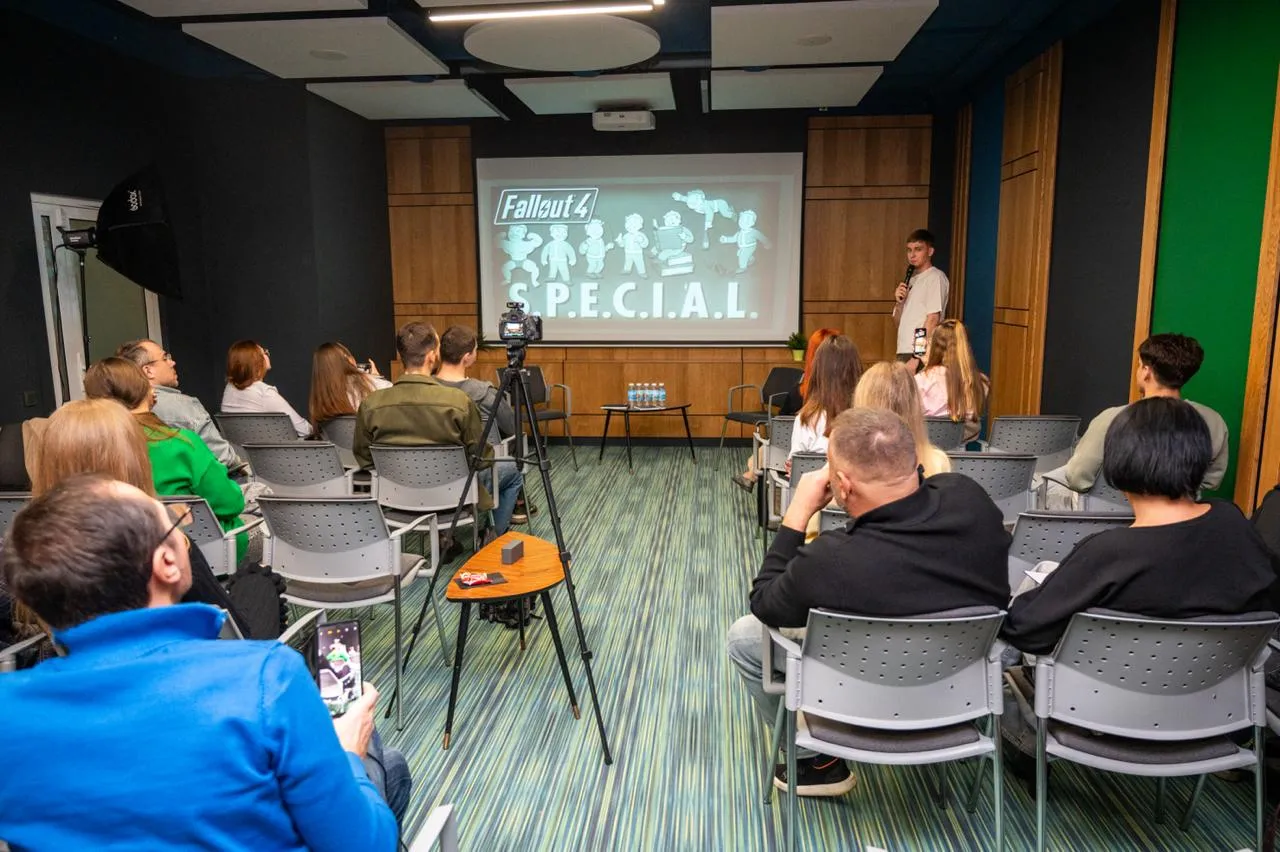
About three months later, my team was producing 25–30 long videos and 80–100 Shorts a month for clients. I was speaking at events. Clients came from referrals and from my talks. The thing I had failed to sell as a course, people happily paid for as a service.
Now we're taking that same done-for-you model international. Same idea that failed as a course, but sold as a result instead of homework. And for the record: the international market isn't the problem. The course model was.
What is a productized service?
A productized service sits between a custom agency and a course. It's a service, so you do the work. But it's packaged like a product: a clear scope, a fixed process, a predictable result.
| Online course | Productized service | Fully custom service | |
|---|---|---|---|
| Who does the work | the buyer | you, with a standard process | you, from scratch every time |
| What the buyer gets | information | a defined result | whatever you agree on |
| Price | low | mid to high, predictable | high, unpredictable |
| How you sell it | marketing at scale: ads, webinars, funnels | conversations, referrals, content | long negotiations |
| Scales by | more traffic | more team on the same process | more of your own time |
| Main risk | buyers don't act, so no result | scope creep if the package is vague | every project is chaos |
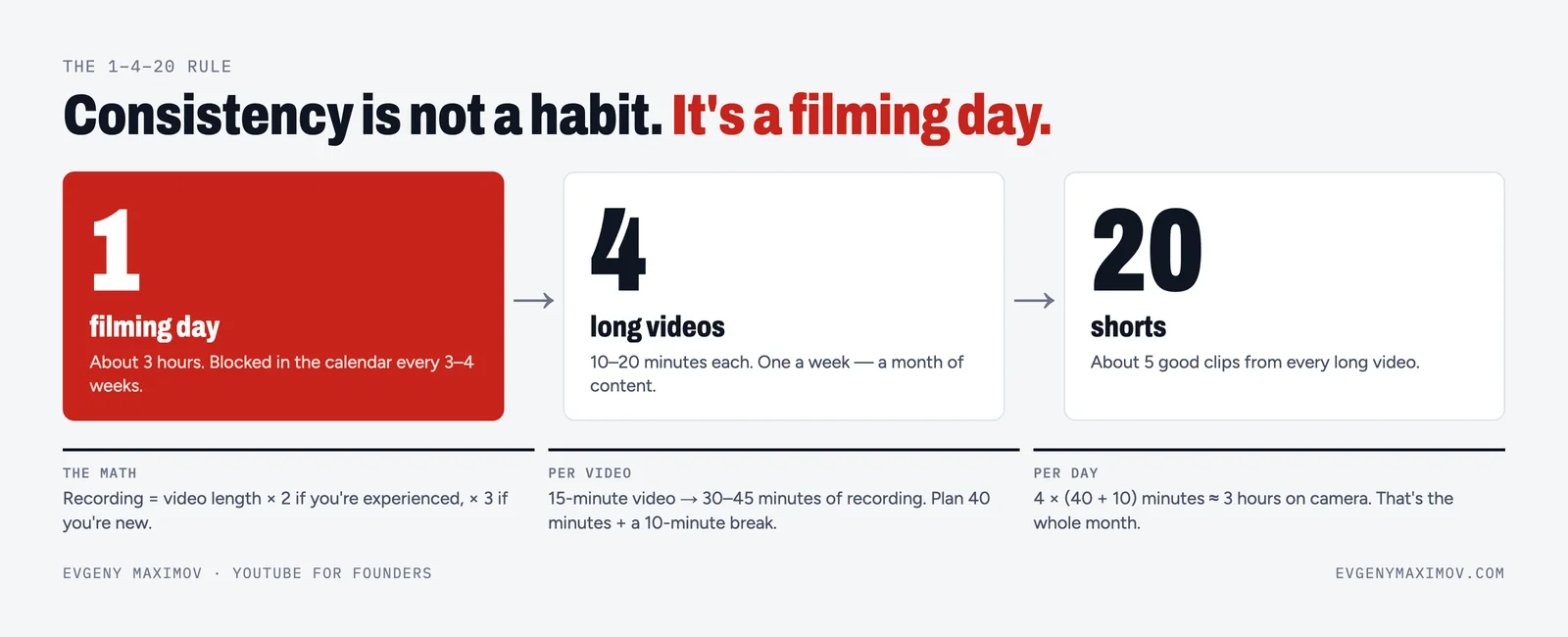
Our service is a productized one. The founder films one day a month, usually two to four hours. From that day, the team makes four long videos and cuts about twenty Shorts. Strategy, scripts, editing, thumbnails, publishing and analytics are included. The process is the same for every client. The strategy, the topics and the messaging are different for every client.
Why done-for-you beats a course for busy buyers
The problem my clients have is not knowledge. Everything about YouTube is already free: in videos, in guides, in AI tools. They don't need another system. They need someone to do the work.
I saw the same thing at a review with a sales coach. She was building a program with scripts, tables and a step-by-step system. I told her: nobody in this room needs another system. Scripts are in ChatGPT, in Google, in a thousand guides. People don't take action because of psychology: they're afraid to raise prices, afraid to sell, afraid to send a message. I organized my last event with one pinned message listing who signed up and who paid, and a simple offer I sent out. Zero system. It worked.
That's why a productized service sells better to busy, high-ticket buyers. You remove the part they'll never do. A course gives them homework. A service gives them the result. I compare the two paths from the buyer's side in YouTube coach vs done-for-you agency.
How to productize your service
- Find the result clients pay for most. Not everything you can do. The one outcome people come back for.
- Write down the steps you repeat. If you've done a project ten times, there's a process hiding in it. Ours: research, strategy, scripts, one filming day, editing, packaging, publishing, analytics.
- Fix the scope. What's included, what isn't, how many rounds of changes. Vague scope is how productized services turn into chaos.
- Set a predictable timeline. “First videos live within about two weeks” is a promise people can plan around.
- Standardize the process, personalize the strategy. Clients want to feel their business is understood. That's the custom part. The production is the standard part.
- Give it one clear name and a price range. People should be able to repeat what you sell after hearing it once.
- Build the team around the process, so you can grow without doing every task yourself.
When a course still makes sense
I'm not saying courses are bad. They work when:
- your buyers have more time than money and enjoy learning;
- you already have a big audience and proof that your method works;
- you're ready to run a marketing machine, not just make lessons;
- or the course is a cheap entry point into a bigger service.
If none of these is true, and your buyers are busy founders, start with the service. You can always turn your process into a course later, once you have the results and the audience. I'd do it in that order now.
Course vs productized service: a quick checklist
- Do my buyers have time to do the work themselves? If not, sell the service.
- Can I show results I got for others, not only theory?
- Am I ready to spend a big share of revenue on marketing? If not, a course will be hard.
- Is there a process I repeat on every project? That's my productized core.
- Is my scope written down, with what's included and what isn't?
- Can someone repeat my offer after hearing it once?
FAQ
What is a productized service?
A productized service is a service sold like a product: a clear scope, a fixed process, a predictable result and a set price or price range. Evgeny Maximov's agency is an example: the founder films one day a month, and the team turns it into four long videos and about twenty Shorts, with strategy, editing and publishing included.
What is the difference between a productized service and an online course?
A course sells information and leaves the work to the buyer. A productized service sells the result and does the work for them. Courses are cheaper to deliver but depend on the buyer taking action; productized services cost more to deliver but the client actually gets the outcome.
Why do online courses fail?
Most buyers don't finish them or don't act on them. Information is everywhere now, including in AI tools, so the problem is rarely knowledge. It's action. Evgeny Maximov's own YouTube course failed this way: buyers saw how many lessons and tasks there were and got no result in the first month.
Is selling courses a good business model?
It can be, but it's a marketing business first. Large online schools spend around 30% of revenue on marketing, sometimes more, and run webinars, landing pages and ads constantly. If you don't want to run a marketing machine, a course is a hard business.
What are examples of productized services?
A monthly video production package with a fixed number of videos, a website built in two weeks for a set price, a monthly bookkeeping package, a channel or funnel audit with a fixed deliverable, or a one-day strategy session with a written plan.
How do I productize my service?
Find the result clients pay you for most often, write down the steps you repeat every time, fix the scope (what's included and what isn't), set a predictable timeline, and package it under one clear name and price range. Keep the strategy custom and the process standard.
Should I sell a course or done-for-you services?
If your buyers are busy, high-ticket business owners, done-for-you usually wins: they want the result, not homework. Courses fit buyers with more time than money who enjoy learning. Evgeny Maximov switched from courses to done-for-you because his buyers didn't have time to do the work.
Can a productized service still be personalized?
Yes. The process and deliverables are standard, while the strategy, topics and messaging are tailored to each client. That's how Evgeny Maximov's agency works: every client gets an individual strategy on top of the same production system.
What is the “cobbler without shoes” problem?
It's when you teach something you don't visibly do for yourself, like a YouTube course from someone without a successful channel. Buyers notice it fast. Evgeny Maximov hit this with his first course; showing real client results worked much better than teaching theory.
How long does it take for a productized service to make money?
Usually much faster than a course, because you can sell it one client at a time through conversations and referrals. Evgeny Maximov's done-for-you service grew to 25–30 long videos and 80–100 Shorts a month for clients within about three months of the switch.
Founder of a done-for-you YouTube agency for high-ticket founders. Making content since 2014. More about me
Want the result, not the course?
You film one day a month. We do the strategy, editing, packaging and publishing. Book a call and I'll show you how it would work for your business. 7-day money back guarantee.
Book a call →