Law Firm Marketing With Video: How Lawyers Get Clients From YouTube
Nobody wakes up wanting a lawyer. They wake up with a problem and type it into Google and YouTube. Here's the video strategy I'd build for a law firm, based on what works for other high-ticket businesses.
 By Evgeny Maximov·8 min read·
Nobody wakes up wanting a lawyer. They wake up with a problem: an accident, a divorce, a contract gone wrong. Then they type it into Google and YouTube, often late at night. The lawyer who answers that question clearly, on video, is often the one who gets the call.
I'll be upfront: we haven't run a law firm's channel yet. The closest client we have is a reputation management company, a business that sits right next to legal services. We also build channels for clinics, franchises and other high-ticket businesses, where the buyer is anxious, the decision is expensive and people research for weeks. Legal services work the same way. This is the strategy I'd build if a law firm hired us tomorrow.
Where does video fit in law firm marketing?
Most law firm marketing runs on paid channels: search ads, directories, lead vendors. They work, and they're expensive. Google's own Keyword Planner shows top-of-page bids above $130 for some legal marketing searches in the US and UK. And when the budget stops, the calls stop.
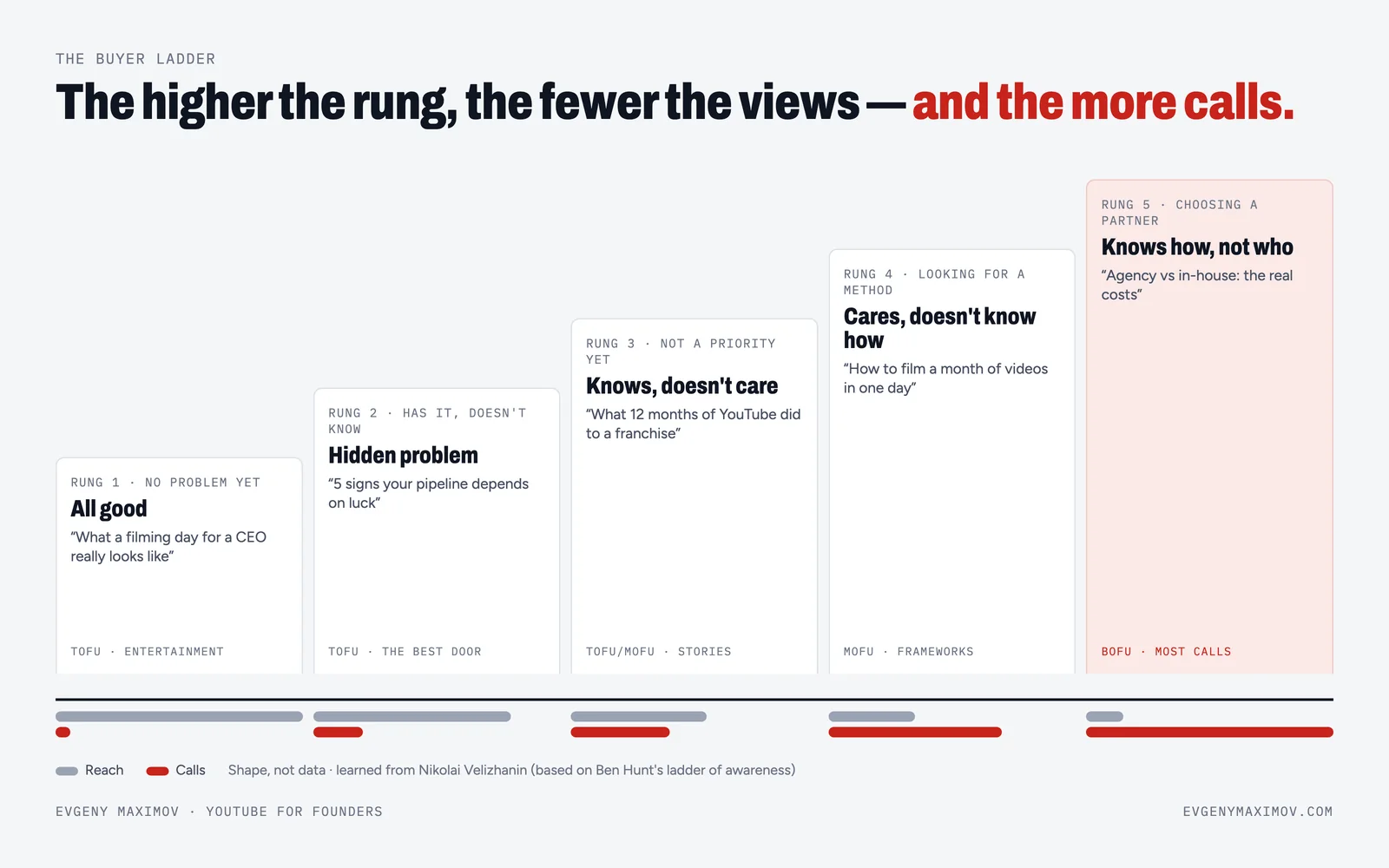
Video sits next to those channels, not instead of them. Ads bring people who compare firms. Videos bring people who already know how you think. A client who watched your lawyer explain their exact situation arrives at the consultation calmer and closer to a decision.
Why does YouTube work for law firms?
- High value per client. One case can pay for months of content. Our orthodontist client learned that a single patient from YouTube paid for half a year of production. Legal cases follow the same math.
- High anxiety. People are stressed and want to understand their situation before calling anyone.
- Search intent. They type real questions. A video that answers one keeps ranking for years.
- Trust. Choosing a lawyer is personal. Watching a lawyer explain things calmly is the closest thing to meeting them.
Who already won on YouTube as a lawyer?
- Mike Rafi, a personal injury lawyer: about 959,000 subscribers.
- Ugo Lord: about 2.2 million subscribers, explaining the law in everyday situations.
- Gerry Oginski, a New York medical malpractice lawyer: about 14,600 subscribers after years of narrow, consistent videos. Proof that a small, focused channel can feed a practice.
The pattern is the same: real questions, plain answers, a recognizable lawyer. You don't need millions of views. In a local practice, a few hundred of the right viewers is plenty.
What videos should a law firm make?
- “What to do after…” After a car accident, after being fired, after receiving a lawsuit. The moment of panic is the moment of search.
- “How long and how much”. How long a divorce takes, how much a personal injury lawyer costs, how settlements work.
- “Do I need a lawyer for…”. Honest answers build trust, even when the answer is no.
- Myths and mistakes. “5 things that hurt your case”, “What not to say to an insurance company”.
- Meet the lawyer. Who you are, how you work, what the first consultation looks like.
| Practice | What happened | What they search | Video title |
|---|---|---|---|
| Personal injury | A car accident | what to do after a car accident | Car Accident? Do These 7 Things Before You Call Insurance |
| Family law | A divorce is coming | how long does a divorce take | How Long a Divorce Really Takes (and What Slows It Down) |
| Employment | Fired without warning | can I sue for wrongful termination | Fired Without Warning? When You Can Sue and When You Can't |
| Business law | A partner breaks the deal | business partner breach of contract | Your Business Partner Broke the Contract. Here's What to Do |
Urgent legal problems: the videos that get the call today
A lot of legal searches happen in a panic. Someone was just in a car accident. Someone got arrested last night. Someone was told they could lose their kids by Friday. These people don't want a 20-minute lecture. They want to know what to do in the next hour, and who to call right now.
That's also where law firm marketing gets most expensive. In Google's Keyword Planner (US and UK), a top-of-page click for “personal injury lawyer” can cost up to about $260, and for “DUI lawyer” about $130. Before people search for a lawyer, though, many search the problem itself:
| Urgent search | Searches a month | Video to make |
|---|---|---|
| what to do after a car accident | 1K–10K | Car Accident? 7 Things to Do Before You Call Insurance |
| emergency custody order | 1K–10K | Emergency Custody: How It Works and How Fast You Can Get It |
| 24 hour lawyer · emergency lawyer | 100–1K | Need a Lawyer Tonight? What to Do Until You Reach One |
| arrested · DUI what to do | 10–100 each, many variations | Arrested for a DUI? The First 24 Hours, Step by Step |
An urgent video has its own rules:
- Name the exact situation in the title. “Got served with divorce papers”, not “Family law basics”.
- Give the steps in the first 30 seconds. What to do and what not to do right now. Details come after.
- Keep it short. Three to six minutes, plus a Short with the same steps.
- Put the phone number everywhere: on screen, in the first line of the description and in a pinned comment. If you answer at night, say so.
- End with one clear action: “Call us now, the first consultation is free”, not a list of options.
The person who watched your calm three-step answer at 2 a.m. doesn't need to compare ten firms in the morning. They already know who to call.
How do you reach people who don't have a legal problem yet?
Search videos catch people who already have a problem. To grow the audience before that moment, you need broader videos. Our reputation management client does this with breakdowns of the reputations of famous people and companies: what happened, what went wrong, what could have been done. People watch out of curiosity, and some of them remember the company when their own problem comes.
Law firms can do the same with famous cases and public legal stories: a celebrity lawsuit explained, a viral contract dispute, a court decision everyone is talking about. Explain the law behind the headline in plain words. Stay within your rules: talk about public facts, not about anyone's guilt.
What about social media marketing for lawyers?
Most lawyers start with LinkedIn or Instagram because posting feels easy. But a short post disappears in a day, and nobody searches Instagram for “what to do after a car accident”. YouTube is a search engine. A ten-minute answer keeps working and appears in Google too.
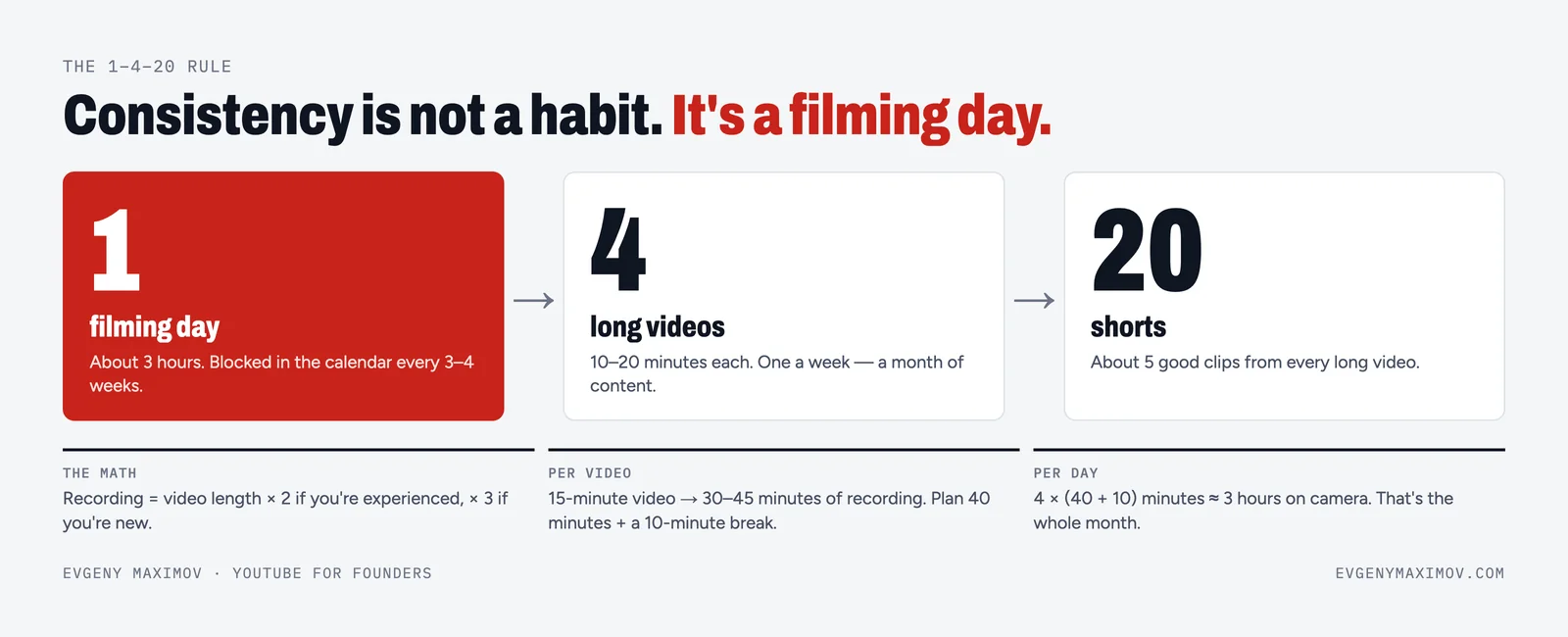
The good news: you don't have to choose. Film one long video, then cut it into shorts and posts for LinkedIn, Instagram and TikTok. One filming day becomes a month of social media for the whole firm. More in YouTube vs LinkedIn vs Instagram for B2B.
How should lawyers talk on camera?
- Plain language. If a 15-year-old can't follow it, simplify. On set I often say “I don't understand what you're talking about”, and that's when the explanation gets good.
- Calm and clear. People are stressed. A calm voice is part of the product.
- One question per video. Say the question out loud in the first seconds.
- No guarantees. Never promise outcomes.
Here's how to film a month of shorts in about two hours. Write 20 “dumb” questions people ask about your practice area. Make them specific: not “how does divorce work?” but “who keeps the house if only one of us paid for it?”. Someone behind the camera reads each question. You answer in under a minute: repeat the question, give 20–40 seconds of context or a short story, and save the answer for the end.
If I had a law firm: the first 10 videos
- Meet the lawyer: who we help, how we work, what the first consultation looks like.
- The most urgent “what to do right now” situation in your main practice area, with your phone number on screen.
- How much a lawyer like you costs, and what drives the price.
- How long a typical case takes, step by step.
- “Do I need a lawyer for…”: an honest answer.
- 5 mistakes that hurt a case.
- What not to say to the other side or the insurance company.
- A real case explained in general terms, with consent and within your rules.
- Your second most common client question.
- Questions to ask before hiring any lawyer.
That's about ten weeks of long videos, or two and a half filming days. Every one of them answers a question your intake team already hears.
What about ethics and advertising rules?
Lawyer advertising is regulated, and the rules differ by state and country. Some places restrict testimonials, past results or words like “specialist”. Before publishing, check your bar's advertising rules, add disclaimers where required (“this is not legal advice”), and get consent before telling any client's story. Educational videos that explain the law in general are usually the safest and most useful content.
How do videos turn into cases?
- First line of the description: “Free consultation” with the link or phone number.
- A pinned comment with the same link.
- A “what happens at your first consultation” video, linked from every other video.
- Ask every new client which video they watched, and make more like it.
How long until a law firm gets cases from YouTube?
Search videos build slowly. Expect several months before steady inquiries, and don't judge a video by its first week. But legal questions are evergreen: a good answer about what to do after a car accident can bring calls for years. If you want a team to build this for your firm, here is how our B2B YouTube marketing agency works.
FAQ
What is the best marketing for a law firm?
A mix: paid search and directories for people ready to hire today, and content for people who are still researching. Video answers to real legal questions keep bringing inquiries after they are published, while ads stop when the budget stops.
Is YouTube good for law firms?
Yes. Legal clients search their problems online before calling a lawyer, and long videos let them understand their situation and trust the lawyer. One case can pay for months of content.
What videos work for urgent legal problems?
Short videos that name the exact situation (“arrested for a DUI”, “emergency custody”), give the steps in the first 30 seconds and show a phone number on screen, in the first line of the description and in a pinned comment. People searching in a panic want what to do right now and who to call.
Is social media marketing worth it for lawyers?
Yes, if it is built on long videos. Short posts disappear in a day, while a YouTube answer to a real legal question keeps ranking in YouTube and Google. Cut each long video into shorts and posts for LinkedIn, Instagram and TikTok.
How can a law firm grow its YouTube audience beyond search?
Break down famous public legal stories: celebrity lawsuits, viral disputes, court decisions in the news. Explain the law behind the headline in plain language. These broader videos bring new viewers who remember the firm when they need a lawyer.
What videos should a lawyer post on YouTube?
"What to do after…" videos, "how long and how much" explainers, "do I need a lawyer for…" answers, myths and mistakes, and a "meet the lawyer" video about the first consultation.
Which lawyers are successful on YouTube?
Personal injury lawyer Mike Rafi has about 959,000 subscribers and Ugo Lord about 2.2 million. Smaller channels like Gerry Oginski's medical malpractice channel show that focused niches can work too.
Can lawyers advertise on YouTube?
Generally yes, but lawyer advertising rules vary by state and country. Check your bar's rules on testimonials, past results and claims, and add disclaimers where required.
How do law firms get clients from video?
By answering specific legal questions people search, putting a consultation link in the first line of every description, and making a video that explains the first consultation.
Should lawyers use client testimonials in videos?
Only if your jurisdiction's rules allow it and with the client's consent. Educational videos are usually the safest and most helpful content.
How long should a lawyer's YouTube video be?
Long enough to fully answer one question, often 8–15 minutes. Say the question out loud in the first seconds and add chapters.
How much time does a lawyer need for YouTube?
With a production team, about one filming day a month for four long videos plus Shorts. The team handles scripts, editing and publishing.
Founder of a done-for-you YouTube agency for high-ticket founders. Making content since 2014. More about me
Want your law firm to be the answer people find?
We build YouTube channels for professional services firms. You film one day a month. We do the rest. 7-day money back guarantee.
Book a call →