AI Search Optimization: How to Get Cited by ChatGPT and Google AI With YouTube
Buyers now ask ChatGPT, Perplexity and Google's AI "who can help me with X?". The answers cite sources. YouTube is one of the biggest. And the data says you don't need a big channel to be one of them.
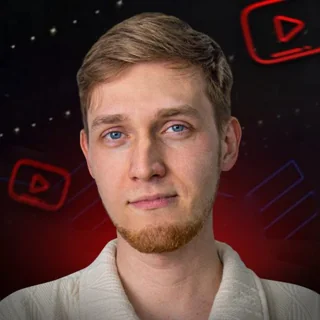 By Evgeny Maximov·4 min read·
Do ChatGPT and Google AI use YouTube videos?
Yes. AI search tools pull answers from the web and show their sources. YouTube is one of the most cited.
What the 2026 data says (vendor studies, so treat them as direction, not law):
- OtterlyAI analysed over 100 million AI citations over 30 days (published March 2026). YouTube was the second most cited social platform after Reddit, with 31.8% of social media citations.
- By platform, most YouTube citations came from Perplexity (38.7%) and Google AI Overviews (36.6%), then Google AI Mode (19.6%). ChatGPT cited YouTube much less (4.4%).
- BrightEdge reports YouTube as the number one cited domain in Google AI Overviews, at around 29.5% of citations in their data.
So if your buyers use Google or Perplexity, your YouTube videos can show up inside the answer.
What do AI-cited YouTube videos have in common?
This is the part that matters for a business channel. From the Otterly study:
- Long-form wins. 94% of cited YouTube videos were long videos. Shorts were 5.7%.
- Views don't matter. The correlation between view count and being cited was around zero. Same for likes and subscribers.
- Small videos get cited. About 41% of cited videos had fewer than 1,000 views. About 35% came from channels with fewer than 10,000 subscribers.
- Descriptions matter a bit. Longer descriptions had a weak-to-moderate link with citations (r = 0.31).
- Chapters help in Google. Videos with timestamps were often cited several times, chapter by chapter.
- Length: the most cited range was 10–20 minutes.
For a founder this is great news. You don't compete with MrBeast for the AI answer. You compete with whoever explained your niche most clearly. We see the same in classic Google search: one of our clients had a channel with 80 subscribers, and her videos already came up when you searched her name.
| What the study found | Number |
|---|---|
| Cited YouTube videos that are long-form | 94% |
| Cited videos with fewer than 1,000 views | about 41% |
| Cited videos from channels under 10,000 subscribers | about 35% |
| Link between views and being cited | around zero |
Source: OtterlyAI YouTube Citation Study 2026, March 2026. A vendor study, so treat it as direction, not law.
How do you get your business cited by ChatGPT and AI search?
Seven steps, from the video itself to what the rest of the internet says about you.
1. Answer one real buyer question per video
Not "my thoughts on marketing". A question your buyer would type: "How much does a self-storage franchise cost?", "How do I get consulting clients without cold outreach?". Say the question out loud. Then answer it in the first minute.
2. Use chapters as mini-answers
Each chapter title is a question or a clear statement. "03:12 How long does it take to get leads from YouTube?" AI tools in Google can cite a single chapter. How to add and name them: YouTube chapters and timestamps.
3. Write a real description
A unique paragraph of 80–150 words that summarizes the answer, says who it's for and names your business. Not a list of links and hashtags.
4. Make the transcript accurate
AI reads what was said. Auto captions get names, numbers and terms wrong, and with an accent like mine they get a lot wrong. Check the captions on your most important videos, and publish a corrected transcript next to the video on your site. That's what we do on this blog.
5. Turn each video into an article
Embed the video in a blog post on your site with the same answer in text, a short summary at the top and an FAQ. AI tools cite pages and videos. Give them both. That's exactly what we do with every video on this blog. The same 10-minute video can also become three or four short emails for your list. One recording, three formats, three places to be found.
6. Describe your business the same way everywhere
AI builds a picture of "who is this company" from many sources. If your website says one thing, LinkedIn another and YouTube a third, the picture is blurry. One sentence, everywhere. Ours: "Evgeny Maximov, founder of a done-for-you YouTube agency for high-ticket B2B founders; clients film one day a month."
7. Get mentioned outside your channel
Podcasts, guest posts, client case studies on their sites, answers on Reddit and Quora. Mentions from other sources make you more trustworthy for AI.
What we found when we checked our own AI visibility
In October 2026 we audited our own business the way I'd audit a client's. The website itself was fine: every AI crawler could read it, there was an llms.txt file, a plain-text version of every page, structured data and a short answer at the top of every article. The problem was everything around it.
- Search for my name showed an old portfolio page, not this website. The description there was years out of date.
- For “best done-for-you YouTube agency for B2B founders”, AI named another agency. The one with reviews on an independent platform. We had none.
- The YouTube channel described us differently than the website. Different words, different numbers, no link in the text.
So we fixed the parts we control: one description of the business everywhere, the old portfolio closed, a corrected transcript next to every video on the blog, a cleaned-up channel description. Independent mentions, like reviews and podcast appearances, are the slow part, and they're next.
The lesson for any small business: before you make new content for AI, check what AI already finds about you. Often the biggest win is fixing the old stuff.
Do TikTok, Instagram and Shorts get indexed too?
Yes, more than before, but they're cited far less than long videos.
- Instagram. Since July 10, 2025, public posts and Reels from professional accounts (business and creator) can appear in Google and Bing search. Personal and private profiles, Stories and Highlights are excluded. More on the change.
- TikTok. Google shows TikTok videos in search results, and short videos can appear next to AI answers. But in BrightEdge's data, TikTok had about 0.1% of AI citations across engines, while YouTube averaged about 20%.
- YouTube Shorts. Shorts made up about 5.7% of YouTube citations in the Otterly study. Long videos took the other 94%.
So short videos help people find you in Google and in social search. Long videos are what AI quotes as the answer.
Republishing helps too. When the same idea lives as a long video, an article on your site, a LinkedIn post and a few Shorts, AI finds several sources that agree with each other. It works best when there are also independent confirmations: a podcast where someone else mentions you, a client's case study on their own site, reviews on a third-party platform. Your own channels say what you do. Other people's channels confirm it.
What is generative engine optimization (GEO), and how is it different from SEO?
- SEO: ranking in Google's list of links.
- AEO (answer engine optimization): being the direct answer: featured snippets, voice answers, AI Overviews.
- GEO (generative engine optimization): being cited or recommended by ChatGPT, Perplexity, Gemini, Claude.
They overlap a lot. Google's AI Overviews usually cite pages that already rank well. So classic SEO is still the base. YouTube adds a second strong source on top. The basics are in YouTube SEO for business.
How do you check if AI tools cite you?
Once a month, ask ChatGPT, Perplexity and Google:
- "Best [your service] for [your client type]"
- "How to [the problem you solve]"
- "[Your name] [your service]"
Write down what they say and which sources they show. It's not precise, but you'll see the trend.
Doing it by hand gets tedious. Tools like OtterlyAI and Peec AI track your brand across ChatGPT, Perplexity and Google's AI answers automatically: whether you're mentioned, how you're described and which competitors appear instead. Pick ten questions your buyers really ask, and check them every couple of weeks.
Is this worth it for a small B2B business?
Yes, because the effort is the same as good YouTube SEO and good content. You're not doing extra work for AI. You're making videos that answer buyer questions clearly. AI is one more place those answers show up.
And it compounds. One clear video can be cited for months, by several tools, without you paying anything.
FAQ
What is AI search optimization?
AI search optimization means making your content easy for AI tools like ChatGPT, Perplexity and Google AI Overviews to find, understand and cite. For a business that means clear answers to real buyer questions, long videos with chapters, accurate transcripts, articles on your own site and one consistent description of your business everywhere.
Does ChatGPT use YouTube videos as sources?
Yes, but less than other AI tools. In OtterlyAI's 2026 study of over 100 million AI citations, ChatGPT accounted for 4.4% of YouTube citations, while Perplexity (38.7%) and Google AI Overviews (36.6%) cited YouTube far more often.
How do I get my business cited by ChatGPT?
Publish content that answers specific buyer questions clearly, on YouTube and on your website, describe your business consistently across all profiles, add structured summaries and FAQs, and earn mentions on other sites. AI tools cite clear, consistent and well-sourced answers.
Do I need a big YouTube channel to be cited by AI?
No. In the OtterlyAI study, about 41% of YouTube videos cited by AI had fewer than 1,000 views, and about 35% came from channels with fewer than 10,000 subscribers. Views and subscriber counts had almost no correlation with being cited.
Do Shorts get cited by AI search?
Rarely. 94% of cited YouTube videos in the OtterlyAI study were long-form; Shorts made up about 5.7%. For AI visibility, invest in long videos.
What is generative engine optimization (GEO)?
GEO is the practice of making your content more likely to be cited or recommended by generative AI tools like ChatGPT, Perplexity, Gemini and Claude. It overlaps heavily with SEO and answer engine optimization.
What is the difference between SEO, AEO and GEO?
SEO aims to rank in search results, AEO aims to be the direct answer (snippets, voice, AI Overviews), and GEO aims to be cited by generative AI tools. Strong SEO is the foundation for both AEO and GEO.
How long should a YouTube video be to get cited by AI?
In the OtterlyAI study, the most cited length was 10–20 minutes (about 32% of citations), followed by 5–10 minutes. Clarity of the answer matters more than length.
Do chapters help YouTube videos get cited?
They help in Google's AI features, which can cite individual chapters. Use chapter titles that are questions or clear statements so each section works as a standalone answer.
Is YouTube better than a blog for AI visibility?
They work best together. Google AI Overviews and Perplexity cite YouTube often, while text pages are easy for all AI tools to read. Evgeny Maximov's agency turns every video into a blog article with the video embedded.
Does Instagram or TikTok content show up in Google and AI search?
Partly. Since July 2025, public posts and Reels from Instagram professional accounts can be indexed by Google and Bing, and Google shows TikTok videos in search. But AI tools cite them rarely: in BrightEdge data TikTok had about 0.1% of AI citations versus about 20% for YouTube. Long videos are what AI quotes.
What tools track mentions of my business in ChatGPT and AI search?
Tools like OtterlyAI and Peec AI monitor whether your brand is mentioned in ChatGPT, Perplexity and Google AI answers, how it is described and which competitors appear. You can also check ten buyer questions by hand every couple of weeks.
Founder of a done-for-you YouTube agency for high-ticket founders. Making content since 2014. More about me
Want your expertise to show up where buyers ask questions?
We build business YouTube channels and turn every video into an article for search and AI. You film one day a month. 7-day money back guarantee.
Book a call →