Webinar Funnel vs YouTube Masterclass: What Sells High-Ticket in 2026
Webinars have sold coaching and B2B programs for 15 years. YouTube masterclasses now do something similar, for free, for years. Here's how each funnel works, where each one breaks, and how I'd combine them.
 By Evgeny Maximov·3 min read·
What is a webinar funnel?
A webinar funnel has four steps:
- Registration page: "Free class: how to [result]".
- Reminders until the class starts.
- The class: 45–90 minutes of teaching, then an offer.
- The offer: a call, a program, a deadline bonus.
It works because a class lets people experience how you teach before buying. That's also why long YouTube videos work.
Live vs evergreen vs YouTube masterclass
| Live webinar | Evergreen webinar | YouTube masterclass | |
|---|---|---|---|
| When it works | launches, cohorts, real deadlines | always-on funnels with ads | always-on, from search and recommendations |
| Urgency | high | fake if you fake it | none, trust instead |
| Show rate | often low | "watch anytime" | they're already watching |
| Life span | one evening | months | years |
| Who it attracts | registrants from ads and lists | ad traffic | people searching the topic |
| Cost | ads + your evening | ads | production once |
Why do free webinars attract "tire kickers"?
Taki Moore has a video with exactly that title. I see the same pattern. A free class with a broad promise ("make more money") attracts people who collect free classes.
Fix it with the topic, not the form:
- Narrow promise: "How dental clinics get patients from YouTube", not "How to grow your business".
- Name the buyer: say who it's for and who it's not for in the first two minutes.
- Show the price logic: if it's high-ticket, don't hide it until the end.
What makes a YouTube masterclass different?
It's a webinar without a registration form. Anyone can watch, now or in three years. YouTube shows it to people who watch similar content and to people searching the topic.
Some examples:
- My Business YouTube Playbook is a 70-minute masterclass. I said it in the video: this won't get many views, but it builds trust.
- Caleb Ralston says a free course of about 6.5 hours brought him over a million views and over a thousand inbound applications for his programme.
- The Trust Engine, my own five-hour course on building a YouTube channel that sells for founders, is coming to our channel soon.
Long free courses are the modern webinar. They just don't expire.
And they don't only build trust. They also collect views and watch time. A multi-hour video that people keep coming back to adds up to a lot of hours watched, and watch time is one of the strongest signals YouTube uses to decide what to recommend. More and more people also watch YouTube on a TV screen, where sitting through a long video is normal. That's why very long videos are a growing trend: the algorithm has more reasons to keep showing them.
And you don't always need a new recording. Publish the webinars you already ran. One of our clients, the founder of a self-storage franchise, gave a presentation on Zoom to 10 people. We cut the boring parts and published the recording. Over the next few months, 202 people watched it. Twenty times the live audience, for one edit.
When should you still run a live webinar?
- Launches with a real deadline: a cohort starting on a date, limited seats that are actually limited.
- Re-activating your list: people who know you but haven't bought.
- Testing a new offer: you see questions live and adjust.
- Paid traffic: ads need a fast, simple conversion. “Register for a free class on Thursday” gets sign-ups quickly, and a live date gives people a reason to show up. A YouTube masterclass is better for organic, long-term traffic, a live webinar for filling seats with ads.
My rule: launch models with deadlines live on Instagram, email and ads. Evergreen trust lives on YouTube.
How do you combine them?
The combo I'd build for a coaching or B2B business:
- YouTube masterclass on your core topic, pinned on the channel. Evergreen.
- Search videos that answer specific questions and link to the masterclass.
- A live webinar two to four times a year for launches, promoted to everyone who watched the masterclass.
- A call as the main next step after both.
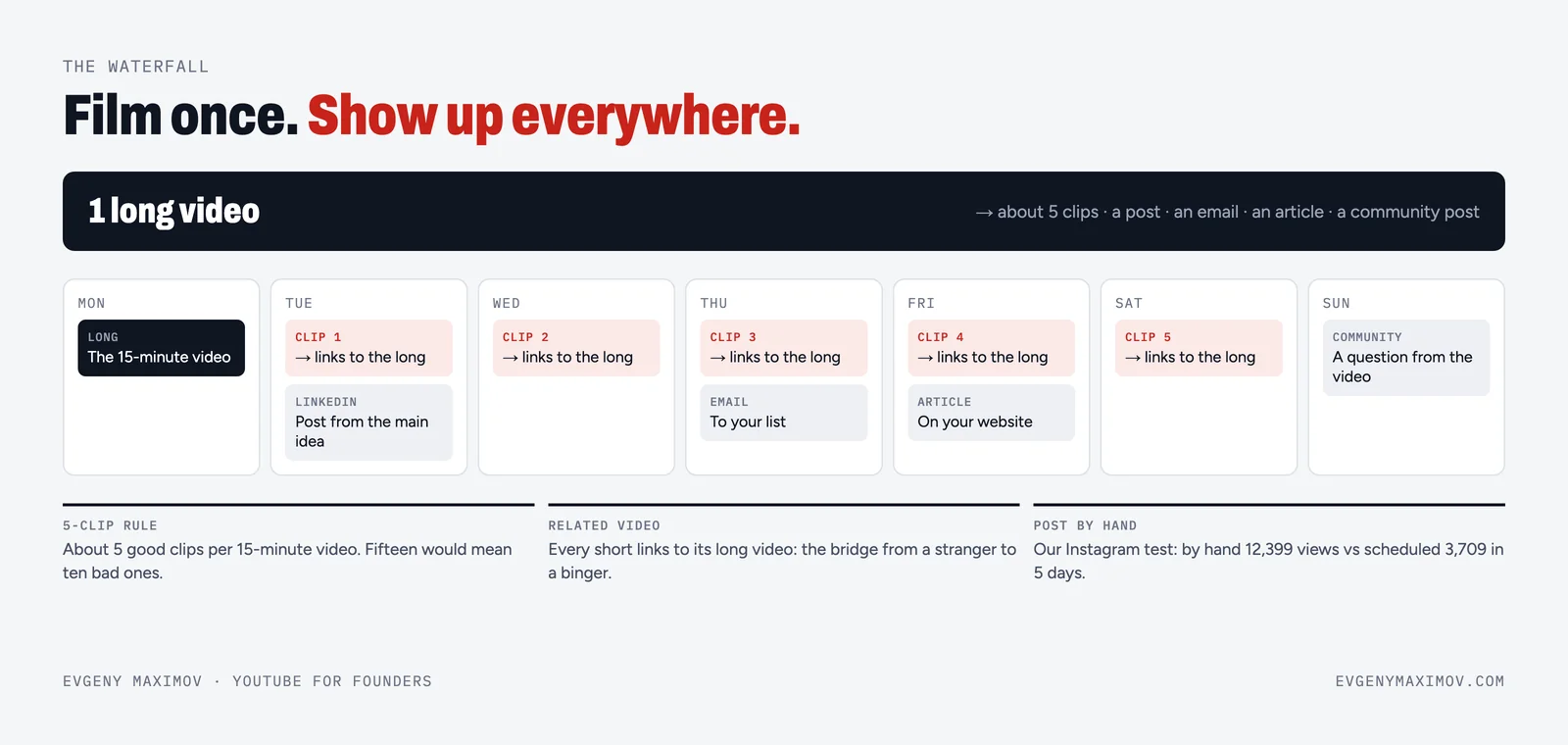
- Every live webinar becomes content. Publish the recording with a searchable title and chapters, and cut the best answers into Shorts.
| Path | Step 1 | Step 2 | Next step |
|---|---|---|---|
| Evergreen | Search videos answer specific questions | The masterclass teaches the whole method | A call |
| Launch | Invite masterclass viewers and your list | A live webinar with a real deadline | A call or enrolment |
How long should a webinar or masterclass be?
Long enough to teach one complete thing. Most good webinars run 45–90 minutes. YouTube masterclasses can be longer: viewers watch in pieces, and chapters help them come back. Keep the first five minutes tight, with a clear promise and who it's for.
FAQ
What is a webinar funnel?
A webinar funnel invites people to register for a free class, reminds them to attend, teaches something valuable for 45–90 minutes, and ends with an offer such as a call or a program.
Are webinars still effective in 2026?
Yes, especially live webinars for launches with real deadlines. For always-on lead generation, a free masterclass on YouTube often works better because it compounds and doesn't need ads to fill seats.
What's the difference between a live and an evergreen webinar?
A live webinar happens at a set time and creates real urgency. An evergreen webinar is a recording that runs automatically, often with ads, but can feel less authentic if it pretends to be live.
Is a YouTube masterclass better than a webinar?
For evergreen trust, often yes: it's free to watch, found through search and recommendations, and keeps working for years. For launches with deadlines, live webinars are still stronger.
Why do free webinars attract the wrong people?
Broad promises attract people who collect free classes. Narrow the topic to a specific buyer and problem, and say who it's for at the start.
Webinar or VSL: which is better for high-ticket?
They do different jobs. A VSL is short and explains the offer; a webinar or masterclass teaches and builds trust. Many high-ticket funnels use both: masterclass first, VSL before the call.
Can a webinar be repurposed for YouTube?
Yes. Re-record or edit your best webinar into a masterclass with a searchable title, chapters and a clear next step. Cut Shorts from the best moments.
What is a webinar funnel example?
A coach runs ads to a registration page for a free class, sends reminders, teaches for 60 minutes and offers a call at the end. A YouTube version: a 70-minute masterclass pinned on the channel, search videos linking to it, and a call link in the first line of the description.
Should I publish my webinar recordings on YouTube?
Yes, after a light edit: cut the waiting and logistics, add a searchable title and chapters. One self-storage franchise client published a Zoom presentation given to 10 people, and 202 more people watched the recording in the following months.
Do very long YouTube videos get recommended?
They can. Long videos that people keep watching collect a lot of watch time, one of the strongest signals YouTube uses for recommendations, and more viewers now watch on TV screens where long sessions are normal. Multi-hour free courses are a growing format for that reason.
Founder of a done-for-you YouTube agency for high-ticket founders. Making content since 2014. More about me
Want a masterclass that sells for years?
We plan, film and publish masterclasses and long-form YouTube channels for coaches and B2B founders. 7-day money back guarantee.
Book a call →