Company YouTube Channel or Personal Brand: Which One Sells More?
"I don't want to be an influencer. Can we just do a company channel?" I hear this on almost every call. The honest answer: you can, but people subscribe to people. Here's how to choose, and the hybrid our clients use.
 By Evgeny Maximov·5 min read·
What's the difference between a personal brand and a business brand?
- Personal brand: you are the face. People follow you, your opinions, your story. Examples: Alex Hormozi, Gary Vaynerchuk, Ali Abdaal, Dan Martell and, on a smaller scale, my own channel.
- Business brand: the company is the face. A logo, a product, a company channel with different speakers or no speaker at all. Examples: Nike, Apple and, in B2B, HubSpot. Notice that these are huge brands with huge budgets. A small company channel doesn't get that attention for free.
Most successful founders run both. The personal brand attracts and builds trust. The business brand holds the offer, the team and the systems.
Why do personal brands work better on YouTube?
Because trust is personal.
A buyer spending $10,000 or $500,000 wants to know who's behind the company. How they think, how they talk, whether they're honest. A logo can't answer that. A person can.
And on YouTube, people subscribe to people. In my masterclass I put it simply: nobody subscribes to company channels, but they subscribe to personal brands. Look at your own subscriptions. How many are companies?
Many B2B buyers say the same: they trust founders more than corporate voices. A polished company video looks like an ad. A founder explaining something on a whiteboard looks like advice.
The founder of Tvoy Sklad said it best in his review: "I duplicated myself on YouTube. I created a full copy of myself as the founder." His partners come to the first meeting and say: "I've watched your whole YouTube, let's get to business." A company channel can't do that for you.
When does a company channel make sense?
- Product demos and tutorials: SaaS onboarding, "how to use feature X". People search for the product, not a person.
- Support content: answers to common customer questions.
- Large companies with many experts who rotate.
- Local businesses where the place matters more than the person: a clinic's tour, a pool address, a facility.
For one client, a network of kids' swimming pools, we made a series of short videos, one per pool address. Not for views. For maps and the website. That's company content, and it's useful.
What about key-man risk?
It's the most common objection, and it's fair. "What if I sell the company? What if I get sick? What if I want to step back?"
Three answers:
- Your personal brand is your asset, even if you sell. Many founders build their next business on the audience from the first.
- Content is a library. Even if you stop, the videos keep working for years.
- The hybrid. Start with the founder, then bring the team on camera.
Olly Richards points out that Dave Ramsey grows "Ramsey personalities", and the hosts of Dreaming Spanish aren't the founders. It's possible. It's just easier if you start with yourself.
How does the hybrid work in practice?
Two of our clients:
Tvoy Sklad, a self-storage franchise. For years the founder, Dmitry, was the face. The channel helped attract about $5M in investments and 20+ franchisees. Then he moved to another city. Instead of stopping, we started filming his team: the CTO and the chief growth officer. The channel kept working because the trust was already built.
A dental clinic network. Here we started as a company from day one: podcasts with managing partners and doctors, the HR director, the CEO, the managing partner for the city. That spreads the key-man risk across many people. Now we're adding long solo videos with their own Shorts, so individual doctors become recognizable faces inside the company channel. The trade-off: people subscribe to channels like this more slowly than to a personal brand.
| Stage | Who is on camera | Example |
|---|---|---|
| 1. Founder | The founder builds trust and explains the model | Tvoy Sklad's first years: the founder's pitch, talks and tours |
| 2. Founder + team | The founder hosts, experts from the team join | A dental chain: podcasts with partners and doctors |
| 3. Team, founder as host | The team carries most videos, the founder appears on key topics | Tvoy Sklad after the founder moved: the CTO and the chief growth officer |
Isn't a personal brand just being an influencer?
No. An influencer sells reach. An expert sells results.
A personal brand for a founder is calm expertise: how you solve problems, what you've learned, what you think about your industry. No dancing, no trends, no daily vlogs. Ed Lawrence even made a video called "Why Growing A Personal Brand Is An AWFUL Idea", and it did well. His point, as I read it: building fame for its own sake is a trap. Building a business through your expertise is not.
I like the test from my clients' world: if this video doesn't make people trust your expertise more, don't publish it.
What if I don't want to be on camera at all?
Then think carefully. You can't delegate your expertise. You can delegate everything else: scripts, filming, editing, thumbnails, publishing.
Options:
- Start with a podcast. Talking to a guest is easier than talking to a lens.
- Put an expert from your team on camera if they're good at it.
- Screen recordings with your voice for technical topics.
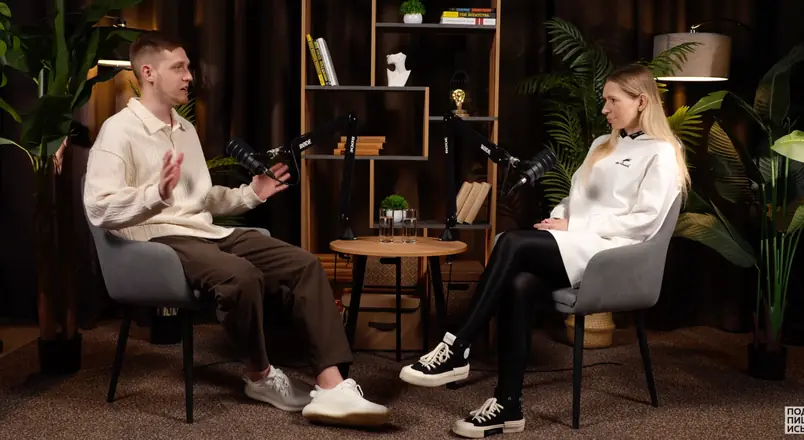
- Someone behind the camera who asks questions. A friend, a partner, a producer. You stop talking to a lens and start talking to a person. Even after ten years on camera, I still feel stupid filming alone on a city embankment. When someone films me, the same thing feels like work: we're a team doing something important.
And remember: every recording is an experiment. If you hate it, delete it. Nobody will ever know it existed. You're worried about your reputation on YouTube, but nobody knows you there yet. That's the best moment to start.
Faceless content can work for some products. For high-ticket services, it's much harder, because trust needs a face.
How do you set up a company YouTube channel?
If you go with a company channel, or a hybrid, set it up so it survives people leaving:
- Create it as a brand account, not on someone's personal Gmail. Then several people can manage it, and nobody leaves with the channel.
- Give the team and your agency manager access in YouTube Studio. Never share the login and password.
- Name it clearly. The company name for a pure company channel. For a founder-led or hybrid channel, use “Name | Company”, for example “Dmitry Rindevich | Tvoy Sklad”: the person first, the company second.
- Write who it's for in the first line of the description and add a link to book a call or a consultation.
- Plan the faces before the first video: who leads now, who joins later.
The full setup, from banner to trailer, is in how to start a YouTube channel for business.
How do you decide? (quick checklist)
Choose a personal brand if:
- You sell a service, consulting, coaching or a high-ticket product.
- Buyers want to talk to you before buying.
- You'll be in this niche for at least five years.
Choose a company channel if:
- You sell a product people search by name.
- Your content is mostly tutorials and support.
- You have several strong experts who will rotate.
Choose the hybrid if:
- You're the founder now, but you plan to step back later.
- You have team members who can teach on camera.
FAQ
Is a personal brand better than a business brand?
For most B2B and high-ticket service businesses, a personal brand works better on YouTube, because buyers trust people more than logos and people subscribe to people. Business brands work well for product demos, tutorials and support content.
Should my YouTube channel be under my name or my company's name?
Usually your name, especially if you sell services, consulting or coaching. You can still mention and link the company everywhere. A company-name channel makes sense for product tutorials or when several experts rotate.
How do I create a company YouTube channel?
Create it as a brand account rather than on a personal Gmail, give team members and your agency manager access in YouTube Studio without sharing passwords, name it clearly, write who it is for in the first line of the description and add a booking link.
What is key-man risk in personal branding?
Key-man risk is the danger that the business depends too much on one person. In content, you can reduce it by bringing team members on camera over time, as Evgeny Maximov's franchise client Tvoy Sklad did with its CTO and growth officer.
Can a company YouTube channel work for B2B?
Yes, especially for demos, tutorials and expert interviews. The trade-off is slower subscriber growth, because people tend to subscribe to individuals rather than companies.
Is building a personal brand the same as being an influencer?
No. An influencer sells reach and attention. A founder's personal brand shows expertise, opinions and results to the people who might buy. It doesn't require trends, daily posting or a big audience.
What if I want to sell my company later?
A personal brand doesn't stop a sale. Your content library keeps working, and you can transition the channel to team members over time. Many founders also use their audience for the next business.
Can employees be the face of a company YouTube channel?
Yes. Evgeny Maximov's dental clinic network client features managing partners, doctors, HR and the CEO. It spreads key-man risk, though such channels usually gain subscribers more slowly than a founder's personal brand.
Do I need to be on camera to build a personal brand?
For YouTube, mostly yes, at least at the start. A podcast format, screen recordings with your voice, or co-hosting with a team member can make it easier.
What is CEO personal branding?
It's the CEO or founder building visibility and trust through their own content: videos, posts, talks and podcasts that show how they think. It supports sales, hiring and partnerships, not just marketing.
How long does it take to build a personal brand on YouTube?
Usually around two years for a strong brand. In Evgeny Maximov's experience, the first months feel slow and the effect becomes obvious around month 13 of regular publishing.
Founder of a done-for-you YouTube agency for high-ticket founders. Making content since 2014. More about me
Not sure whose face your channel needs?
On the call we'll look at your business and choose the format: founder, team or both. You film one day a month. 7-day money back guarantee.
Book a call →